














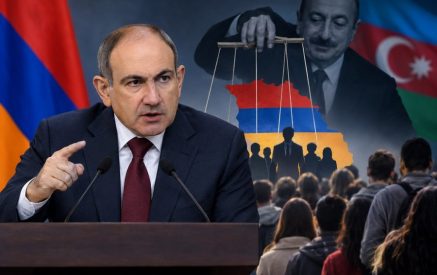

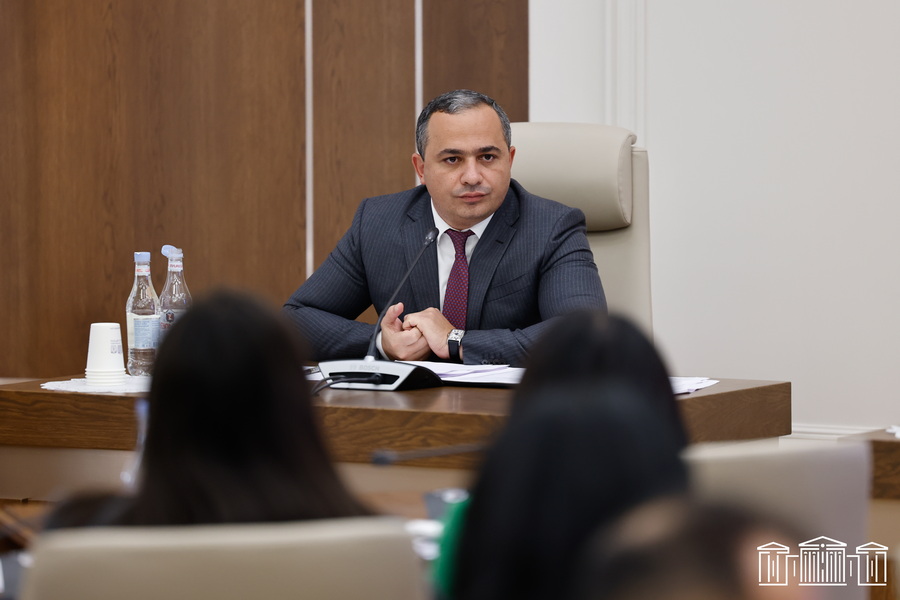
In response to questions from opposition MPs, the head of the Investigative Committee says that “humiliating,” “destroying,” “killing them off,”and other such gems of the prime ministerial rhetoric do not constitute a criminal offense.
But surely the opposition MPs know that, don’t they? For example, if the head of the Investigative Committee were to declare—or even suggest— that there might be a criminal offense in one or another of the prime minister’s statements, he might not even have time to notice how he had gone from being head of the Investigative Committee to being a criminal himself. And, as the Great Combinator used to say, a reason can always be found.
Consequently, no official in the law-enforcement system will take such a gamble, or even entertain the thought that one or another of the prime minister’s words might raise a question of legality.
Especially when those law-enforcement agencies are directly subordinate to the prime minister. After all, in terms of high-level toast-making, Armenia is already practically an EU member. But on the ground, Armenia remains a Eurasian “bastion” through and through. So imagining that the country’s top political figure could face prosecution is roughly the same as imagining that Armenia’s national football team could win a medal at the World Cup or European Championship in 2050.
And, of course, it must be acknowledged that all this has a range of deep-rooted causes in Armenia, relating to its legal and political culture, mindset, and social psychology. Overcoming them is a strategic, existential task for Armenia. But this cannot be done as long as the current ruling force remains in power. It is not as though the system that governed before was striving to overcome all this, only to be thwarted by the “Velvet Revolution.”
Yet the former system, compelled by a number of factors, was moving along the path of legal and political evolution, even if only out of its own need to remain in power. After 2018, however, that “evolutionary” imperative was neutralized in an instant, giving way not to reformist acceleration but to authoritarian tendencies. And those tendencies accelerated even further after the defeat in the war and the complete loss of Artsakh.
Since then, staying in power has required not evolution, but “humiliating,” “destroying,” “killing them off,” “making people lick the curb,” and so on. And remaining in power also requires seeing no problem whatsoever in any of this.And remaining in power also requires seeing no problem whatsoever in any of this.
Hakob BADALYAN