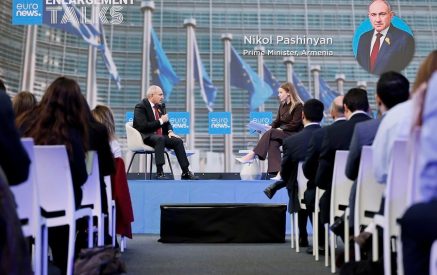







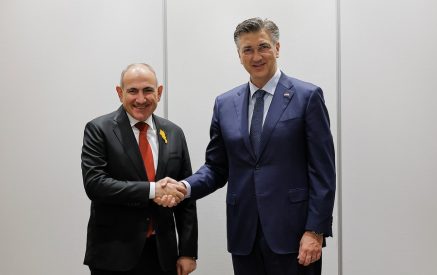
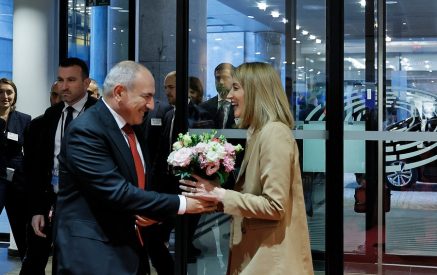

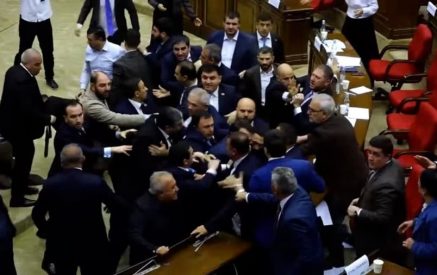






Having announced in Brussels that Armenia would formally apply for EU membership in 2027 or 2028, Nikol Pashinyan wasted no time: the very next day, he set about launching yet another coercive operation against the opposition, this time targeting Samvel Karapetyan, leader of Strong Armenia. Perhaps even Pashinyan’s most fanatical followers have no doubt that these actions are driven exclusively by political motives. It is just that, for reasons of their own, they find it expedient to parrot the official “justifications.”
What is far more interesting here is what the representatives of the EU, the locomotive of democracy, make of all this. For instance, those who have been deployed in Armenia for two years on the “grounds” of protecting Armenian democracy from hybrid threats. In the view of these European observers, is the use of law-enforcement powers against opposition rivals an act of defending democracy and the rule of law, or is it quite the opposite—a threat to them? This, too, is perhaps a rhetorical question, because Nikol Pashinyan would hardly show such utter disregard for the Europeans. After all, they are not Armenia’s opposition electorate. With “one foot still in Brussels,” he would not have proceeded with yet another use of the government’s coercive powers against the opposition. Moreover, one cannot rule out the possibility that he had secured Brussels’ approval for the operation.
Unless, of course, Brussels itself had actually dictated it, as a “token” of Armenia’s commitment to the EU.
In any case, before 2018, whenever a police officer in Armenia walked past an opposition leader, EU representatives—both formal and informal—considered it their duty to react to the “incident” and, at the very least, warn that the officer might accidentally brush against the opposition figure or activist while passing by, thereby restricting their freedom. Now? Stone-cold silence. What is more, even at the level of informal representatives, there has been consistent encouragement and “justification” of the Armenian authorities’ actions.
Read also
Accordingly, judging by the state of affairs, when Nikol Pashinyan spoke of a possible application in 2027–28, EU officials must have been terribly impatient, expecting the overture to begin as soon as possible. And Pashinyan, for his part, did not hesitate: as soon as day broke, he was already at it.
Hakob BADALYAN