

































“In order to know what is going to happen, one must know what has happened.”
Niccolo Machiavelli, Florentine philosopher and statesman of the Renaissance.
The elections are over, yet the dispute over their outcome remains unresolved. The eighth convocation of the National Assembly, which set Armenia on a legislative path toward EU accession, has passed into history; it now falls to the ninth to write the next page. Leading world capitals have already offered their congratulations—or delivered no less eloquent “non-congratulations.” Party representatives had barely settled into their seats when a torrent of mutual accusations and insults – by now a familiar spectacle to the public – began pouring from the parliamentary rostrum. The authorities, meanwhile, have not confined themselves to rhetoric and have set the administrative and legal machinery in motion. The new political cycle is only beginning, but the present already resembles the past so closely that it is impossible not to wonder what the future holds.
From Transformation to the Preservation of Power
The French Revolution was the first event in European history to bring the masses onto the political stage as a source of power. Yet the leaders who came to power through mass mobilization soon encountered the revolution’s dual legacy. On the one hand, the new government grounded its legitimacy in the direct will of the people; on the other, the mobilized public’s continued participation in politics threatened the stability of the new order. The universalism of revolutionary aims and the ambition to transform the world gave way to a policy focused on preserving the state and the regime itself. Confronted with limited resources and the difficulty of achieving its proclaimed goals, the revolutionary government shifted from a logic of transformation to a policy of minimizing losses. The new elite, therefore, curtailed mass participation in politics and concentrated decision-making in the hands of a narrow circle within the new governing center. This pattern rests on the following logic: over time, a government born in the streets comes to regard civic activism and political competition not as sources of legitimacy, but as threats to its own survival and obstacles to implementing its proclaimed course.
Read also

This transformation in the logic of power is also reflected in foreign policy. A post-revolutionary situation requires negotiation and engagement not so much with allies as with adversaries. To this end, a system of inter-elite relations insulated from society takes shape, within which concessions become the principal means of averting further national catastrophes and, at the same time, a key factor in the government’s domestic political stabilization.
All of these trends emerged in post-revolutionary Armenia: the gradual curtailment of mass political participation, the hyper-centralization of decision-making, and the reorientation of foreign policy toward minimizing losses. Following the surrender of Artsakh, they became more pronounced and coalesced into a coherent pattern. In the absence of effective allied support, engagement with external adversaries became, for the government, the only means of minimizing threats to the country’s security. To this end, the government tied its own political survival to settling with Azerbaijan and Turkey and to further rapprochement with the West. Consequently, disagreement with the government’s foreign policy course ceased to be perceived as an acceptable expression of political dissent and came to be regarded as a direct threat both to the implementation of its strategy and to the incumbent political group’s continued hold on power. Opponents were, therefore, no longer treated as legitimate participants in political competition, but as obstacles to be neutralized. This marked the beginning of the disintegration of Armenia’s political class.
The Disintegration of the Political Class
The political class comprises the individuals, parties, groups, and institutions that exercise state power, aspire to it, or are capable of influencing public decision-making and the formulation of the country’s strategic course. The disintegration of the political class refers to the breakdown of a common political framework within which competing forces cease to recognize one another as legitimate participants in the political process, adhere to common rules, or resolve fundamental disagreements through national institutions.
Its principal manifestations include the mutual delegitimization of political rivals; the selective use of legal and judicial mechanisms to restrict their participation; the replacement of political competition with administrative control; the refusal to seek agreement on strategic issues; and domestic political forces’ reliance on competing external centers of influence. As a result, not only is the internal cohesion of the political class undermined, but also the common institutional framework through which those in power can be held accountable and political disagreements resolved without turning state institutions into instruments of political struggle or diverting them from their legally mandated functions.
The Geopoliticization of the Political Divide
Following the surrender of Artsakh in 2023 and the ensuing reorientation of Armenia’s foreign policy, divisions within the political class deepened into an ideological and geopolitical rift. At the heart of these disagreements were the causes of the national catastrophe of 2020–2023, the mission of Armenian statehood, relations with Russia and the West, the price of normalizing relations with Azerbaijan and Turkey, and the role of the Armenian Apostolic Church as a guardian of national identity. The government grounded its vision of the country’s future in Western alignment and European integration, while influential opposition forces advocated preserving Armenia’s alliance with Russia and its Eurasian orientation, viewing the European track not as an alternative to the Eurasian one, but as complementary to it.
The polarization of domestic political positions around competing external centers of power radically altered the nature of the rift within the political class. Armenia’s domestic political confrontation became intertwined with the broader struggle for influence in the South Caucasus, while the opposing sides increasingly came to view one another as actors serving external interests. As mutual delegitimization deepened, foreign policy ceased to be regarded as a matter of national choice on which different but equally acceptable positions could coexist.
Following the disputable outcome of the 2026 parliamentary elections, administrative and legal pressure on the most influential opposition centers intensified and became systematic. The existence of criminal charges does not in itself establish that the prosecutions are politically motivated. However, their scale, timing, targeting, and political consequences suggest that law enforcement is being used primarily to reconfigure the political field by removing leaders capable of mobilizing substantial groups of voters and neutralizing parties that retain a formal presence but have lost any meaningful ability to influence decision-making.
Under these conditions, the preservation of the formal features of political competition conceals the de facto exclusion of the most influential opposition forces from meaningful political contestation, leaving them with a choice among three possible courses of action: (1) accept the limits of permissible activity imposed by the government; (2) maintain a formal parliamentary presence as a legally recognized but politically neutralized opposition; or (3) withdraw from institutional politics. Under the second scenario, the opposition becomes a façade for an effectively noncompetitive system: its formal presence preserves the appearance of political pluralism without providing genuine competition or meaningful influence over decision-making. At the same time, its continued presence serves as a tool for rallying government supporters around the perceived threat of the return of the former elites and their allies. This may reproduce the model of the 8th convocation of the National Assembly, in which the opposition maintained a formal presence but exercised no meaningful influence over decision-making and was unable to provide effective parliamentary oversight of the government.
Consequences of Disintegration
The disintegration of the political class precludes even minimal agreement on the rules of political contestation and the limits within which state power may be exercised, giving rise to four interrelated consequences.
The first is the de facto elimination of political competition. Politics becomes entirely personalized, while the formation and transfer of power occur either through administratively managed elections or as a result of an extra-institutional rupture.
The second is the further erosion of the rule of law. When the application of law follows the political dividing line between supporters and opponents of the government, law ceases to function as an impartial regulator and becomes an instrument of political struggle. As a result, even legally well-founded decisions lose public credibility.
The third is the weakening of checks on executive power. In a parliamentary republic, a politically neutralized opposition loses the capacity to exercise effective parliamentary oversight, while judicial, law-enforcement, and oversight bodies dependent on the executive cease to act as autonomous constraints on its authority.
The fourth is the erosion of the institutional environment needed to forge agreement on strategic issues. Decisions made by a single political group while excluding other significant forces remain stable only until the next political rupture and therefore cannot provide the foundations for durable statehood.
Taken together, these processes lead to a loss of trust in national institutions and a dangerous increase in external influence. Both the government and the opposition seek backing beyond the country’s borders, turning external support into a decisive resource in domestic political struggle.
In Lieu of a Conclusion
Because the emerging domestic and external configuration remains far from settled, the future trajectory of Armenia’s political development—and, in particular, the prospects for restoring a functioning political class—will depend not only on the nature and dynamics of domestic processes but also on changes in the external environment. As long as the West views Armenia primarily through the prism of geopolitical confrontation with Russia and the reordering of the South Caucasus, the current government’s pursuit of a pro-Western foreign policy will matter more to Brussels and Washington than the state of political competition within the country. The future of Armenia’s political system will, therefore, be shaped to a considerable extent by the emerging architecture of European security. Its nature and contours will largely determine whether the country’s political arena remains a space of geopolitical confrontation or can return to domestic competition founded on the rule of law and the mutual recognition of political forces. The wait will be long: the conditions for an alternative path are not yet in sight.
Armen MARTIROSYAN
Member of the Supreme Soviet and the National Assembly of the Republic of Armenia (1990-99)
Ambassador Extraordinary and Plenipotentiary of the Republic of Armenia
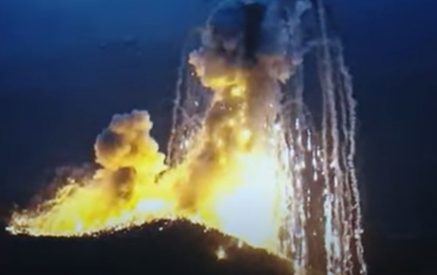
The illustration was created using AI technology
Aravot Daily
01.09.2026