
























What Is Needed for a Radical Revolution
“The ideology of political revolution will never change anything except appearances. There will be violence, and power will pass from one party to another, but when the smoke clears and the bodies of all the dead men are underground, the situation will be essentially the same as it was before: there will be a minority of strong men in power exploiting all the others for their own ends. There will be the same greed and cruelty and lust and ambition and avarice and hypocrisy as before.”
This is a quotation from Thomas Merton’s Seeds of Contemplation, published in 1949. The revolutions, wars and totalitarian regimes of the 20th century enabled the Catholic philosopher to sum up the experience of the preceding decades and add to it the grim realities that had typically followed revolutionary events in earlier centuries.
Merton’s words apply, to one degree or another, to all revolutions. They apply to the events that took place in Armenia in 2018 as well — events that, incidentally, many do not consider a revolution, but that is for historians to debate. In any case, it is beyond doubt to me that people took to the streets in response to negative realities, not at the behest of Pashinyan, Soros, the West or Gazprom. I argued this at the time and continue to argue it today, despite the fact that some people accuse me of supporting the “color revolution” of 2018.
Read also
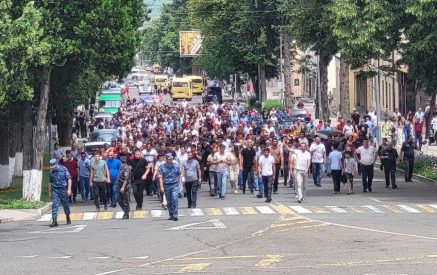

The other question is what expectations brought people into the streets. Naturally, they were different. Setting aside several dozen shades in between, I would divide those expectations into two categories: healthy and unhealthy.
The first were represented mainly by young people who wanted us finally to overcome the post-Soviet period of “stagnation,” when everything is determined by the will of one person and everything is built on sycophancy and corruption. The unhealthy side dreamed, and continues to dream, of a “lumpen revenge” — of punishing the former and the wealthy. It must be stressed that in 2018, surrendering Artsakh, replacing the Catholicos, or turning against Russia were not part of anyone’s expectations.
The expectations of the “healthy” side were not fulfilled at all, while the wishes of the “sick” side are being fulfilled in part, although such aspirations have no end: they constantly need “gallows” and “guillotines,” both literally and metaphorically.
First of all, fulfilling healthy expectations is objectively difficult. But, as became clear very quickly, it was not part of Pashinyan and his courtiers’ plans either: their aim was to make use of the already existing monolithic, stagnant system.
As a result, we ended up with precisely what Merton described: greed, cruelty, lust, ambition, avarice and hypocrisy remained.
That is why the theologian believed that the only — and an extremely radical — revolution is one that changes the essence of the human being, rather than the outward “decorations” of society. To achieve this, in particular, one must overcome the False Self.
Ordinary political revolutions require the destruction of internal and external enemies, whereas a spiritual revolution entails the “death” of the egoistic person — the person we mistakenly regard as our own “self.” The False Self builds illusions around social status, wealth and the lust for power.
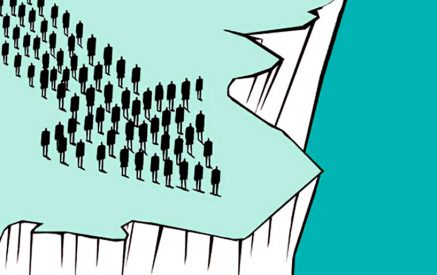
If the False Self does not die, all varieties of “color” or “black-and-white” revolutions — or, if you prefer, “revolutions” — will, within five to ten years, follow the same trajectory that we have witnessed in 2018–2026.
Aram ABRAHAMYAN
Aravot Daily
01.09.2026