


























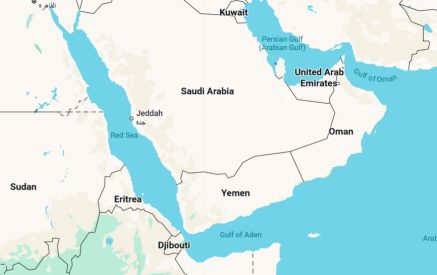

















The recent Houthi attacks on the Kingdom of Saudi Arabia have once again raised questions about the effectiveness of contemporary military-political alliances and the nature of the guarantees they provide. What do these guarantees actually entail: deterring a potential adversary, providing political and diplomatic support to a partner in crisis, or an unconditional commitment to use military force?
On August 7, Saudi Arabia, Turkey, and Pakistan signed the Mecca Joint Defense Agreement. It establishes the principle of collective defense: an armed attack against one participant is to be regarded as an attack against all. However, the agreement’s publicly available provisions do not specify the measures to be taken or the process for making decisions. Following the Houthi attacks, Pakistan said that a military response under the agreement was not being discussed at that time, while adding that it was prepared to act if necessary. Turkey condemned the attacks and reaffirmed its support for Saudi Arabia’s sovereignty and territorial integrity, but did not announce a military response under the agreement. So far, therefore, the response has involved political solidarity and diplomatic support, but not coordinated military intervention.
Similar constraints have emerged in U.S.–Saudi relations. The United States and Saudi Arabia signed a Strategic Defense Agreement in November 2025. However, according to Reuters, Crown Prince Mohammed bin Salman had asked Donald Trump to launch strikes against the Houthis, but the U.S. president declined to intervene directly. Washington instead offered intelligence support and assistance with targeting.
This example shows that even a formal bilateral defense partnership does not guarantee military intervention in every crisis. A gap may emerge between the expectations created by alliance rhetoric and the commitments actually undertaken. Differences in national interests, as well as divergent assessments of the nature and scale of a threat, can widen that gap. These cases, taken on their own, do not provide sufficient grounds for concluding that alliance agreements are ineffective. Military intervention is only one of the functions an alliance may serve. Alliances can also contribute to deterrence, intelligence sharing, policy coordination, and material assistance. The effectiveness of deterrence, meanwhile, depends on whether a potential adversary considers a collective response sufficiently likely and credible.
Read also



When an agreement does not specify the conditions for a response or the measures that may be taken, its parties have greater discretion to determine the form and scale of their response. As a result, a commitment to act collectively may appear less credible, while the form and timing of any response may seem less predictable.
Uncertainty is also increased by the nature of contemporary conflicts. Attacks may be carried out by non-state armed groups rather than regular armies. In such cases, allies must assess the scale of the attack, determine its source, and decide whether the incident falls within the terms of the agreement. Differences in threat assessment and willingness to escalate may lead alliance members to choose different forms of support.
An alliance’s reliability, therefore, depends not only on its stated principles but also on the clarity of its response conditions, the design of its coordination mechanisms, the compatibility of members’ national interests, the degree to which they share assessments of a threat’s nature, immediacy, and severity, and their political willingness to fulfill their commitments.
Trump’s refusal to launch direct strikes against the Houthis should be viewed as a decision that took the risk of escalation into account: the direct use of American military force could have widened the conflict and further endangered regional security.
Collective security agreements should, therefore, be assessed not against maximalist expectations, but in light of the political and legal realities in which they operate. This requires attention to the actual content of their commitments, the compatibility of members’ interests, and the extent to which they share assessments of threats.
Armen Martirosyan
Member of the Supreme Council and National Assembly of the Republic of Armenia (1990–1999)
Ambassador Extraordinary and Plenipotentiary of the Republic of Armenia