














































Phys.org. Inspired by the ability of sea cucumbers to change the stiffness of their bodies, University of Waterloo researchers have developed a gel that could one day help repair damaged tendons and other soft tissues without leaving permanent material behind.
A paper on the study, “Bioinspired Hydrogels with Broadly Programmable Mechanics for Soft-Tissue Interfaces,” was recently published in the journal Advanced Functional Materials.
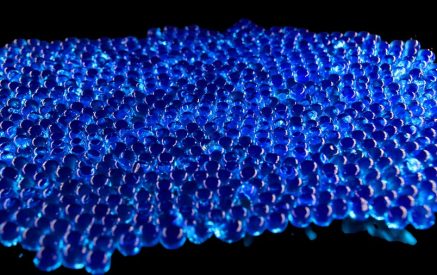
The water-rich material, known as a hydrogel, acts as a temporary support structure that allows new tissue to grow as the material gradually breaks down. Like the sea cucumbers that inspired it, the gel can be made softer or stiffer, potentially allowing it to support the healing of different tissues throughout the body.
“Soft tissues don’t all require the same scaffold,” said Dr. Yimin Wu, a mechanical engineering professor at the University of Waterloo, which spearheaded the study. “A material placed near the soft brain must behave differently than one used to repair a hard tendon.”
After nearly four years of research, the international team tested the gel in a preclinical study involving rats, with promising results. Rats with damaged tendons treated with the gel showed improved healing compared with those repaired with stitches alone.
Read more at the source