
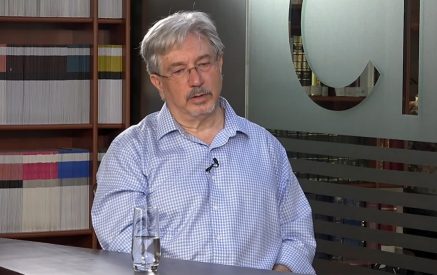





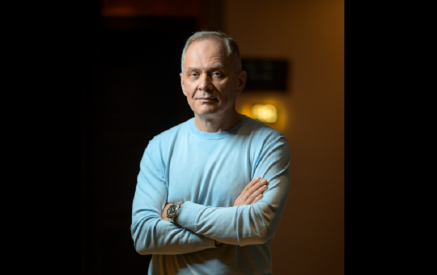






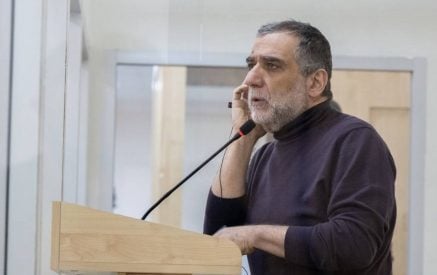





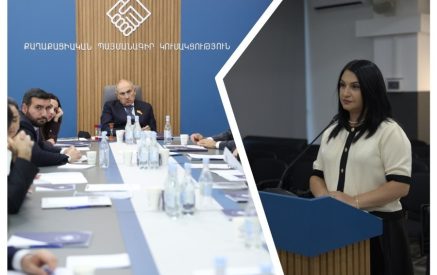
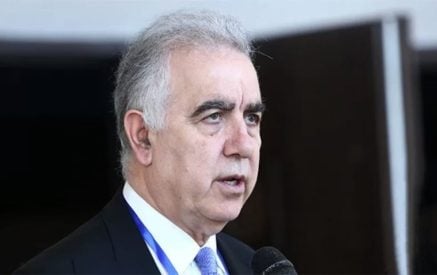

CivilNet journalist Erik Hakobyan stated during a program that non-governmental organizations advocating for women’s rights had failed to respond to Nikol Pashinyan’s remarks about the woman who neutralized an Azerbaijani saboteur.
Nikol Pashinyan had said: “If she had allowed her maternal instinct to take over for a moment and waited for the police, none of this would have happened.”
The Coalition to Stop Violence Against Women was quick to refute the journalist’s claim, stamping the word “DISINFORMATION” across his photograph and presenting its previous responses.
Now, let us examine whether Erik Hakobyan actually spread disinformation, even if these organizations had indeed responded.
Read also
Disinformation involves the deliberate distortion of facts with the intention of presenting something true as false, or something false as true.
But is there any indication of such intent in Erik Hakobyan’s conduct? The journalist’s professional track record provides no grounds for such a conclusion.
So why did this happen?
Since 2018, several organizations advocating for women’s rights have maintained close ties with the Civil Contract party. Not only have they adopted a passive stance in certain cases of discrimination and violence against women, but they have also provided political support to the ruling party.
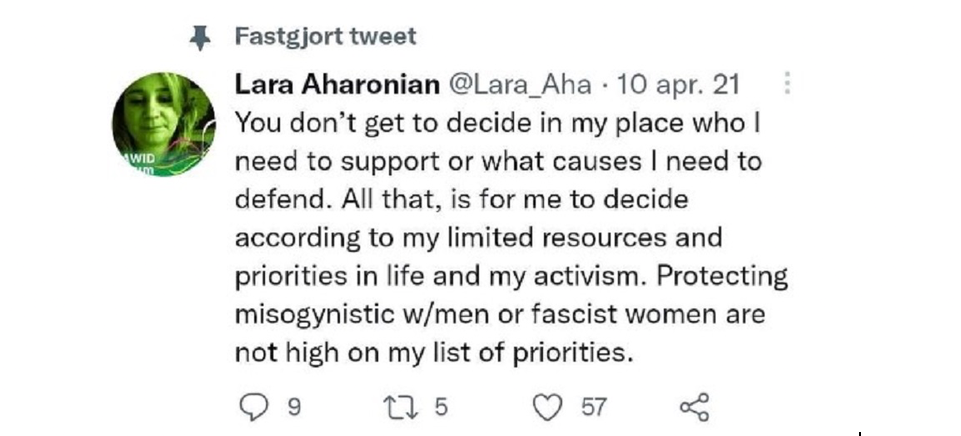
Moreover, one of the most prominent women’s rights advocates, Lara Aharonian, has herself stated that she does not defend the rights of all women.
As early as 2022, public appeals were also issued urging Armenian citizens to question the activities of these so-called “human rights defenders,” who had left Armenian citizens without protection.
Armenian Women’s Rights — Without Any “Buts”
On May 9, 2022, a statement titled “We Demand Peace Without Buts” was published. Among its signatories were representatives of organizations advocating for women’s rights, including Lara Aharonian.
Three months after their demand for “peace without buts,” in August, Armenian women from Aghavno and Berdzor lost their homes. Four months later, in September, during Azerbaijan’s attack, Armenian female service members were killed, and their bodies were mutilated and dismembered.
International legal claims were brought in connection with these crimes.
However, the peace agreement initialed in August 2025 by Nikol Pashinyan and Ilham Aliyev provides for the termination or withdrawal of interstate claims and proceedings.
This raises a question: What will happen to the demand for justice for the crimes committed against Armenian women?
These organizations advocating for women’s rights have not waged a sustained public campaign to ensure accountability for these crimes or to oppose the risks associated with withdrawing interstate legal claims.
The same question applies to the right of return of displaced women from Artsakh, as well as to the concerns raised over the unlawful detention of Aregnaz Manukyan and the restrictions imposed on her communication with her minor child, or the unlawful detention of Naira Alaverdyan, an accountant for the Aragatsotn Diocese, on the basis of false testimony given by the defrocked priest Aramayis Takhmazyan.
They have not responded.
A Collective Perception Shaped by Eight Years of Activity
Let us return to our central question:
If the coalition did indeed respond to Pashinyan’s remarks, why did the journalist come away with the opposite impression?
Through their conduct, these organizations have created a public perception, a collective understanding, that no matter what happens, they will not respond and that they defend women’s rights selectively.
Within this collective perception, rural women, opposition-affiliated women, and Armenian women subjected to Azerbaijani attacks do not fall under their protection.
Within this collective perception, these organizations are regarded as entities aligned with, or acting as satellites of, the Civil Contract party’s political agenda, even though that agenda undermines the security and well-being of Armenia’s female citizens.
As a result, the belief that these organizations have nothing to do with genuine human rights advocacy and will not respond has become almost automatic.
The coalition may present evidence of its responses, but doing so cannot disprove the distrust that its own activities have generated.
The credibility of a human rights organization is determined not by how many statements it has issued, but by whose rights it has defended and whose rights it has ignored.
Thus, the very organizations in question are the source of the perception underlying Erik Hakobyan’s statement. They themselves are the source of the disinformation about their activities, not the CivilNet journalist.
They Deleted a Comment and Got an Article Instead
I had expressed these thoughts more briefly in the comments section of the coalition’s post about Erik Hakobyan.
My comment was deleted.
Thus, an organization that publicly accuses a journalist of spreading disinformation chooses to remove criticism directed at itself rather than respond to it.
For that, I am grateful. Otherwise, this analysis would never have been written.
Hovhannes Ishkhanyan