





By Greg Sarkissian
Armenia’s recurring parliamentary confrontations invite a broader reflection on the foundations of democratic governance and the conditions necessary for lasting internal stability. Rather than viewing these incidents merely as political disputes, I believe they should be examined through three interconnected lenses: culture, ideology and power.
Culture shapes how a society understands disagreement, authority, collective identity and coexistence. Democratic culture requires more than elections. It requires tolerance of differing opinions, respect for institutions, acceptance of political pluralism and the ability to resolve disagreements without intimidation or violence. Armenia’s historical and political experiences, including the legacy of Soviet political culture, present particular challenges in developing these democratic practices.
Ideology concerns the principles upon which a political system is built. Armenia’s 2018 Velvet Revolution articulated an aspiration to end entrenched oligarchic rule, confront systemic corruption and establish a democratic, citizen-led government. If these are the foundations of the country’s democratic transformation, then listening to opposition voices, respecting dissent, protecting freedom of expression and ensuring institutional accountability must be integral to that vision. A citizen-led democracy cannot be meaningful if citizens or their elected representatives are heard only when they agree with those in power.
Read also
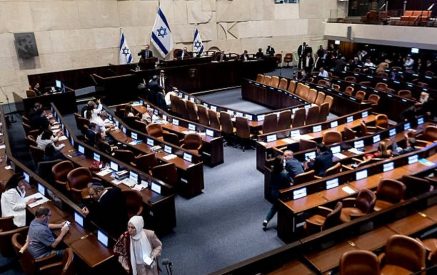
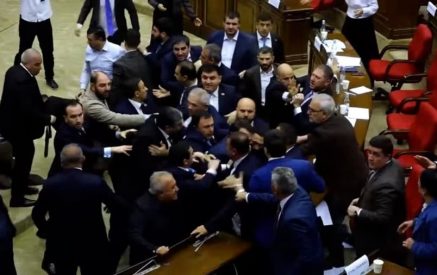
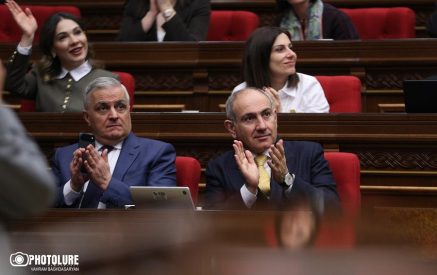
Power concerns how authority is exercised and how political differences are managed. In a democracy, power is not simply the ability to govern; it carries the responsibility to unite, protect institutions and serve society as a whole. Repeated physical confrontations within parliament raise questions about the culture of political engagement and the maturity of collective self-governance.
These responsibilities are not exclusive to those in government. The opposition, too, has an essential role in sustaining democratic culture. Its responsibility is to challenge authority, scrutinize government decisions and express dissent through legitimate parliamentary and democratic processes. Neither political disagreement nor the intensity of opposition justifies intimidation, physical aggression or disregard for institutional norms. Democratic maturity requires restraint, accountability and respect from both those who exercise power and those who seek to hold it accountable.
These three dimensions must reinforce one another. When political culture contradicts democratic ideology, or when the exercise of power undermines the principles upon which democratic transformation was founded, social cohesion becomes increasingly fragile.
Armenia faces enormous security, geopolitical and economic challenges, particularly following the wars of 2020 and 2023. Addressing these challenges requires more than political authority or economic policy. It requires internal peace, public trust and a shared sense of national purpose.
Leadership is ultimately measured not only by how power confronts opposition, but by how effectively it brings a divided society together.
Without alignment between culture, ideology and power, sustainable internal peace will remain elusive. And without internal peace, Armenia’s capacity to confront the enormous challenges ahead will inevitably be weakened.
The views expressed in this article are solely those of the author and do not necessarily represent the views or position of the Zoryan Institute