















Pashinyan is doing everything he can to prevent political solidarity and a shared sense of responsibility for a common destiny
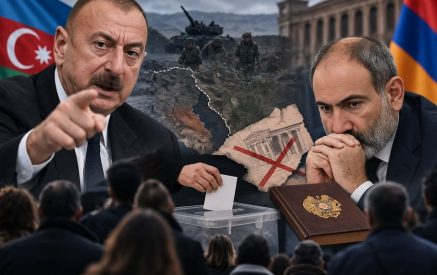
According to official figures, more than 700,000 voters cast their ballots in favor of Civil Contract. Of course, this may have been aided by electoral manipulation or, for example, by reaching such a figure through the voting of military personnel after polling stations had officially closed—an extraordinary occurrence by international standards. But let us assume that Civil Contract actually received half a million votes. By any measure, that is a substantial number.
Perhaps the greatest mistake today would be to disparage and label those people. For example, to say, “We never became a nation,” implying that the half-million “Nikol supporters” are somehow not part of the nation. Or to claim that “it was all done by senile Soviet-era people aged 65 and over.” I, too, am over 65, but, immodest as it may sound, I do not consider myself either senile or Soviet in the negative sense usually implied by that label.
As for “becoming a nation,” it does not happen by the wave of a magic wand, nor is it accomplished through elections. In fact, I would go further and argue that voting for one political force or another is not the primary indicator of nationhood.
Read also
“Becoming a nation” is a dynamic process that never truly ends for any people. It experiences advances and setbacks, ebbs and flows. The Germans, it would seem, became a nation in 1870. Did they cease to be one in 1933? Or was it, conversely, their embrace of racist and misanthropic ideas that itself reflected a particular form of nationhood?
Turning to our own situation, on what basis can we claim that those who believe the three main opposition forces want to start a war with Azerbaijan, that they are acting on Putin’s instructions, that Armenia’s defeat in the 44-day war was a “great success,” or those citizens who, at Pashinyan’s direction, were reportedly brought to polling stations by the authorities—all these people are somehow “not a nation”? And that those who do not believe such absurdities, or who did not yield to pressure from the authorities, are the nation?
The level of civic responsibility, education, or the prevailing public mood at any given moment cannot be directly equated with whether a nation has or has not matured. I am speaking, of course, about a political nation rather than an ethnic one; in the latter sense, we do not appear to have a problem.
Among the defining characteristics of a political nation, two seem particularly important to me. First, political solidarity within a single state. Second, a shared vision of the future—not merely living side by side, but assuming collective responsibility for the country’s future.
The issue, therefore, is not how one voted, but rather the obstacles that prevent us from becoming a political nation. And that concerns all of us alike—both supporters and opponents of Pashinyan.
The problem is that Pashinyan is doing everything he can to prevent people with differing views from achieving political solidarity and from sharing responsibility for Armenia’s future. In his view, the half-million voters who supported him are “proud citizens,” while those who voted against him are “Russian lackeys.” Such an approach will benefit neither the state nor Pashinyan himself.
Aram ABRAHAMYAN
“Aravot” daily
09.06.2026