















What does a politician with a sense of statehood do when he wins an election, or believes he has won, or wants to convince everyone that he has won? In civilized countries, the first thing he tries to do is ease the political tensions that inevitably arise from elections. To that end, he typically declares that he is the president or prime minister of all citizens, regardless of whom they voted for.
That is how leaders in the United States and European countries speak after elections, regardless of what happened or was said during the campaign, as well as during the voting itself. The point is not that all those leaders are wonderful people. This statecraft tradition serves a purely practical purpose. Unless one intends to govern in the coming years exclusively through arrests and political repression, it is far easier to lead a country when one does not regard citizens who voted for the opposition as personal enemies.
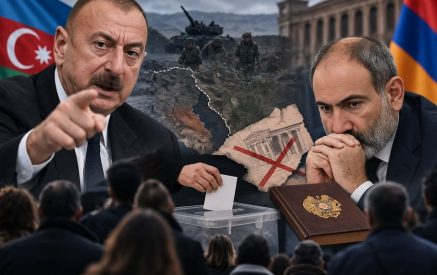
Pashinyan, of course, knows that he did not win the election and is not particularly trying to convince anyone that he did. He does not need to prove that he is prime minister, and deep down everyone understands that he is no prime minister at all. What he needs to prove is that he is a bold, tough-talking guy who speaks “from the heart of the people” and is capable of anything. That is precisely why, on election night, when barely 10 percent of the votes had been counted, he was already declaring his “victory.”
What followed was not the traditional statement one would expect in civilized countries: “I pledge to be the prime minister of all citizens, to protect the interests of every citizen, and to take into account all legitimate concerns raised during the campaign.” No. Pashinyan instead put on his familiar record: “I’ll arrest this one, turn that one into a bum, make this one bow down, force that one to kneel.”
Read also
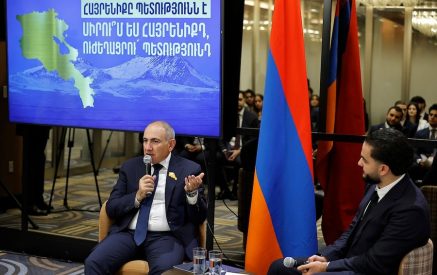
In other words, all of Pashinyan’s political opponents deserve nothing but such treatment. And that, in turn, means that the hundreds of thousands of people who voted for the opposition likewise deserve no respect and no humane treatment. Can a person with such a mindset govern a state?
Pashinyan is not a statesman not only because he failed to secure election as prime minister, but also because he has never conducted himself as a head of state. He has been, and remains, a fiery opposition orator. But unlike ordinary opposition speakers, he has at his disposal the instruments of political retribution.
Aram ABRAHAMYAN