
















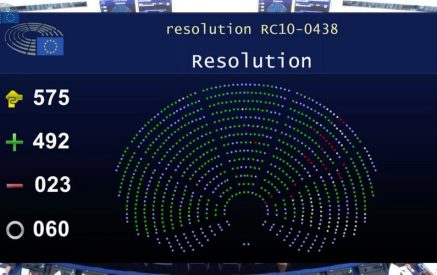





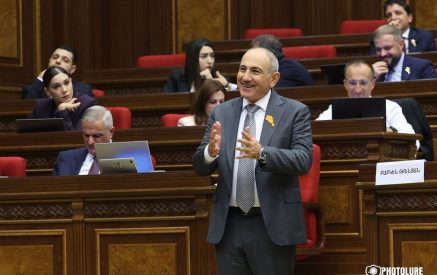

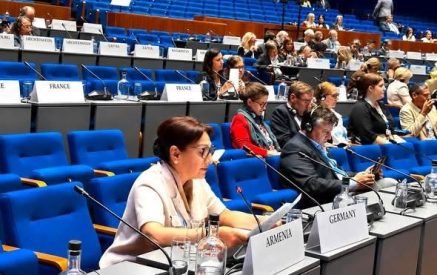





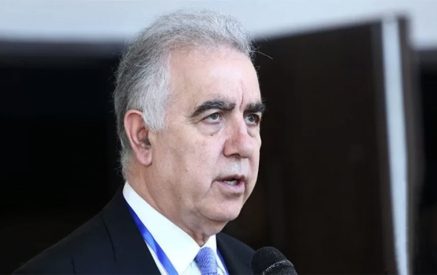

The ruling Civil Contract party provided the necessary votes for Aram Vardevanyan, the candidate of the Strong Armenia parliamentary faction, to be elected Deputy Speaker of the National Assembly. As many know, under the well-known D’Hondt method, one of the three Deputy Speaker positions in Armenia’s parliament is, so to speak, an opposition quota. The majority decided not to obstruct the opposition from exercising that quota, although the opposition itself was not so much seeking the position as insisting that recognizing the quota was not a matter of granting a right, but of fulfilling an obligation.
In any event, the key question here is whether this picture — the majority voting in favor of an opposition candidate — is evidence of a change in parliamentary political culture, and whether it represents the civility that newly elected Speaker Ruben Rubinyan called for at the start of this parliament’s work. Or is this merely a momentary pause, or, as the saying goes, “the mouse plays until the cat reaches the barn,” meaning that the game of civility in Armenia’s parliament lasts only until Pashinyan reaches the parliament building? Once he arrives, he will once again be in his element, seeking to score maximum points against the opposition by setting a new record for the number of labels and harsh statements he can deliver in a matter of seconds.
If Nikol Pashinyan has comfortably settled into the logic that “no one can compete with me,” it is difficult to imagine how the parliamentary majority — which is nothing more than a “notarial stamp” on Pashinyan’s intentions and will — could seriously contemplate a new parliamentary culture. Therefore, perhaps the public should not fall prey to illusions.
On the other hand, there is perhaps a very important point here. Having no illusions about the motivation behind the ruling majority’s civility should by no means mean abandoning one’s own strategy and conduct of civility, or giving up on them.
Read also
Nevertheless, the culture of political and public relations is an issue of fundamental importance for Armenia’s future and, consequently, an existential responsibility for any political force that sees itself as having a stake in that future. An existential responsibility, above all, when it comes to dialogue with society.
In any event, one of the keys to the opposition’s strategic advantage will be precisely how effectively and convincingly it can demonstrate to the public the comparative advantage of civility as a cornerstone of a secure, stable and viable future for the state.
Hakob BADALYAN