














I am presenting below, as a literal translation and without any changes, the article published on August 5 on the Azerbaijani opposition-affiliated website “Meydan TV”. It is titled: “Imprisoned war veteran: ‘The Azerbaijani people who sent us to our deaths, shouting “Go, go!”, did not stand by us.’”
Several participants of the Second Karabakh War, currently in prison, have given an interview to Meydan TV. These individuals, whom most detainees refer to not by name but as “veteran” (qazi), claim they were framed on narcotics charges and imprisoned. They spoke about the problems they faced in post-war life, the reasons for their arrest, and the difficulties they encounter in the penal system.
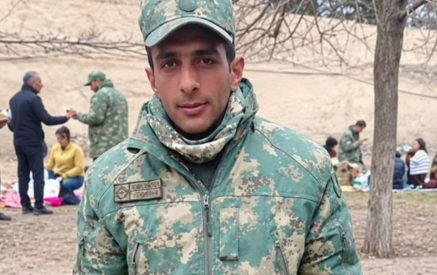
“I have never been involved in politics; I have lived a poor life. But I loved my homeland dearly. In 2020 I volunteered to go to battle, we achieved victory, but others reaped the benefits,” says a participant of the Second Karabakh War, now in prison, in his interview with Meydan TV.
He does not want his name mentioned, explaining why:
Read also
“They beat the ones who complain, they insult them, they ban our visits. Just imagine: the head of Penal Facility No. 11, Shakir Ganiyev, said to a Karabakh veteran on hunger strike, in front of all the inmates: ‘If you won’t eat through your mouth, we’ll feed you through your back.’ That is the attitude toward veterans who raise their voices in every prison and detention center. Or Jalil Aliyev, the head of the Shuvelan detention center, had a veteran’s head shaved, took him and held him out in the sun in an enclosed area. Then he would come by and check on him and mock him with sarcasm, ‘How are you?’ I myself have been subjected to such torture many times.”
“Look how they have brought war heroes to a wretched and oppressed state,” he laments.
According to our interviewee, after returning from the war he was unable to receive proper medical treatment; instead, he was detained by officers of the Main Department for Combating Organized Crime and subjected to severe torture:
“To be honest, the torture reached such a level that it was as if I had been taken prisoner in the war. Perhaps if I had been captured, even the Armenians would not have behaved like that. First the operatives, then a department head named Muzaffar personally insulted and tortured me. I told him I was a Karabakh veteran, and he said, ‘Then why didn’t you die in the battle?’ When I remember that torture and humiliation, I choke with rage. If an army veteran is being humiliated and broken in this manner by a man named Muzaffar in some police department, the blame lies with Muzaffar, the Supreme Commander-in-Chief.”
According to him, he was framed with drugs like the others, and unable to endure the torture, he confessed:
“I had expressed support for the veterans’ protests on social media several times, because they were demanding their rightful dues. That’s how I ended up on the blacklist. In prison you’ve probably come across many veterans. Almost all of them were framed like me.”
In his view, the imprisonment of war participants is no coincidence:
“At first I didn’t realize this, but later I understood everything. The veterans had returned with victory, and society’s trust in them had grown. The existence of such an active and influential stratum could not help but worry the authorities. That is why they framed veterans using various methods; they deliberately created the conditions for more than 50 veterans to set themselves on fire and commit suicide, in order to create an atmosphere of fear. There is no other name or explanation for this.”
The war participant also complains about Azerbaijani society, about his own people:
“Unfortunately, the Azerbaijani people, who sent us to death with encouragement, also did not stand behind us. A people of ten million stayed silent out of fear of 100 to 150 officials.”
“I recently read a book by Svetlana Alexievich about the Second World War: ‘The Unwomanly Face of the War.’ Truth be told, I’m not someone very inclined to read books, but when I read this one, the picture of our situation came alive before my eyes. Reading this book, which deals with the horrors of war and post-war problems, I was horrified. They had deceived us just as Soviet society was deceived, or rather, we had been naively deceived. Just as when the war began Stalin for the first time addressed the Soviet people as ‘My dear brothers and sisters,’ and everyone believed the dictator was sincere and that both he and the country would change after the war. The characters in the book themselves admitted that after a war they believed everything would be fine, that they would live in a completely different country. It was exactly the same for us. Everyone believed that the country’s main, great problem was Karabakh, and once it was resolved, we would live in a different Azerbaijan. But nothing got better, and the country only went from bad to worse. As a result, the heroes of victory were framed by those who benefited and profited from the victory. Where the blood of our martyrs was shed, Ilham Aliyev flourished his family business,” he says.
The war participant says he no longer expects help from anyone:
“I have given up on everyone – on the government, on the courts, and on the Azerbaijani people. I am not saying this so that someone will help me. I am saying it so that everyone knows the truth. And so that if such a situation arises again, they won’t send ordinary people’s children off to death with an uproar.”
“When I saw political prisoners in prison and spoke with them, I saw how right they were. Now, when I run into fellow veterans in prison, or even war participants I don’t know, I tell them openly: get involved in politics. We liberated the country from occupation, but captivity remains. We are inside, but our children, our families, our parents outside are also under captivity. They too must be saved,” says the Karabakh veteran.
Another war participant also told Meydan TV he was framed:
“Before the war I had a car. After I returned, I posted my car on my social media accounts saying I wanted to sell it. I sold the car and spent part of the money on my medical treatment, and with the rest I bought a cheaper car. I shared this on TikTok too, [asking] how my new car looked. A few days later I was detained and taken to the Department for Combating Organized Crime.”
The veteran says he too was framed with drugs:
“At the department they asked me, where does this money come from, you change cars every day? I couldn’t explain that I had sold my car and bought a cheaper one. They loaded drugs onto me and sent me to prison. This is the reward of victory, the gift of triumph. This is how they rewarded me. I don’t know what, or on whose behalf, they are taking revenge on us.”
Translated by Tatev Hayrapetyan, PhD in History and expert on Azerbaijan.