























It is only natural that a decision by the Israeli government to recognize the Armenian Genocide would attract significant public attention in Armenia. This has always been the case whenever an influential actor in international politics has taken such a step. In Israel’s case, however, there is an additional dimension.
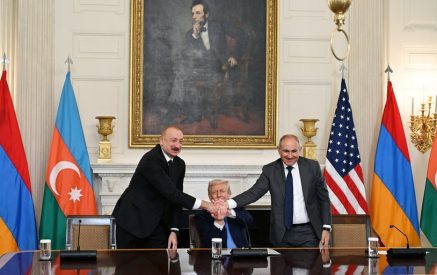
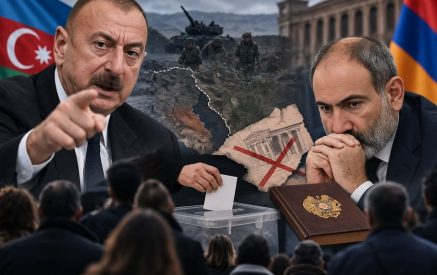
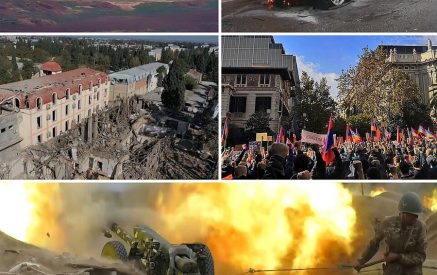
Israel was one of the countries that played an active role in facilitating, preparing, and enabling Azerbaijan’s military campaign against Nagorno-Karabakh. Israel’s objective, of course, was not Nagorno-Karabakh itself, but Iran. That, however, does not change the devastating consequences of the war and the subsequent ethnic cleansing.
It now appears that the three-party alignment behind that campaign is beginning to fracture, and in the process Israel has reached for one of the most painful issues for Armenians—the recognition of the Armenian Genocide—turning it into a geopolitical bargaining chip.
This naturally raises a question: are cracks emerging within the alliance over the geopolitical and military gains derived from the operation against Nagorno-Karabakh? One possible factor in this context is last week’s U.S.–Iran agreement. It is against this backdrop that Israel moved to recognize the Armenian Genocide.
Read also
At first glance, there may be no direct link between these developments. However, if the structure of U.S.–Iran relations is shifting, this inevitably implies a corresponding reconfiguration of the traditional U.S.–Israel relationship. It is noteworthy that U.S. Vice President JD Vance, whose administration has been engaged in negotiations with Iran, has stated that Israel can no longer assume its status as Washington’s privileged ally is guaranteed.
At the same time, amid the complex but formally launched negotiation process between Washington and Tehran, the United States unexpectedly signalled its readiness to supply Türkiye with advanced combat aircraft—a move that could significantly alter the balance of power between Türkiye and Israel.
In parallel, the decision to recognize the Armenian Genocide comes from a government that, has for an extended period pursued policies in Gaza amounting de facto to genocide against tens of thousands of women and children.
From a strictly humanitarian perspective, this inevitably casts a shadow over the universal meaning of genocide recognition as a tool for preventing future atrocities. Instead, it risks appearing as an attempt to obscure one set of alleged crimes under the language of humanitarianism while simultaneously advancing broader geopolitical objectives.
Hakob BADALYAN