






















Archbishop Pargev Martirosyan’s Appeal to the International Community and the Leadership of INTERPOL
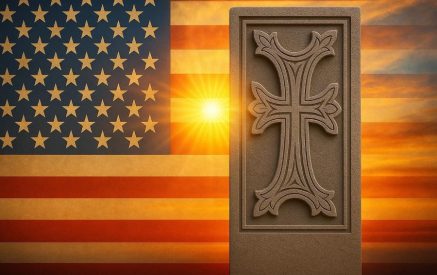
In 301 AD, Armenia became the first country in the world to adopt Christianity as its state religion. For more than seventeen centuries, the Armenian Apostolic Church has preserved the spiritual and cultural heritage of our people, both in Armenia and in Armenian communities throughout the world.
It is our duty to save our endangered religious treasures. We are responsible for every loss that could have been prevented. Inaction has no justification; it is tantamount to sinning.
The head of Azerbaijan’s state service for the protection of cultural heritage has stated that information concerning the khachkars and frescoes removed from Dadivank was submitted to INTERPOL in October 2025 and entered into its database of stolen works of art. This is Azerbaijan’s official statement.
Read also
INTERPOL’s database is populated with police information submitted by authorized bodies. Accordingly, a statement that an item has been registered cannot be presented as a court judgment establishing ownership.
I appeal to the President of INTERPOL, the Honorable Mr. Lucas Philippe and the Secretary General the Honorable Mr. Valdecy Urquiza: examine the entire case. Establish the origins of these religious treasures, their ecclesiastical affiliation, the circumstances of their relocation, and the threats to their preservation. Without such an examination, no definitive legal assessment of their relocation can be made.
Of all the historical testimonies, it is sufficient to recall only the 13th-century historian Kirakos Gandzaketsi. He leaves no ambiguity regarding the question of Dadivank’s affiliation. When a medieval historian clearly recorded to whom Dadivank belonged, it is impossible, centuries later, to alter that fact in response to political demands.
The origins of Dadivank are associated with Saint Dadi, one of the Seventy Apostles of Christ, who, by the instruction of Saint Thaddeus the Apostle of the Armenians, traveled to the regions of Eastern Armenia to preach and was martyred in the first century. The site of his martyrdom became a major place of Christian pilgrimage as early as the first century.
In the 4th century, Saint Gregory the Illuminator, having established the Catholicosate of Eastern Armenia, appointed his grandson, Saint Grigoris, as Catholicos. During his visit to the land of Artsakh, Saint Gregory founded dozens of churches and monasteries. At Gandzasar Monastery, he consecrated Saint Grigoris as bishop, founded Amaras Monastery, and at Dadivank built the Church of Saint Dadi and established the monastery..
Solely Armenians settled on the right bank of the Kura River, forming the two Armenian provinces of Artsakh and Utik, while the Caucasian Albanian tribes lived exclusively on the left bank of the Kura.
Dadivank’s third cathedral was built in 1214 by Arzu Khatun in memory of her husband and sons. Its Armenian inscriptions have survived. The pair of khachkars is dated 1283. This evidence is presented in scholarly studies of the monastery’s history. According to the centuries-old tradition of the Armenian Church, all Armenian churches bear inscriptions carved in Armenian letters on their walls and stones.
The European Parliament’s resolution of 10 March 2022 on the destruction of cultural heritage in Nagorno-Karabakh states: “… over the past 30 years, Azerbaijan has carried out the irreversible destruction of religious and cultural heritage, particularly in the Nakhchivan Autonomous Republic, where 89 Armenian churches, 20,000 graves, and more than 5,000 tombstones have been destroyed.”
To understand our profound concerns, remember Julfa.
Julfa was an ancient Armenian city in Nakhchivan, a historical Armenian territory whose fate was decided in the twentieth century by Russia and Turkey without the consent of the Armenian people. Under the Treaty of Moscow in 1921 and subsequently the Treaty of Kars, Nakhchivan, together with Artsakh and Utik, was designated an autonomous territory under Azerbaijan’s patronage. In the decades that followed, Nakhchivan, which had once had an Armenian population numbering many thousands, was entirely depopulated of Armenians, and the traces of Armenian presence were systematically and completely erased, one after another.
The most horrifying symbol of this was the Armenian cemetery of Julfa. Thousands of Armenian khachkars (cross-stones) had stood there for centuries. The final and decisive phase of their destruction took place in December 2005. Video recordings clearly showed military personnel breaking the khachkars with hammers and removing their fragments from the site. At that time, the army destroyed 5,000 historical medieval Armenian khachkars, treasures of Christian culture belonging to all humanity.
The European Parliament’s resolution of 16 February 2006 on cultural heritage in Azerbaijan strongly condemned the destruction of the Julfa cemetery and called on Azerbaijan to allow international experts and a European Parliament delegation access to the site. Such access was never provided.
Julfa was not an isolated incident. It occurred in a country whose system of government is today described as authoritarian in independent international assessments, and whose state institutions’ incitement of national and ethnic hatred against Armenians prompted even the United Nations’ International Court of Justice to prescribe a specific provisional measure requiring its prevention. The Court also ordered Azerbaijan to prevent and punish vandalism and desecration affecting Armenian cultural heritage.
I do not regard these events as accidental or unrelated. To me, they are the consequence of the authoritarian rule that has developed in Baku over decades and of a state-supported anti-Armenian policy, Armenophobia, and hostility toward everything Armenian throughout the world.
I have also witnessed these consequences with my own eyes. During the war of 1991–1994, I witnessed Azerbaijani aircraft and artillery targeting historical Armenian holy sites. The monasteries of Amaras and Gandzasar were also subjected to bombing and shelling. They were damaged, and afterward we had to repair the damage inflicted upon them.
Years later, Armenian heritage faced the same danger once again. Following the events of 2023 and the mass displacement carried out by Azerbaijan in Nagorno-Karabakh, the entire Armenian population of Artsakh forcefully displaced from its ancestral homeland. In its resolution dated 5 October 2023 on the situation in Nagorno-Karabakh after Azerbaijan’s attack and the continuing threats against Armenia, the European Parliament characterized these actions by Azerbaijan as tantamount to ethnic cleansing. I quote from the resolution: “… whereas the United Nations Security Council defines ethnic cleansing as rendering an area ethnically homogeneous by using force or intimidation to remove persons of another ethnic or religious group from that area, which is contrary to international law; whereas there is an urgent need to halt and reverse the ongoing forced displacement of the local Armenian population, which amounts to ethnic cleansing …”
In subsequent resolutions, the European Parliament has continued to raise the alarm about the danger of destruction, damage, and alteration of the identity of Armenian churches, monasteries, cemeteries, and other historical monuments.
Even today, we see the danger facing the Armenian cultural and religious heritage of Artsakh. The experience of Julfa gives us no right to wait until another monument is reduced to a pile of stones and only then tell the international community what occured and how.
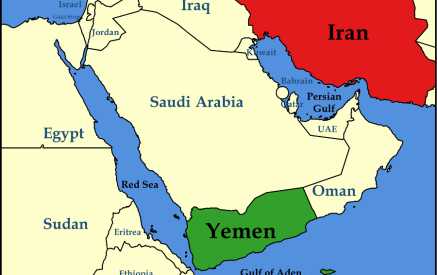
The frescoes and khachkars of Dadivank could have suffered the same fate. From the fifth century until the 1820s, these territories were under Persian rule. Unlike Azerbaijan, the Persians do not regard this heritage as their own; they recognize that it is Armenian cultural and spiritual heritage and do not deny the truth.
In its order on provisional measures of 7 December 2021, the International Court of Justice ordered Azerbaijan to take the necessary steps to prevent and punish vandalism and desecration affecting Armenian cultural heritage. The order covers churches, cemeteries, and cultural artifacts. Compliance with that obligation must therefore also be examined. The question of relocating these religious treasures assures their safekeeping.
I call on UNESCO and the European Parliament to keep an independent examination of the condition of Armenian monuments a priority. On-site inspections, an inventory, and a public record of the findings are necessary. As I noted above, the European Parliament has already called for unhindered access for an expert mission and for the participation of Armenian and international specialists.
I call on the Pope, the World Council of Churches, and the leaders of Christian churches to take part in preserving these holy sites. I appeal to the President of the United States, members of the U.S. Congress and Senate, and the European Union: examine the documentary evidence and put an end to this systematic policy of cultural genocide pursued by Azerbaijan.
The European Parliament’s aforementioned resolution of 10 March 2022 on the destruction of cultural heritage in Nagorno-Karabakh states that Armenophobia is a state policy of Azerbaijan. I quote: the European Parliament “Recognizes that the erasure of Armenian cultural heritage is part of a broader pattern of systematic, state-level policy of Armenophobia, historical revisionism, and hatred toward Armenians promoted by the Azerbaijani authorities, including dehumanization, the glorification of violence, and territorial claims against the Republic of Armenia, which threaten peace and security in the South Caucasus.”
I also bring all of this to the attention of the Director of INTERPOL.
From March 1989 until 21 February 2021, I served as Primate of the Diocese of the Armenian Church of Artsakh. In 1930, as a consequence of the anti-Armenian and anti-Christian policies pursued by the authorities in Baku, the historic and distinguished Diocese of Artsakh was closed. No functioning church or monastery remained in Artsakh. Many clergy were executed by firing squad; others were exiled. For decades, our holy sites remained abandoned, devastated, and in ruins.
When I assumed leadership of the Diocese of Artsakh in 1989, we began almost from nothing. We had to restore ruined churches and monasteries, make the bells ring again, and revive spiritual life where it had been forcibly silenced for decades. This was more than construction work. We were restoring Artsakh’s spiritual memory.
Sadly, the policy that once led to the closure of the Diocese of Artsakh and the persecution of its clergy continues today with greater intensity, through new methods and manifestations. The Azerbaijani authorities present Armenian Christian heritage as so-called “Albanian” heritage, attempting to alter the historical identity of churches, monasteries, and khachkars. This policy is now extending even to the history of Georgian churches in the region.
More than three decades of my life are bound to the Diocese of Artsakh. My years of service, my memories, as well as the sorrow and joy of my people remain in Artsakh.
Sadly, because of my serious health condition, with the blessing and direction of the Catholicos of All Armenians, I traveled to the United States for treatment and to preserve my health. Later, I received the title of Pontifical Legate.
A person may leave his country, yet the country does not always leave the person.
To this day, and for as long as I live, with all my soul and my entire being, I will remain bound to my beloved land of Artsakh, to its churches and monasteries, its mountains and its people. For me, Artsakh is not merely a chapter of a life gone by; it is my service, my indelible memory, my life, and its meaning.
To sin against the truth is to sin against God.
It is time to put an end to this aggressive and false policy.
May God bless those who preserve the truth.
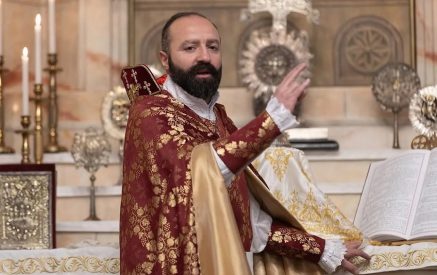
Pontifical Legate
Archbishop Pargev Martirosyan