
















Almost a week has passed since Nikol Pashinyan announced from the parliamentary podium that Armenia is preparing to apply for EU membership in the near future. Pashinyan did not, of course, give a specific timeframe, but he clearly signaled that the application could be submitted soon.
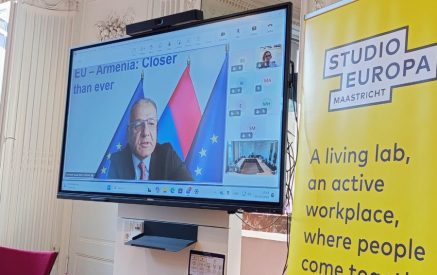
And who, logically, should have been the first to welcome such an announcement? One would expect the European Union itself to be at the top of the list. Yet the EU has been strangely silent. There was, of course, a response from European Commission spokesperson Markus Lammert, who said that Armenia is closer to the European Union than ever before. But Lammert’s statement does not so much break the silence as underscore it — at least the political silence.
Because if Armenia’s number-one political official announces that the country is preparing to apply for EU membership, while the EU responds merely through a European Commission spokesperson or official representative, that is political silence, not a political response. Yet in the context of realpolitik, this silence is hardly surprising.
Despite the unprecedented warmth in Armenian-European rhetoric, the European Union expects Armenia not to apply for membership, but to reach an agreement with Azerbaijan and Turkey as quickly as possible. The EU aspires not to become part of Armenia’s family, but rather to act as the matchmaker bringing Armenia together with its “Caucasian family” of Turkey and Azerbaijan — and to reap the resulting geopolitical dividends.
Read also
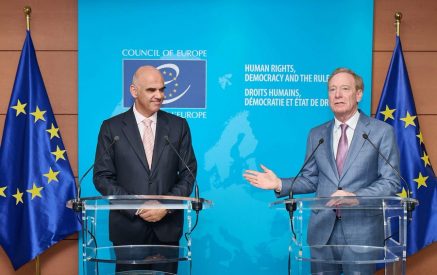
To understand this simple point, one need only listen carefully to what EU officials say — not its spokespersons, but senior political figures. Hence, after Armenia’s high-level announcements about its EU membership bid, the expression on their faces may perhaps resemble that of a matchmaker whose prospective bride has chosen not the groom, but has instead started flirting with the matchmaker himself.
Hakob BADALYAN