













Joint statement: Three years since the ethnic cleansing of NagornoKarabakh / Artsakh
Today marks the third anniversary since the entire Armenian Christian population of Artsakh (Nagorno Karabakh) was forcefully driven from its ancestral homeland by Azerbaijan.
Christian Solidarity International joins Armenian and international human rights organizations, civil society groups, and experts to defend international law and demand the immediate release of all Armenian political hostages, the protection of ancient Christian heritage sites under threat of destruction, the end to religious persecution, and the safe, dignified implementation of the right of return.
Read the full joint statement below:
Read also
A joint statement by Armenian and international human rights organisations, civil society groups and experts
Three years ago this month, the entire Armenian population of Artsakh (Nagorno-Karabakh) was driven from its ancestral homeland by Azerbaijan. We, the undersigned, mark this anniversary to insist that their expulsion was not an accident of war, and that it is not over. We call on the international community, including the United States, European Union, Council of Europe and the United Nations, to hold Azerbaijan to account.
1915 marked the start of the Armenian Genocide, when the Armenians of the Ottoman Empire were persecuted as a people through massacre and deportation, their traces effaced and the crime denied by its perpetrators. Azerbaijan’s attack on Artsakh in 2023 obeyed the same logic. From December 2022, Azerbaijan closed the Lachin (Berdzor) Corridor, subjecting some 120,000 people to nine months of siege without adequate food, medicine or fuel. On 19 September 2023 it launched a military assault on that starved population. Within a week virtually every Armenian in Artsakh had fled, and the Republic of Artsakh was dissolved. Not one has been permitted to return.
A population was expelled, its institutions dissolved, its churches and cemeteries forcibly abandoned and targeted for destruction, and the whole undertaking recast by Azerbaijan as a lawful internal matter. While the means and methods of the Armenian Genocide have changed, the objective – the negation of the Armenian people as a nation and their right to self-determination – has not.
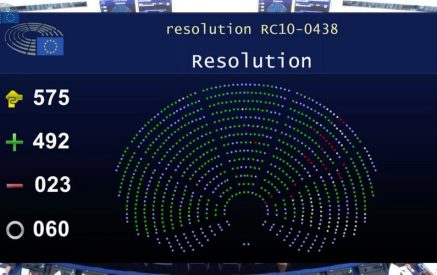
The international community responded with shock. The European Parliament, the Parliamentary Assembly of the Council of Europe and the United States Congress each passed resolutions. Foreign ministries spoke out against the ethnic cleansing. There were calls for independent international investigations. On 17 November 2023, the International Court of Justice (ICJ) ordered Azerbaijan, in binding provisional measures, to ensure that those who left Artsakh after 19 September 2023 can return in a safe, unimpeded and expeditious manner, and to protect and preserve their registration, identity and private property records. That order – like the ICJ’s order of 22 February 2023 requiring Azerbaijan to lift the initial blockade – remains unimplemented, and Azerbaijan has borne no cost for ignoring it.
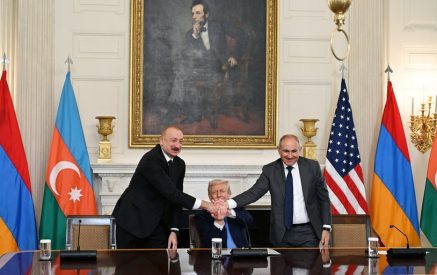
Instead, Western governments have sought to quietly normalise the new political status quo as part of broader geopolitical considerations. The recent visit to Artsakh by Western ambassadors and envoys, among them the United States Chargé d’Affaires and the EU Special Representative for the South Caucasus, served only to lend that normalisation the appearance of legitimacy and to deepen the injury done to those expelled from the territory. The desire to support peace, trade and energy partnerships in the region is legitimate. But peace and economic development can never be built on the permanent exclusion of a whole population from its ancestral homeland.
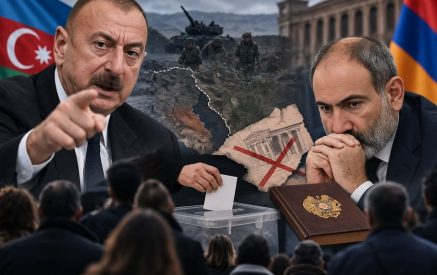
Azerbaijan continues to hold the leaders and officials it seized from Artsakh as hostages. In February 2026, after closed military-court proceedings, Baku sentenced sixteen of them – among them the former presidents Arayik Harutyunyan, Bako Sahakyan and Arkadi Ghukasyan, and the former State Minister Ruben Vardanyan – to terms ranging from fifteen years to life. Amnesty International called their convictions “nothing short of a travesty” and “an affront to all victims of crimes under international law.” With the Baku office of the International Committee of the Red Cross (ICRC) closed at the behest of Azerbaijan, independent access to these prisoners has all but ended.
The authorities of the Republic of Armenia bear their own responsibility for encouraging Azerbaijan’s campaign against the Armenian people. Rather than defend the rights of the displaced, the government of Prime Minister Nikol Pashinyan has advanced an ideology of “Real Armenia”, which has removed Artsakh from official discourse. Pashinyan is forcing the dispossessed to give up their right of return, and to forget the land and ancient heritage from which they were driven. The displaced of Artsakh have been left in penury. Tens of thousands in Armenia remain without secure housing or stable work, and cuts to state support have deepened their destitution. Integration, offered as a substitute for return, has meant abandonment of their true home.
This policy has been accompanied by mounting pressure on the Armenian Apostolic Holy Church and those who still speak for Artsakh and its historical significance to the Armenian people. Pashinyan has conducted a sustained campaign against the Catholicos of All Armenians, in breach of domestic and international guarantees of freedom of religion or belief. Several clergymen have been held in arbitrary and punitive pre-trial detention for their advocacy. Archbishop Bagrat Galstanyan spent 344 days in custody on coup charges before his transfer to house arrest in June 2026. Dissent over Artsakh, and over the policy of “Real Armenia”, is being criminalised.
Above all, the people of Artsakh have been denied a voice. There is no forum – in Yerevan, Baku or Brussels – that admits them as parties to decisions about their own homeland. We sign this statement to voice their claims where they cannot do so themselves. We insist that their demands be heard.
5. Respect by the Government of Armenia for the rights of the displaced, and an end to the prosecution of clergy and others for their advocacy on Artsakh.
We also urge the international community to stop treating normalisation of relations in the South Caucasus as a reason to set these demands aside, and to make progress on them a condition of closer relations with Azerbaijan. Three years is not long enough for a people to forget a homeland, nor to excuse the rest of us from acting.