





Euneighbourseast. On the left bank of the Dniester River in Moldova lies a narrow strip of land – a separatist region bordering Ukraine, which flies the Russian flag, hosts a Russian garrison and heats its homes with gas paid for by Moscow. Even so, Brussels has opened EU accession talks with Moldova.
Nearly 35 years after armed clashes in the former Moldavian Soviet Socialist Republic ended with a frozen separatist conflict in Transnistria, there is a chance that Moldova could once again become a single country – or at least that its two parts could be peacefully reintegrated: one centred on Chișinău, the other on Tiraspol, the capital of the internationally unrecognised breakaway region of Transnistria.
On 15 June, 2026, the European Union opened the fundamentals cluster in its accession talks with Moldova; on 14 July, it opened the cluster on external relations. Marta Kos, the European Commissioner for Enlargement, said Moldova was technically ready to open all six clusters. In October, two more clusters — internal market and competitiveness and inclusive growth — were subsequently opened. Chișinău wants to complete the technical phase of the negotiations by the end of 2028.
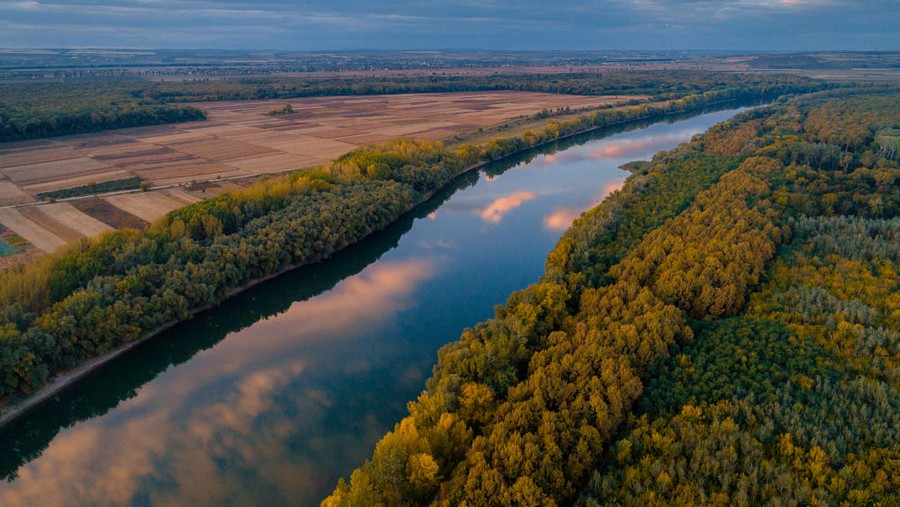
The Dniester river. Photo: UNDP Moldova
None of these steps has been made conditional on resolving the status of Transnistria, a region with its own rouble, ‘parliament’ and Russian garrison.
Read also
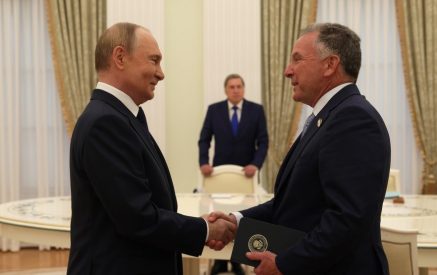
On 8 May, 2026, the European Union’s foreign policy chief, Kaja Kallas, said in Chișinău that the existence of Transnistria would not block Moldova’s path to EU membership. In June, Moldova’s foreign minister, Mihai Popșoi, said that accession and a settlement of the Transnistrian issue were being pursued “in parallel”.
Moldova’s path to the European Union
With Vladimir Putin’s Russia pressing against countries from the former Eastern bloc that remain outside the European Union – beyond the obvious and most dramatic case of Ukraine, that includes Georgia, Armenia and even Serbia – EU accession feels increasingly urgent in Moldova. Even more so, because even Transnistria seems to be approaching the issue pragmatically.
That could leave the post-Soviet atmosphere of the Dniester’s left bank largely as it often appears in the Western press: as a tourist curiosity.
As early as June 2023, Josep Borrell, then High Representative of the EU for Foreign Affairs and Security Policy and Vice-President of the European Commission, said openly that a country with divided territory could still join the European Union, as Cyprus did in 2004. Protocol No. 10 to Cyprus’s accession treaty suspended the application of EU law on the island’s unrecognised Turkish-occupied north pending reunification.
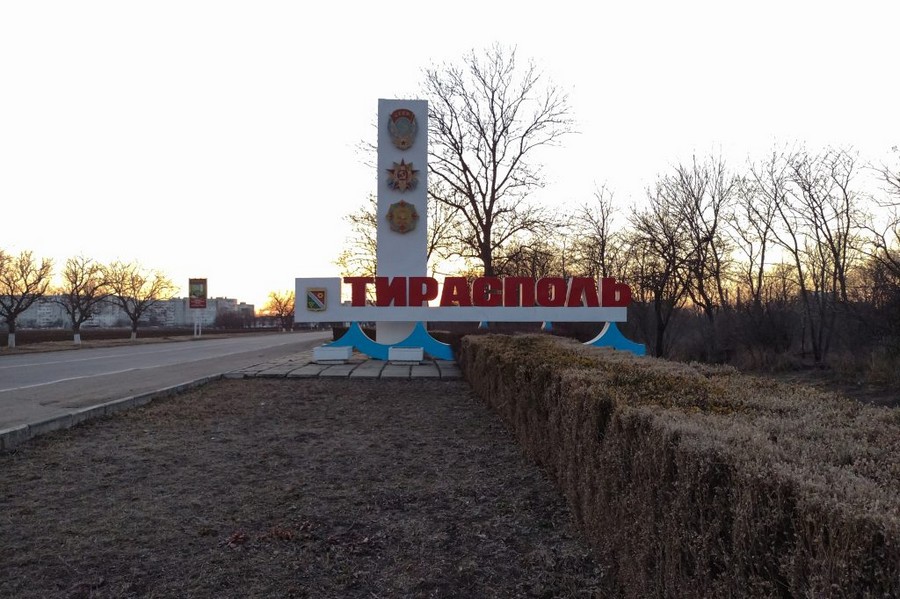
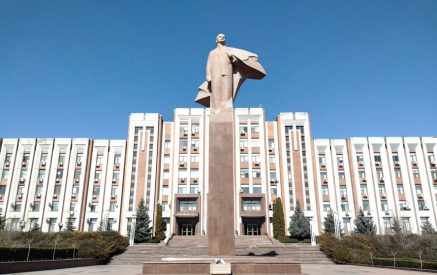
Tiraspol, the capital of the Transnistrian Autonomous Territorial Unit. Photo: Andrea Mancini/NurPhoto
It is worth looking more closely, however. Transnistria has already been moving, gradually, into Moldova’s and the European Union’s legal orbit through customs, taxation and trade, even as its political status remains unresolved. The situation is still complicated. The obstacles have not disappeared: the region is dominated by an oligarchic network built around the Sheriff conglomerate – more on that later – its residents tend to feel closer to Russia than to Moldova, populations are shrinking on both banks of the Dniester, and the Moldovan state itself remains vulnerable to Russian money and disinformation.
As recently as 2020, experts like Bogdan Koszel, a political scientist at Adam Mickiewicz University in Poznań, described European efforts to keep Moldova on a pro-European course as “doomed to fail”, citing corrupt elites on both sides of the river and a weak sense of state identity. But that assessment now belongs to another era. Russia’s full-scale invasion of Ukraine has changed the equation.
As Paweł Jędral wrote in OKO.press, Transnistria can be described as a “republic of pragmatic oligarchs”. It is, certainly, a territory under Russian influence. But it is not governed by an ideological vision of the “Russian world”, nor by a clan personally loyal to Vladimir Putin, as in Chechnya. In Transnistria, business interests come first.
The starting point for understanding the current situation is the European Union’s 2014 Association Agreement with Moldova. In mid-December 2015, the EU-Moldova Association Council extended the Deep and Comprehensive Free Trade Area, or DCFTA, to the country’s entire territory. Companies on the left bank were thus granted access to the EU market, provided they cleared their goods through Moldovan customs.
Researchers describe this as the core of a policy pursued since 2005: “engagement without recognition.” Economic ties have grown steadily closer even as the region’s political status has remained frozen.
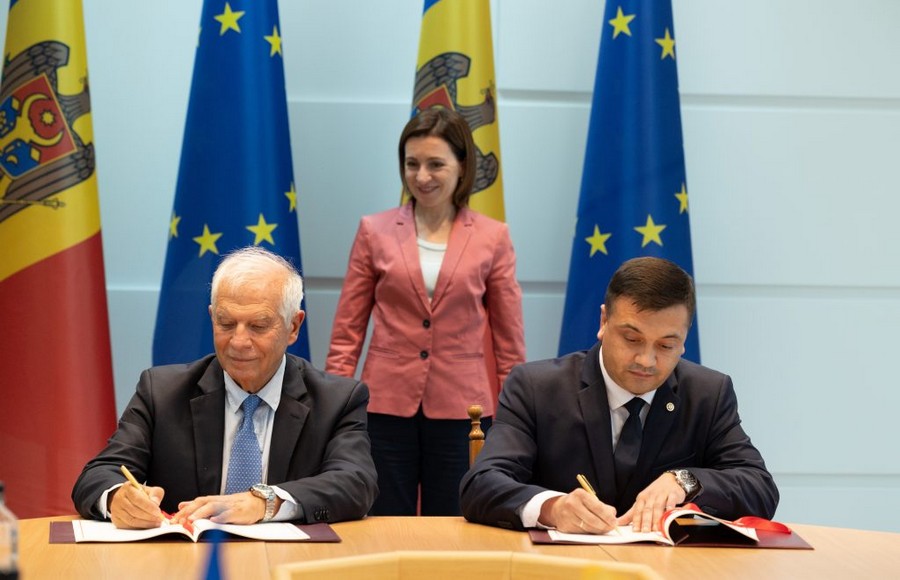
Josep Borrell and Maia Sandu, the President of the Republic of Moldova
The impact on Transnistria’s economy was immediate, as the rising share of exports going to the European Union shows:
- 2021: 56.9 per cent
- 2022: 67.1 per cent
- 2024: 83 per cent
Russia’s share of the region’s exports, meanwhile, was shrinking:
- 2021: 14 per cent
- 2022: 11 per cent
- 2024: 6 per cent
A Moldovan government source told Voxeurop in June 2026 that 71 per cent of the region’s exports now go to the European Union and that, “in a sense, Transnistria is better integrated [into the EU market] than Moldova itself”, which sends 68 per cent of its exports to the bloc.
Since January 2024, companies on the left bank have been paying customs duties to Chișinău under Moldova’s 2021 Customs Code, at rates of 0.4 per cent of the value of exports and 0.1 per cent of imports. Media in Tiraspol denounced the move as “economic genocide”.
Chișinău has since gone further. On 1 September, 2026, it imposed a 20 per cent value-added tax, along with excise duties, on luxury and excise goods imported into Transnistria, including alcohol, tobacco, perfume, jewellery, precious metals and pyrotechnics. Gheorghe Balan, a former Moldovan deputy prime minister, described the measure as part of an effort to dismantle smuggling networks, while adding that the main obstacles remain the Russian troops and weapons stockpiles in the region. Energy products and metals are expected to follow in 2027.
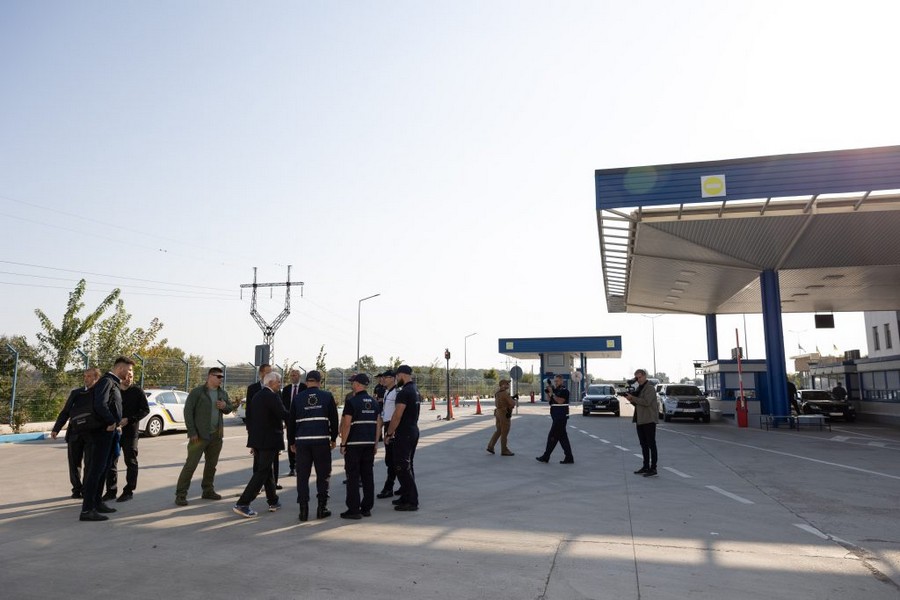
EU Border Assistance Mission (EUBAM) representatives at a border crossing point
As of March 2024, 367,800 people were officially registered as living in Transnistria, nearly 359,000 of them Moldovan citizens. Many hold two, three or even four passports. Social services, too, are entering through the side door: the European Union’s Confidence Building Measures programme helps to finance them on the left bank of the Dniester as well.
One of those passports, however, is Russian. Until last year, the region’s main source of revenue was the sale of electricity to right-bank Moldova, generated using Russian gas supplied free of charge.
That income accounted for roughly 60 per cent of Tiraspol’s budget.
After 24 February, 2022, Ukraine closed its crossings with the region and blew up the railway bridge at Kuchurhan, which had linked Tiraspol with Odesa and once formed part of a route from the Transnistrian capital through Ukraine and its occupied territories to Russia. Today, all exports leave the region through territory controlled by Chișinău.
Transnistria, an oligarchs’ paradise
To keep the picture from looking too rosy, one point needs to be made plainly: Transnistria is, in practice, a state owned by a single corporation, backed by post-Soviet oligarchs.
Sheriff, a conglomerate founded by former Interior Ministry officers Viktor Gushan and Ilya Kazmaly, owns supermarkets, gas stations, a television network and much of the region’s industry. Its political arm, Obnovlenie, has held a majority in the Supreme Council since 2016. It also has the presidency: Vadim Krasnoselsky, who is closely associated with Sheriff, won re-election in December 2021 with 79.4 per cent of the vote on turnout of just 35.2 per cent, a record low for a presidential election.
The only challenger allowed to run was Sergei Pynzar, an official from the Grigoriopol district. Two well-known opposition figures, Anatoly Dirun and Nikolai Malyshev, were denied registration by the election commission, which cited irregularities in their signature petitions.
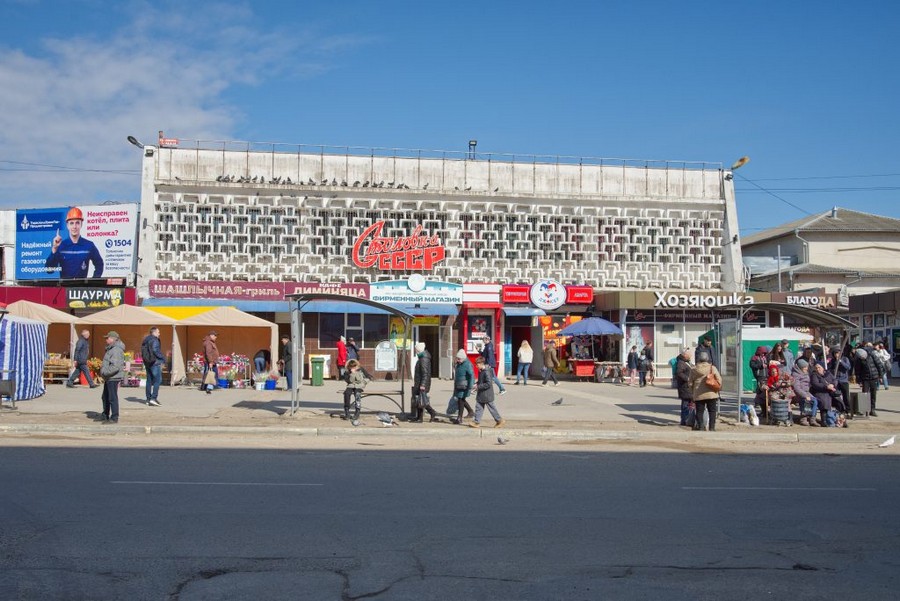
Passersby outside the so-called USSR Canteen located at the central market in the city of Bender in Moldova’s unrecognized breakaway region of Transnistria. Photo: Benjamin Furst/Hans Lucas via Reuters Connect
Four years later, in elections held on 30 November, 2025, Obnovlenie won all 33 seats in the Supreme Council. In 21 districts, there was no opposing candidate at all. Turnout was 26 per cent.
At the same time, there are signs that attitudes toward Moldova are shifting among Transnistria’s residents. An online survey conducted by Zona de Securitate and WatchDog.MD between February and April 2026 found that 53 per cent of residents on the left bank would support reintegration with Moldova in a hypothetical referendum, up from 45 per cent in 2024. About 30 per cent said they viewed Russia as a potential threat.
Residents of Transnistria are also keenly aware of the wage gap. In 2023, gross monthly pay on the left bank was about $360, roughly half the level on the right bank. According to the Friedrich Naumann Foundation, the region’s GDP fell by 18 per cent in 2025, while industrial output dropped by 30 per cent.
The Centre for Eastern Studies reports that Transnistria’s official population fell from 740,000 in 1990 to 455,000 at the beginning of 2024, while the true figure is likely no higher than 300,000. Pensioners make up more than 30 per cent of the population. The right bank, however, is hardly in much better shape: Moldova has lost about 35 per cent of its population since 1991, while an estimated 1 million to 1.2 million Moldovan citizens work abroad.
In Moldova’s October 2024 referendum on enshrining the country’s European Union ambitions in the Constitution, supporters of integration with Brussels won by the narrowest of margins.
A total of 50.46 per cent of voters backed the constitutional amendment. Even that slim victory was a major success for pro-European forces, given the scale of Russian financial interference. Moldovan authorities estimate that Russia poured nearly €136 million into efforts to influence the referendum, including through the bribery of some 130,000 voters.
“This conflict is above all geopolitical,” Alexandru Flenchea, Moldova’s former deputy prime minister for reintegration with Transnistria from 2019 to 2020 and now head of the Moldovan think tank Initiative 4 Peace Association, told Gazeta Wyborcza. Flenchea noted that Maia Sandu performed well among voters from the left bank in the 2024 presidential election, suggesting that fears about the impact of pro-Russian votes had been overstated.
Moscow turns off the tap for Transnistria
For three decades, the region lived on what was effectively free Gazprom gas, supplied under a contract signed by Chișinău. Tiraspol resold it to households and businesses at nominal prices and used the proceeds to finance, among other things, pensions. In an analysis for OKO.press, Paweł Jędral estimated the volume at about 2.1 billion cubic metres a year, supplied at almost no cost through 2024. Part of it was burned at the MGRES power plant in Cuciurgan, with the electricity then sold to the right bank. According to Moscow’s Institute of CIS Countries, citing data from Russia’s Energocom, MGRES supplied 90 per cent of Moldova’s electricity in October 2024 alone.
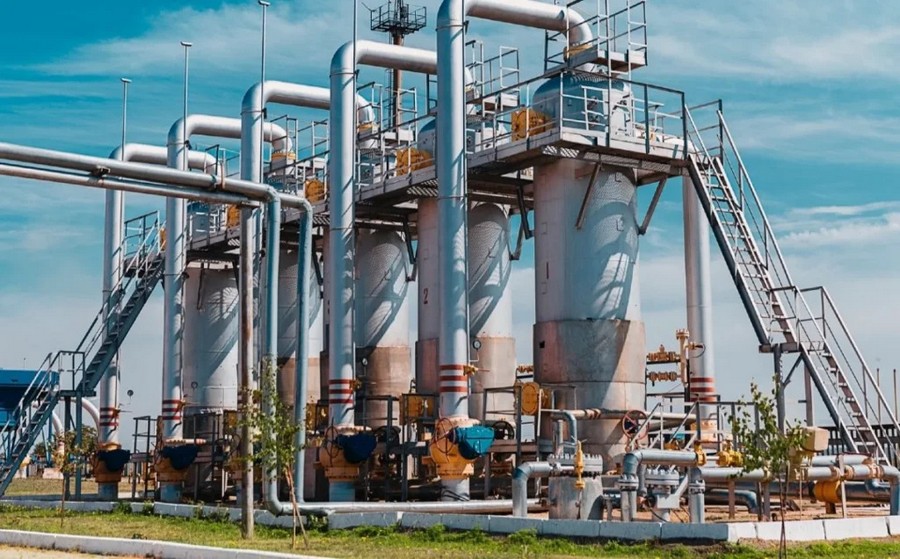
Energy supplies have played a central role in economic relations between Transnistria and the rest of Moldova
That arrangement ended on 1 January, 2025, when Ukraine declined to extend the gas transit agreement. The effects were immediate: heating was cut off as temperatures fell to minus 3 degrees Celsius, industry ground to a halt and coal reserves were said to be sufficient for only 60 days. Tiraspol blamed Moldova and Ukraine, portraying both as representatives of “the West”.
Yet by April 2025, Alexandru Flenchea was publicly asking where the region was getting its money. Half of its industrial sector had stopped operating, its main source of revenue – electricity sales from MGRES to the right bank – had disappeared, and yet salaries and pensions were still being paid.
Moldova, which had been buying gas from Western suppliers since late 2022, turned to Romania for electricity. Tiraspol initially rejected supplies through Moldovagaz and tried to use a private intermediary, but Moldova’s intelligence service persuaded the company’s chief not to proceed with the deal. It later accepted European gas delivered through Moldovagaz, backed by €64 million in European Union support. The EU also offered free gas and additional supplies in exchange for political reforms.
Tiraspol refused. Instead, it accepted Moscow’s offer. The gas is supplied by MET Gas and Energy Marketing, a Swiss-registered company owned by the Hungarian energy group MET, while payment is made by JNX General Trading, a Dubai-based company. Tiraspol says the money comes from a Russian loan, though Moscow has never confirmed that account.
How JNX, in turn, settles its accounts with Russia remains unclear.
Russian subsidies have become a spigot of political support that Moscow can turn on and off at will. In June 2025, gas deliveries fell below 1 million cubic metres a day, prompting another state of emergency. By mid-July, they had jumped back above 2 million cubic metres; the steelworks restarted, and output at MGRES rose from below 150 to 200-250 megawatt-hours. In March 2026, war in the Middle East disrupted payments, gas supplies to industry and 158 boiler houses were cut, and MGRES switched to coal. MET’s licence runs through the end of 2026, while Chișinău is preparing a contingency plan in case supplies are cut during the 2026-27 heating season.
Russia, in other words, is simply becoming less economically useful to Transnistria.
Its military presence there has also diminished. In 2020, Russian forces were estimated at roughly two motorized battalions, or 1,500 to 1,700 troops. About 400 were peacekeepers deployed under the 1992 agreement; the rest belonged to the Operational Group of Russian Forces. By 2023, estimates put the total at around 2,000 troops, without heavy equipment and in no position to pose a serious military threat to Moldova. In July 2025, Russia’s ambassador in Chișinău told TASS that about 1,000 troops remained, tasked mainly with guarding ammunition depots at Cobasna. President Volodymyr Zelensky, by contrast, put the figure at 2,500 in June 2026.
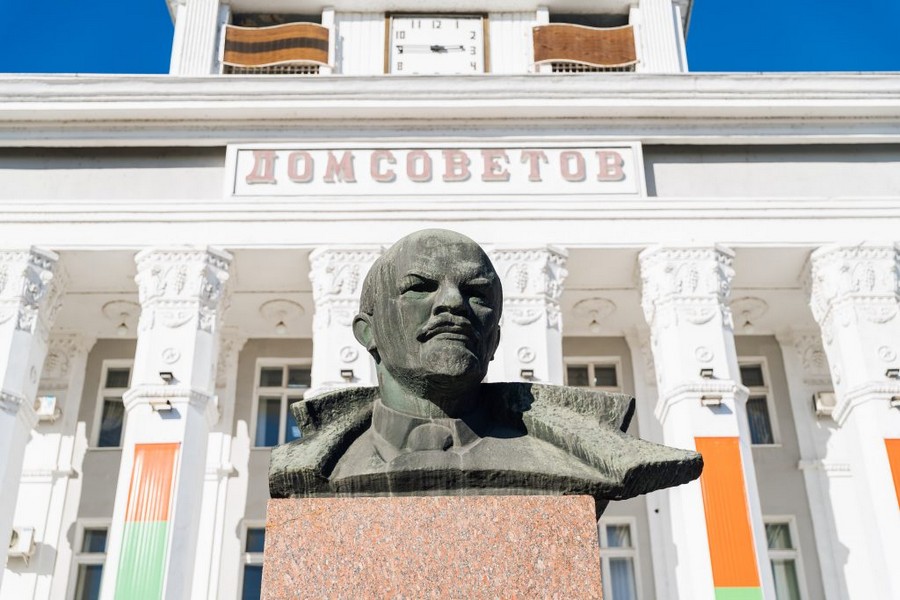
A statue of the historic communist leader Vladimir Lenin stands in front of the House of the Soviets in Tiraspol, one of the most important buildings in Transnistria region. Photo: David Cruz Sanz/ZUMA Press Wire via Reuters Connect
Most rank-and-file soldiers are local residents holding Russian passports and are not rotated in from Russia. Their withdrawal, then, would amount less to physically transporting troops out than to changing their legal and military status: there are relatively few people who would actually have to be sent back to Russia. Moldovan experts argue openly that Russian forces could be removed from the region entirely – and without bloodshed – by demobilising local personnel and deporting the small number of Russian officers individually.
According to a 21 August, 2026, report by Moldova’s Security and Intelligence Service and Military Intelligence Agency, about 14,000 of the 20,000 tons of ammunition stored at Cobasna in 2006 remain there today. Of that, roughly 2,800 tons consist of explosive material.
The so-called “electoral raids” have also ended – organised efforts to transport holders of Moldovan passports to polling stations to vote for pro-Russian candidates. In 2025, Ukraine froze the assets of Transnistrian oligarchs over supplies to Russia’s defence industry. Moscow, meanwhile, says some 220,000 Russian citizens in the region are “at risk”, while President Vladimir Putin has signed a decree making it easier for residents to obtain Russian citizenship.
Chișinău and Brussels – with Tiraspol alongside
With the region increasingly cut off from Moscow – itself one of the consequences of Russia’s invasion of Ukraine – Transnistria’s oligarchs know they must come to terms with the European Union. The question is what concessions they are prepared to make.
The plan in Brussels and Chișinău is clear: accession first, with reintegration proceeding in parallel and on Chișinău’s terms. Tiraspol denounces this as “unlawful interference”. Yet Alexandr Rozenberg, the head of the region’s government, has also left the door open to cooperation in selected sectors.
Brussels is applying both money and pressure. At the EU-Moldova summit on 4 July, 2025, the European Union called for the full withdrawal of Russian troops. Its Growth Plan provides €1.9 billion, while the bloc has imposed sanctions on pro-Russian figures such as Ilan Shor. In this way, Transnistria is being folded into Moldova’s European timetable – managed through customs rules and a convergence fund – much as occupied northern Cyprus was incorporated into the framework of the Republic of Cyprus’s accession in 2004.
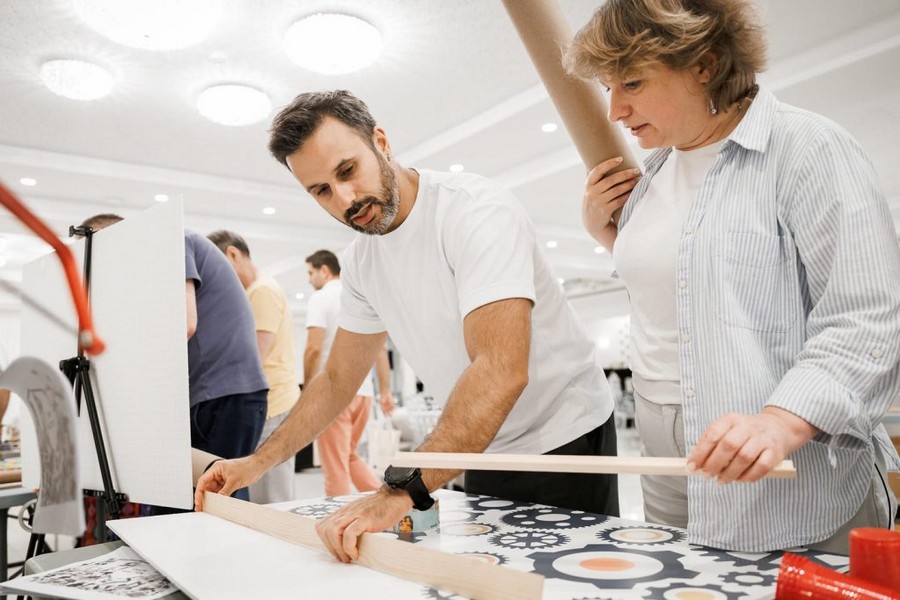
EU-supported confidence-building initiatives help bring communities on both banks of the Dniester closer together. Photo: UNDP Moldova
For now, of course, these are largely arrangements on paper. Brussels has an interest in bringing Chișinău into the European Union quickly, while Russia’s focus on the war in Ukraine has pushed Tiraspol’s elites to look for other outside powers capable of helping sustain the region’s economy – much as traditionally pro-Russian Serbia has done in recent years.
Moldovans themselves appear willing to wait. In an iData poll from May 2026, 44.2 per cent of residents on the right bank said full reintegration was the best solution to the conflict. Another 17.9 per cent preferred the status quo, 12.4 per cent favoured special autonomy for the region within Moldova, and only 8.4 per cent supported independence.
But Russia’s imperial policy – and its conviction that not only Transnistria, but Moldova as a whole, belongs within Moscow’s sphere of influence – cannot simply be dismissed.
The echoes of the 1991-92 conflict have not faded. One of the forces behind Transnistria’s secession in 1990 and the armed conflict that followed was fear among Russian-speaking minorities, encouraged by Moscow, that Moldova would unite with Romania. The current plan does not resolve those ethnic questions.
Language, in particular, remains important, and Russia will almost certainly continue to exploit it. As in other parts of the former Soviet empire, Russian became the region’s lingua franca, including for Ukrainians, Tatars and Gagauz living there. But as Moscow pursues an increasingly nationalist course, these minorities now face a stark choice: complete Russification, or greater Romanian linguistic and cultural influence within the framework of the European Union – where endangered languages, in particular, are protected not only by law but, just as importantly, by public funding.
Everyday life in Moldova. Photo: UNDP Moldova
“Moldova spent five years negotiating an Association Agreement and the DCFTA – the Deep and Comprehensive Free Trade Area – with the European Union, without any clearly defined timetable for signing the agreements or bringing them into force. It was Russia’s invasions of Ukraine, first in 2014 and then the full-scale invasion in 2022, that significantly accelerated the integration process,” Flenchea said.
He argues that further progress in Moldova’s European integration will therefore continue to depend on geopolitical factors. At the current stage, however, with accession talks already under way, a second set of factors matters as well: Moldova’s domestic political situation, the direction of its reforms, how they are carried out and how the negotiations themselves are managed.
“Oligarchs are pragmatic people,” he added. “Their primary goal is to make money, so they will work with anyone who allows them to keep doing that.”
“The only way to push them toward cooperation and constructive behaviour is to reduce their choices to two,” Flenchea said. “They can submit to the law – first Moldovan domestic law and, eventually, European law as well – and stop doing business under the rules they operate by today.
“It is exactly the same choice faced by any citizen in any country: either you obey the law and remain a law-abiding citizen, or you do not remain free. It is very simple.”
Flenchea cautioned, however, that much would depend on the course of the war in Ukraine. On both banks of the Dniester, he said, one thing is clear: Ukrainians are fighting not only for their own survival, but also for an independent Moldova.
Author: Krzysztof Katkowski
The original article was published in Polish by Gazeta Wyborcza
Main photo: Andrea Mancini via Reuters Connect