




ЕU Neighbours East. “What is remarkable is that Ukraine and Moldova, despite finding themselves in a very tense situation regarding their security, are extremely keen to move closer to the EU and have therefore already begun negotiations and opened the first cluster.”
These are the words of the Deputy Director of the European Council on Foreign Relations (ECFR), Vesela Cherneva, and they come just as the official negotiation process for the two countries’ accession to the European Union (EU) has begun.
With this, the EU embarked on a truly geopolitical enlargement – driven not only by the pursuit of shared values, a larger market, and stronger common institutions, but also by the need to safeguard the continent’s security in a shifting geopolitical environment.
Ukraine: a battle-hardened nation’s journey from the post-Soviet world to the EU
Read also
According to the Deputy Director of the European Council on Foreign Relations, the EU’s upcoming enlargement is the only way to institutionally anchor Ukraine within a serious and lasting framework, given that the US position has remained clear under both Donald Trump and Joe Biden: NATO enlargement to include Ukraine is not possible.
“Currently, EU membership is the only way to integrate Ukraine’s and Europe’s security systems. This is an entirely different discussion from negotiations on chapters, clusters, sanitary standards and other accession requirements. We are talking about security guarantees, but also about the transfer of military technologies from Ukraine to Europe and, more broadly, about how Ukraine – which currently possesses the strongest and most combat-capable army in Europe – can, while defending Europe, also become part of the European security debate,” she says.
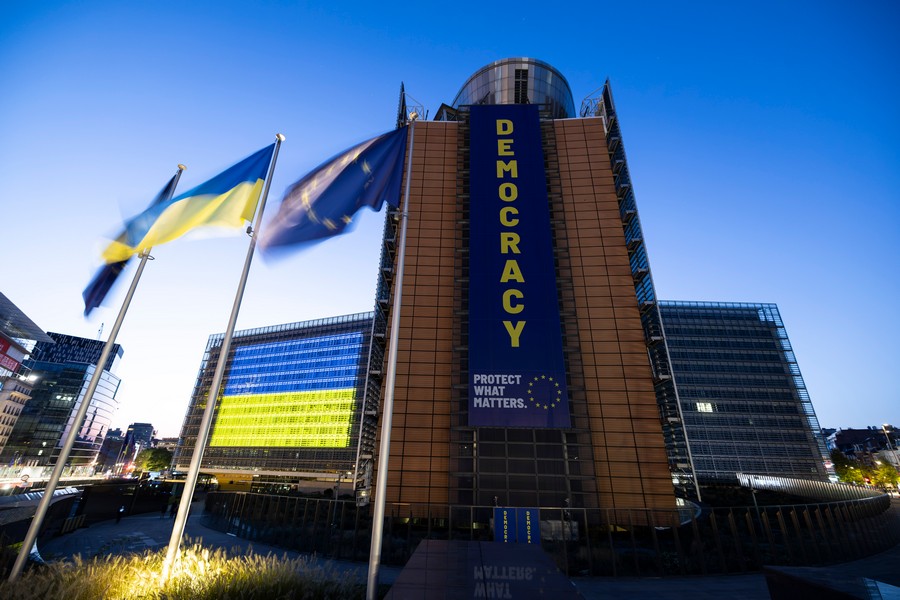
The Berlaymont illuminated with Ukrainian flag’s colours
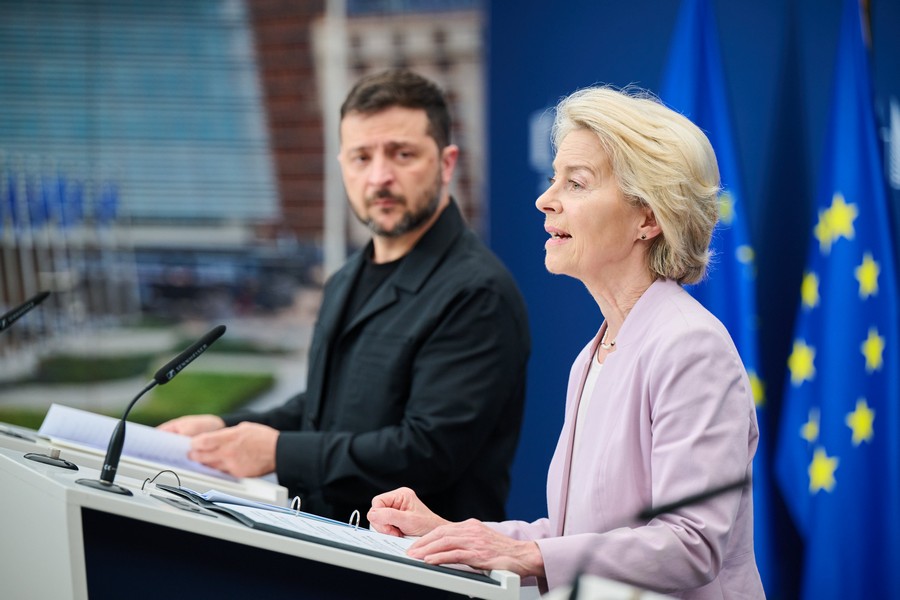
Volodymyr Zelensky and Ursula von der Leyen
Ognyan Minchev, political scientist, professor and Executive Director of the Institute for Regional and International Studies, an independent think-tank in Bulgaria, also believes that Ukraine’s importance is substantial and that the questions surrounding its integration are highly complex.
“Ukraine currently possesses the only genuinely combat-capable army on the European continent. Western European armies have very limited personnel numbers and, until recently, received extremely low levels of funding. The lack of real resources, including weapons, to address the challenges of military security makes Ukraine a more attractive partner,” he argues.
Although many experts would point to Ukraine’s contribution to European security as the greatest benefit of its accession to the EU, the country can also contribute to development in other areas. There is undoubtedly great potential for development in the fields of agriculture and farming. The country has a vast area of cultivated land and is among the world’s leading producers of a number of cereal crops such as wheat, maize, barley, rice and others. It exports these products to third countries, and membership would increase the Union’s economic influence in these regions.
Ukraine’s accession could also lead to cooperation between different sectors and result in an increase in meat and dairy production as a consequence of increased cereal production.
Beyond agriculture, Ukraine’s pharmaceutical industry could offer the EU an opportunity to reduce its reliance on imports of generic medicines from China and various Asian countries. Thanks to its favourable climate, Ukraine also has great potential for various types of renewable energy. Deposits of gallium, rutile, graphite, magnesium ores, lithium and other minerals vital to the green transition could contribute to European production and help the EU compete with China.
According to Ognyan Minchev, integrating Ukraine represents a major challenge because it involves a large country that is institutionally weak, with high levels of corruption, poor economic organisation and significant shortcomings in the functioning of public life.
“Ukraine has been forced to transform itself into an effective fighting machine, but in other respects it remains a post-Soviet society with serious problems in the areas mentioned above. This makes its rapid integration into the EU extremely difficult,” the political scientist notes.
Moldova: a key piece in Europe’s security architecture continues to struggle under Russia’s shadow
“For Moldova, we can say that it is a small but significant element in the broader domino effect of Black Sea security, which is becoming an increasingly crucial aspect of overall European security. This is because the confrontation between the Kremlin regime and Europe is effectively unfolding along the line of a new Iron Curtain being formed across Ukraine and the Black Sea region,” Minchev says.
According to Cherneva, Moldova’s accession is also crucial precisely because the country is a buffer state, and Russia has demonstrated that it does not tolerate buffers.
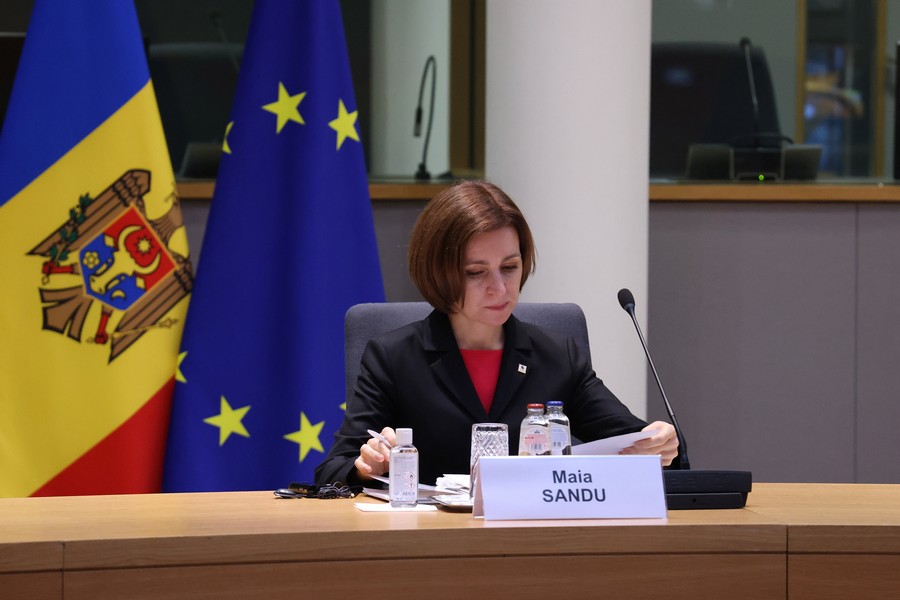
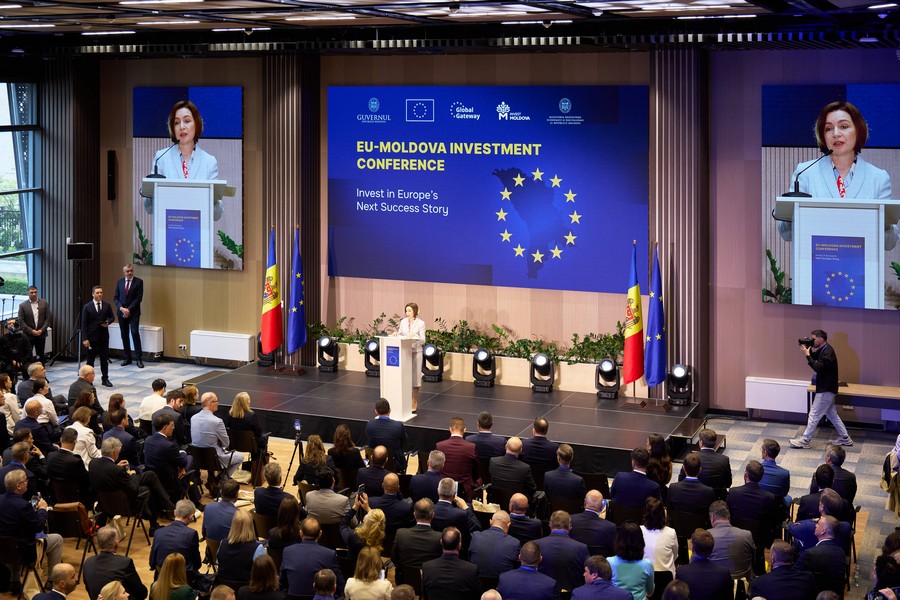
“Russia seeks to conquer and control such buffer zones. If Moldova does not want to share the fate of Belarus or Georgia, it must take rapid steps towards European integration,” she says.
For years, Moldova has served as a testing ground for Russia’s hybrid warfare. As Western European countries are only now confronting the full scale of Russian hybrid attacks, Moldova has already spent years developing its own resilience and countermeasures. The country brings to European security valuable expertise gained from combating Russian disinformation and resisting repeated attempts by the Kremlin to interfere in its domestic political processes.
Yet Moldova’s accession would have implications extending far beyond security. Although it possesses far less agricultural land than Ukraine, the country has the potential to make a meaningful contribution to the European agricultural sector. Moldova has been gradually integrating into the EU’s Single Market through the Deep and Comprehensive Free Trade Area (DCFTA). Last year, it became the European Union’s largest supplier of sunflower seeds, accounting for 57.5% of imports, while its fruit exports to the bloc also reached significant levels. Full EU membership would enable Moldovan farmers to participate fully in the Single Market and contribute to expanding Europe’s agricultural capacity.
Moldova also has a relatively well-qualified workforce that could help ease labour shortages driven by demographic decline across much of the European Union. The same is true of Ukraine. As many member states struggle with shrinking and ageing populations, the accession of both countries could provide much-needed human capital and support growth across a range of economic sectors.
Together, Ukraine and Moldova have a combined population of more than 42 million people. Their accession would expand the European Union’s Single Market to nearly 500 million consumers, increasing not only its size but also its attractiveness for investment and long-term economic growth.
The accession of Ukraine and Moldova will not be an easy undertaking. Since the beginning of the 21st century, the European Union has already undergone its largest wave of enlargement with the accession of Central and Eastern European countries. As the bloc now stands on the threshold of another historic expansion, it must take stock of the achievements, shortcomings and lessons of previous enlargements. Those lessons may prove decisive in shaping Ukraine’s and Moldova’s path towards EU membership.
Expanding the borders of the European project and its successes
The accession of the countries of Central and Eastern Europe has been at the heart of Europe’s development since the end of the Cold War. It marked the moment when many former Eastern Bloc states chose to turn their backs on the past and embrace a new civilisational path.
“The 2004 enlargement was the apotheosis, the ultimate culmination of the European dream of reunification. The return of our countries to the European family, to which they had always belonged before being torn away after the Second World War, seemed to bring that historic cycle to a close,” says Vesela Cherneva.
Although the process has not been without its challenges, Cherneva argues that the enlargement to Central and Eastern Europe transformed the European Union into a truly influential global actor, backed by one of the world’s largest single markets.
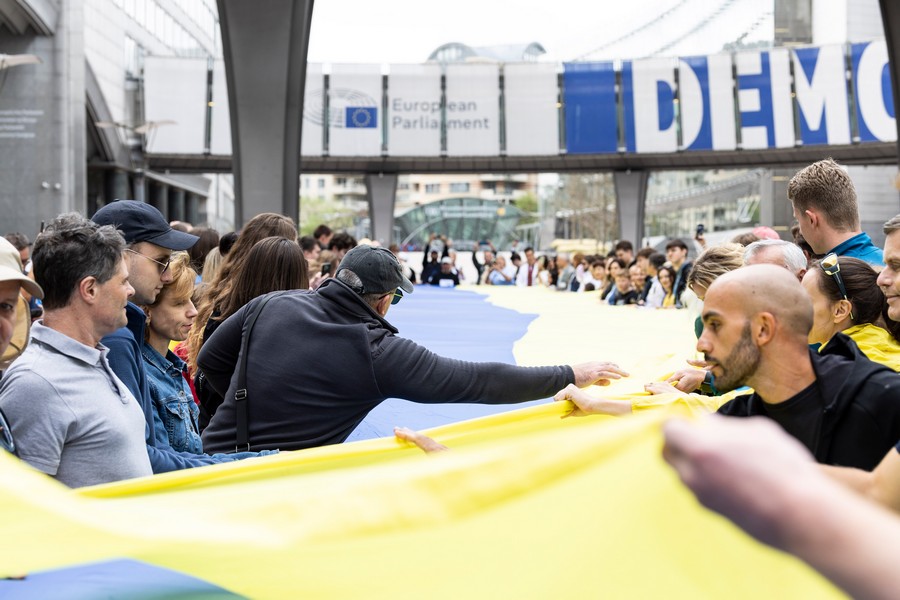
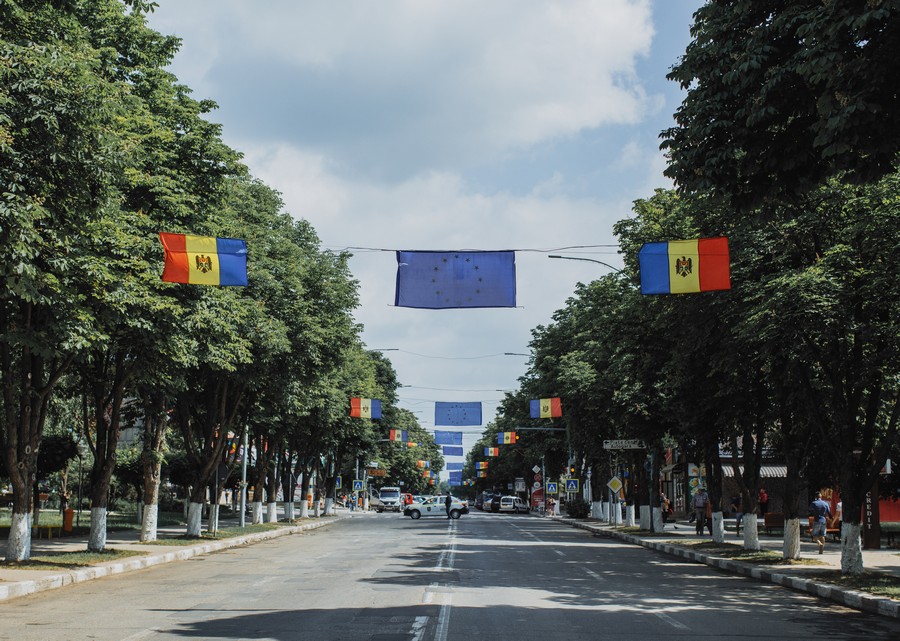
Ognyan Minchev shares this assessment, emphasising the significance of enlargement for the EU’s geopolitical weight, both today and in the years ahead. In his view, at a time when new centres of global power are emerging, the Union’s successive enlargements have enabled Europe to remain a force capable of projecting its influence on the international stage.
Problems, lessons, and Orbán’s Hungary еra
According to Cherneva, the 2004 and 2007 enlargements represented a “romantic moment” for the European Union. Today, however, they are viewed with mixed feelings, as they also gave rise to challenges such as the political course pursued by long-serving Hungarian Prime Minister Viktor Orbán, who spent years holding the EU back.
“Enlargement also produced smaller-scale problems, such as [Slovak Prime Minister Robert] Fico and [Slovenian Prime Minister Janez] Janša, who periodically undermine European unity. It also produced states captured by corruption, such as Bulgaria and Romania, which to this day indeed, to an even greater extent than before accession not only have failed to tackle corruption, but have become even more deeply entrenched in this oligarchic system,” Cherneva says.
She points out that the criteria for joining the Union are now far more demanding than they were in the past, precisely because of some of the mistakes made during previous enlargements. The EU is also working on mechanisms that would allow accession negotiations to be rolled back if a candidate country begins to retreat from democratic values.
According to Cherneva, the EU has learned several crucial lessons from the three enlargement rounds of the 21st century and is gradually putting in place the mechanisms needed to avoid repeating past mistakes.
“The first lesson is that a member state should not be able to undermine the separation of powers while simultaneously blocking key European decisions. This was the approach Viktor Orbán adopted after the EU froze Hungary’s funding under the Recovery and Resilience Facility,” Cherneva explains. She adds that the Union needs an effective mechanism to respond when democracy erodes within a member state, and believes this will increasingly be achieved through the EU’s Multiannual Financial Framework.
“The second major lesson, particularly in relation to Orbán, concerns the abuse of the veto power. There is growing discussion about extending qualified majority voting even to key areas such as security and defence,” she says.
In her view, the third major lesson concerns the Union’s ability to prevent critical decisions from being paralysed during times of crisis. According to her this will be achieved through coalitions of like-minded countries, following the model of the Coalition of the Willing, which are likely to become an ever more common feature of European politics.
The impact of crises
According to Vesela Cherneva, the most serious challenges accompanying EU enlargement have come from within the Union itself – specifically, from the way new member states have used the EU’s own rules. Ognyan Minchev, however, argues that the main obstacle has been the succession of major international crises that coincided with the enlargement process.
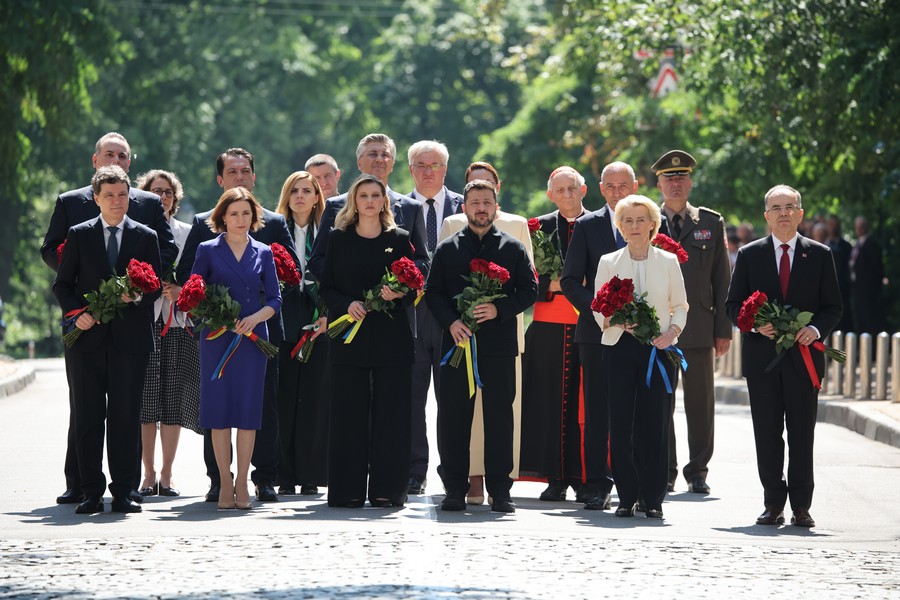
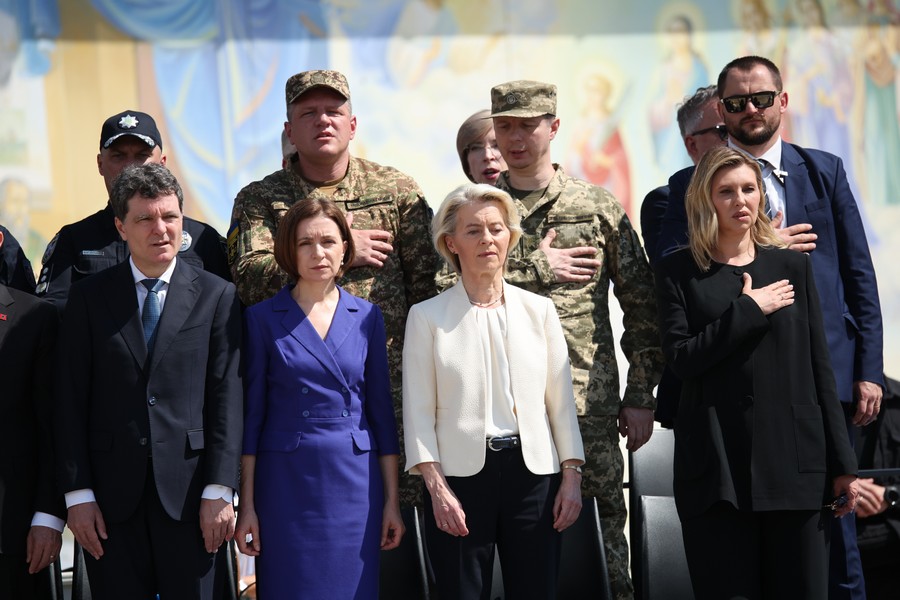
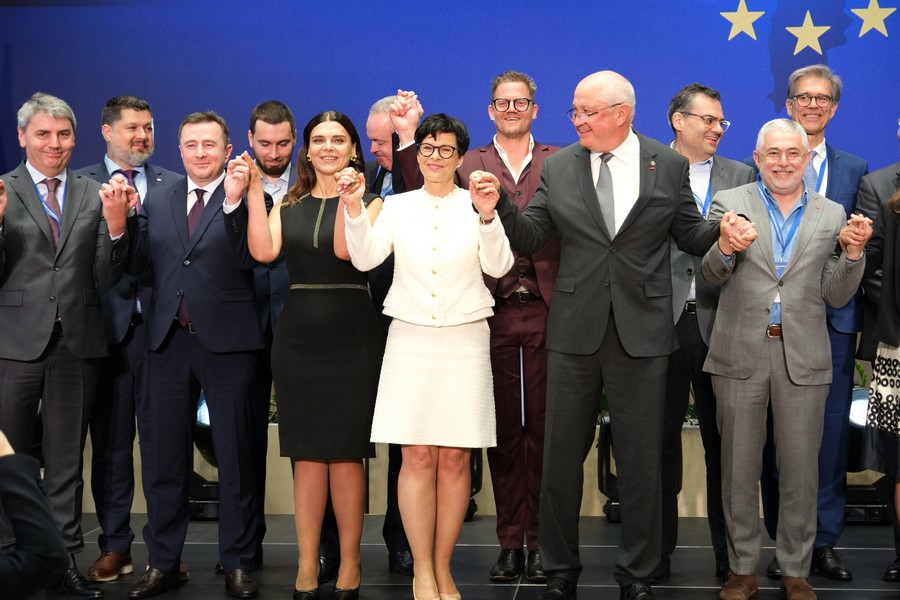
Daniel Nicușor, Maia Sandu, Ursula von der Leyen, Olena Zelenska, from Left to right
In his view, each successive expansion made it increasingly difficult to reach common decisions that reconcile the interests of a growing number of member states, and even more challenging to administer those interests effectively. The challenge becomes even greater when compounded by successive crises.
The political analyst points out that the EU’s landmark enlargement in 2004, followed by the accession of Bulgaria and Romania in 2007, was soon overshadowed by the global financial crisis of 2008-2010.
“For the European Union, this was also a crisis of its institutional architecture, its common finances, its single currency – the euro – and of the way it had to respond to Greece’s deep financial crisis and the mounting debt burdens of Southern European countries. That was another process that compounded the difficulties of integrating the new member states,” Minchev says.
He adds that the EU’s evolution has also been shaped by the transformation of the international system during the second decade of the 21st century.
“The so-called liberal consensus that defined the 1990s and the first decade of the 21st century has gradually given way to a renewed era of geopolitical rivalry,” he notes.
According to Minchev, during the 1990s the European Union saw itself as the prototype of the future global order envisioned by advocates of the liberal international consensus. That is precisely why the resurgence of geopolitical competition – at the very moment when the Union was expanding – triggered such a profound internal identity crisis.
Crises continued to accumulate, with the 2015 migration crisis emerging as one of the most significant tests the EU has faced.
“A million and a half people crossed from the Greek islands and made their way across Europe on foot, heading for Germany, Sweden and other countries. It became clear that Europe was experiencing a profound crisis of identity. In this new world, Europe was no longer the universally admired model of the future global order that everyone aspired to join. It now faced determined opponents, hostile actors and even outright enemies,” Minchev says.

In his assessment, part of this identity crisis has been reflected in the growing political polarisation of European societies and institutions around competing ideological visions. The rise of right-wing populism has created additional challenges for the European project and its underlying values.
“All of this has unfolded alongside the complexities of enlargement itself. And all of it inevitably affects the prospects for future rounds of EU enlargement,” Minchev concludes.
While Minchev views crises as an additional burden on the EU enlargement process, Cherneva sees them as “one of the ways in which the European Union develops its institutions and policy instruments”.
This time, however, both agree that the bloc is facing what they describe as an “urgent enlargement driven by a geopolitical threat”.
Possible paths for Ukraine and Moldova towards the EU
According to Vesela Cherneva due to this complex environment, the focus on Ukraine and Moldova and their accession has become more urgent than that on the Western Balkan countries, which until recently were the main priority of EU enlargement.
She believes that both countries can begin implementing all the measures and legislative initiatives required by the European Commission, despite the fact that Ukraine is simultaneously fighting a war and Moldova is defending itself on the hybrid front.
In her view, enlargement is neither as simple nor as optimistic a process as it appeared in the past, and the greatest risk lies in pursuing expansion without genuine readiness.
Minchev argues that this is precisely why the integration of the two countries will most likely take place in stages, allowing Ukraine – as a key factor in European security – to be supported in its transformation towards meeting the fundamental standards required for EU membership.
According to him, various trends and visions for the future of the Union are gaining strength within the EU, one of which is the concept of integration at different speeds. In his view, this type of differentiated integration is likely to become one of the defining characteristics of the European Union’s future development.
Authors: Desislava Koleva, Radoslav Alexandrov
The original article was published in Bulgarian by Mediapool