











































The parliamentary elections of June 7 could well have become a day of political change in Armenia had Nikol Pashinyan not broken his promise never to falsify elections. He openly and brazenly stole the people’s votes, creating not only a crisis of legitimacy but also failing to secure the numbers necessary to form a constitutional majority. In other words, he did not receive, or, more accurately, did not “manufacture” enough votes to obtain a constitutional majority and thereby gain the authority to undertake actions affecting the Constitution. And what did we witness before and during the elections? Disgraceful foreign interference, repression, hundreds of arrests and detentions.
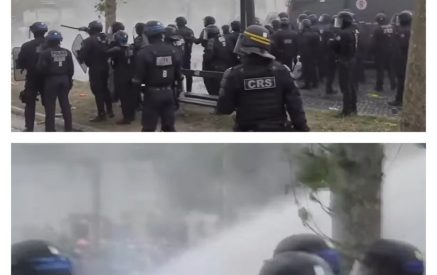
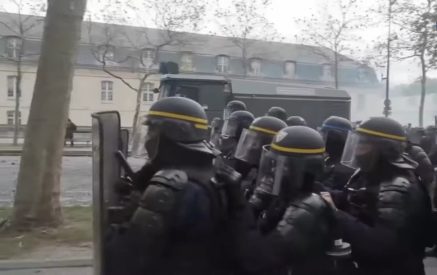
Most striking was the disproportionate conduct of the security forces. What was permitted to those in power was strictly forbidden to the opposition. Moreover, for exactly the same act, an opposition supporter could be arrested immediately, while a government representative would be ignored. Both law enforcement agencies and senior officials appeared to operate according to double standards. June 7, which truly could have been a day of political change, something desired by the overwhelming majority of citizens, was instead transformed into a spectacle of electoral fraud and the mass arrest of opposition supporters on a scale unprecedented in Armenia’s history. Yet it represented the people’s sole opportunity to determine their own future.
At the moment when Pashinyan had effectively taken control of the Central Electoral Commission and was imposing his will on its members, the results from the country’s largest cities of Yerevan, Gyumri, Vanadzor, Echmiadzin, Hrazdan, and others had not yet been counted. These are precisely the places where support for the opposition is strongest. It was this prospect, according to critics, that appeared to alarm the leader of the ruling party, prompting him to flood social media with favorable results from dozens of small and medium-sized communities and to hastily proclaim that the Civil Contract Party had won in every electoral district. The CEC was allegedly compelled to suspend its live broadcasts during the night and adjust the results to suit Pashinyan’s preferences and wishes.
Just five or six minutes before polling stations closed, soldiers serving in Meghri were reportedly rushed in to vote, and many remained at polling stations throughout much of the night. It was also evident that technical manipulation took place within the CEC during the night. All of us who closely followed the tabulation of the election results witnessed it firsthand. Such a development would be difficult to imagine in almost any country, and especially in Armenia.
Read also


“Hayatsk Yerevanits” Journal
ACNIS reView from Yerevan #23, 2026 of the Armenian Center for National and International Studies (ACNIS)