
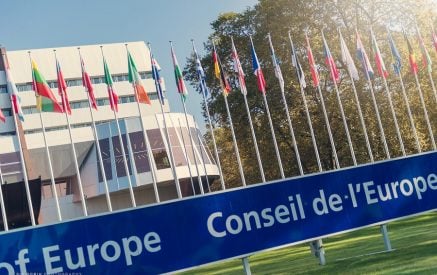




















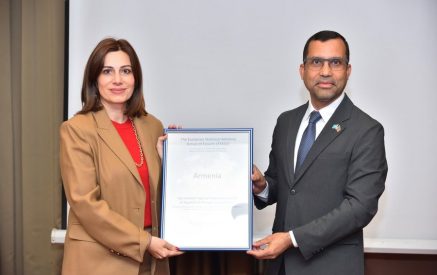

Council of Europe’s anti-corruption body GRECO has published its annual report covering the period until 31 December 2025.
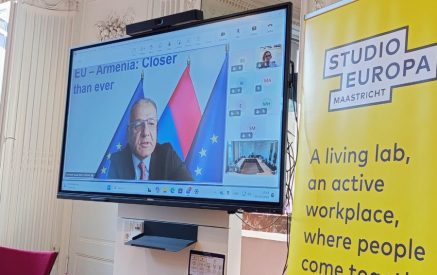
Armenia is among the countries for which, as of 31 December 2025, GRECO had alrady closed the monitoring of compliance with its recommendations on the prevention of the corruption in respect of parliamentarians, judges and prosecutors (see page 40 for percentage of the recommendations implemented).
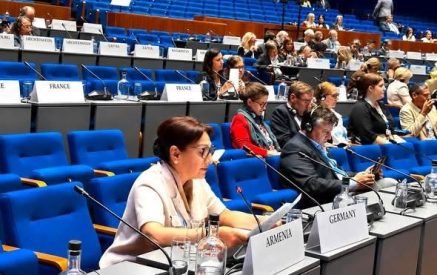
Armenia is currently under monitoring in the 5th thematic round “ Preventing corruption and promoting integrity in central governments (top executive functions) and law enforcement agencies”.
During its June 2026 plenary meeting (see decisions), GRECO also adopted follow-up reports on Armenia, Georgia and Italy; noted that further progress was necessary to achieve an adequate level of compliance within the next 18 months, and set 31 December 2027 as the deadline for the submission by the respective Heads of delegation of a situation report on additional measures taken to implement the Fifth Round recommendations.
Read also
Council of Europe’s GRECO stresses government leaders’ responsibility in leading by example in combating corruption and promoting integrity
Strasbourg, 30.06.2026 – The highest-level officials of central governments have a crucial role to play in leading by example to promote a culture of integrity and zero tolerance of corruption across all levels of public administration, institutions and the whole of society, stresses the Council of Europe’s Group of States against Corruption (GRECO) in its 2025 annual report.
This commitment should be matched by the adoption and effective implementation of robust legal and institutional frameworks capable of preventing and combating corruption.
GRECO’s report assesses anti-corruption measures across Europe and the USA, highlighting key trends, providing examples of good practices and country-by-country data on member states’ implementation of GRECO’s recommendations to prevent corruption and promote integrity among members of parliament, judges and prosecutors, and among central governments and law enforcement agencies.
While noting regular, though sometimes slow, progress in implementing its recommendations, GRECO generally finds a positive shift towards embedding integrity frameworks in public administration, and towards prevention measures rather than directing most efforts to combat corruption only once it has occurred.
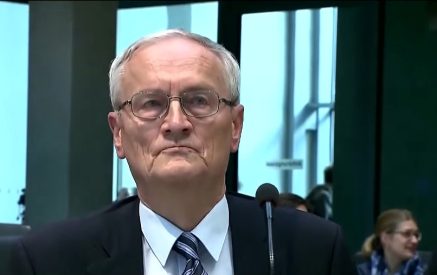
GRECO’s president, David Meyer, said: “Democracy requires both ethical leadership and effective safeguards. Across states, particular attention must be paid to ensuring that reforms affecting key institutions responsible for preventing and combating corruption — including the judiciary, law enforcement, prosecution, and specialised anti-corruption bodies — preserve their independence, effectiveness and credibility”.
“At a time of declining trust in institutions and growing geopolitical tensions, corruption prevention is not only a matter of good governance but also a key component of democratic resilience. Strong integrity systems are essential to safeguarding democratic institutions, protecting public decision-making and maintaining the public’s trust”, he stressed.
“GRECO’s monitoring, guidance and policy dialogue constitute a central contribution to the New Democratic Pact for Europe. GRECO member states should pursue their reform efforts with determination and translate its recommendations into tangible improvements in transparency, integrity and accountability in public life”, he emphasised.
In 2025, GRECO continued assessing the implementation of its recommendations regarding central governments and law enforcement. GRECO closed the monitoring in respect of ten countries, following sufficient progress, but also found that significant shortcomings persisted in many jurisdictions.
As of 31 December 2025, GRECO had published reports on 32 states evaluating their progress in implementing its 5th evaluation round recommendations. States had fully or partly implemented 69.6% of GRECO’s recommendations concerning central governments, compared to 63% at the end of 2024. As regards law enforcement agencies, the proportion of fully or partially implemented recommendations increased from 71.7% to 77.2%.
GRECO concluded that numerous reforms were still needed in many countries, concerning the enforcement of codes of conduct for high-level government officials, supervision and oversight of integrity standards, the management of integrity risks, mechanisms to promote integrity, confidential counselling, transparency and oversight of contacts with lobbyists, transparency of law-making and public participation, access to information and disclosure of official information, conflicts of interest, prohibition or restriction of activities and the declaration of assets and interests.
Regarding law enforcement agencies, GRECO found that further progress was required in the adoption of anti-corruption and integrity policies, recruitment and appointment procedures, conflicts of interest, the prohibition or restriction of certain activities, the declaration of assets, income, liabilities, and interests, and oversight and enforcement.
Regarding the 4th evaluation round on preventing corruption concerning MPs, judges and prosecutors, as of 31 December 2025, GRECO closed the monitoring in respect of 36 countries. States had fully or partially implemented almost 90% of the recommendations. The highest proportion of still-unimplemented recommendations concerned parliamentarians (15.5%), followed by judges (8.6%) and prosecutors (5.7%).
In 2025, GRECO started the first assessments of measures to counter corruption and promote integrity at the local and regional levels under the 6th evaluation round. Estonia and the Slovak Republic were the first states to be evaluated and will be followed by Luxembourg, Slovenia, the United Kingdom, the Netherlands, Latvia, and Poland.
The Group of States against Corruption (GRECO) is a Council of Europe body that aims to improve its members’ capacity to fight corruption by monitoring their compliance with anti-corruption standards. It helps states to identify deficiencies in national anti-corruption policies, prompting the necessary legislative, institutional and practical reforms. It comprises the 46 Council of Europe member states, Kazakhstan and the United States of America.
Press release