




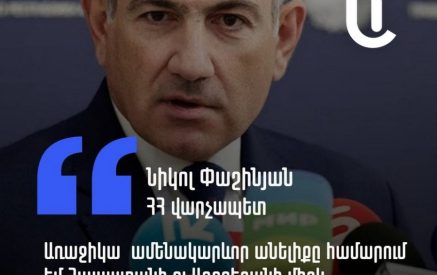



Nearly two months after Armenia’s parliamentary elections, Pashinyan and Putin had their first post-election conversation. Yet, at least according to the official readouts made public, there was no mention of the elections—let alone any congratulatory remarks addressed to Pashinyan.
Many believe this reflects Russia’s dissatisfaction with the election results. I have serious doubts about that, because Russia itself may have played a significant role in shaping those results—a point I have raised repeatedly.
Putin’s apparent “indifference” toward Armenia’s parliamentary elections may therefore stem from the fact that they are, to put it mildly, not a priority for the Russian president. The fact that his first contact with Pashinyan came almost two months after the elections points in the same direction.
This raises the question: What changed, given that Putin had apparently not responded to Pashinyan’s attempts to initiate contact until now? There is little reason to doubt that such attempts may have been made, since Pashinyan himself spoke during the election campaign about an understanding that they would meet after the elections. Moscow, incidentally, did not appear to deny this.
Read also
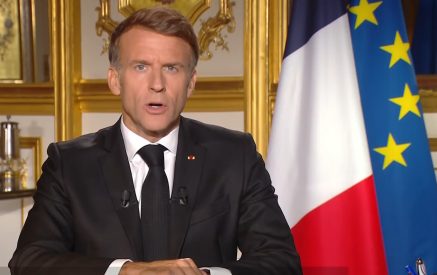
The phone call may therefore have taken place against the backdrop of broader political developments. In this context, it is worth noting that Nikol Pashinyan called Putin two days after his own telephone conversation with French President Emmanuel Macron. He might have called a day earlier had that day not simply been a Sunday.
As is well known, Macron has long been trying to restore communication with Putin. And given that Aliyev, during his recent visit to Germany, confirmed that German and Russian officials had held a closed-door meeting in Baku, one can imagine how much irritation—or even jealousy—this may have provoked in Emmanuel Macron, whose undisguised leadership ambitions are underscored by France’s status as the European Union’s only nuclear-armed state.
At the practical level, the Pashinyan–Putin conversation may therefore have been more about a broader international agenda than about Armenian–Russian issues. Those issues, meanwhile, appear to have been reduced to little more than small change in relation to that broader agenda—to the detriment of Armenia’s economy, particularly its agriculture and processing industries, and the tens and hundreds of thousands of citizens whose livelihoods depend on those sectors.
Hakob BADALYAN