







For Truth and Justice
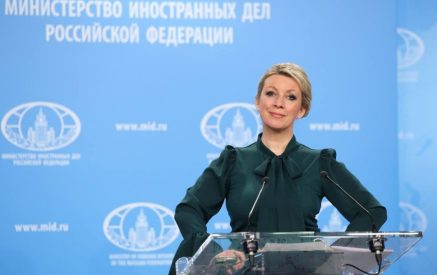
Russian Foreign Ministry spokesperson Maria Zakharova has stated that the Collective Security Treaty Organization (CSTO) could not have become involved in the conflict over Karabakh because Armenia had recognized the territory neither as part of its own territory nor as an independent state. According to her, Yerevan attempted to activate the Organization’s mechanisms, but there was no legal basis for doing so. Zakharova emphasized that, under such circumstances, the CSTO could not have intervened.
It must be placed on record that, during the 44-day war, the Republic of Armenia did not appeal to the CSTO. Nor is the categorical assertion that “Armenia did not recognize the territory […] as an independent state” accurate, just as senior Armenian officials were mistaken when they made statements to the same effect. It would likewise be incorrect to claim that the Republic of Armenia had fully recognized the Republic of Artsakh as an independent state de jure.
The reality is that the OSCE Minsk Group Co-Chair countries—the United States of America, the Russian Federation, and the French Republic—while acting in their capacity as Co-Chairs, consistently opposed any settlement of the Artsakh conflict outside the OSCE Minsk Process. They actively sought to prevent both the international recognition of the Republic of Artsakh and attempts to transfer the settlement process to other platforms. It is pertinent to recall that the principal obligation of the mediating parties was always to ensure the complete exclusion of any use or threat of force from the conflict-settlement process.
Read also
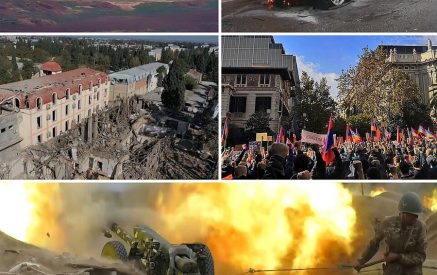
The Republic of Armenia did not formally and unilaterally recognize the Republic of Artsakh as an independent state de jure, thereby allowing negotiations within the OSCE Minsk Process to continue. In practice, however, the Republic of Armenia treated Artsakh as an established de facto state and maintained with it an extensive system characteristic of relations between states, including a diplomatic representation, interstate loans, intergovernmental, interparliamentary, and interagency agreements, exchanges of official delegations, and the mutual recognition and use of official state titles.
The response by the head of the Azerbaijani Foreign Ministry’s press service to the statement by the Russian spokesperson—claiming that “the Karabakh region has always been recognized by the international community, including the Russian Federation, as an integral part of Azerbaijan”—is both erroneous and a distortion of the facts. All settlement proposals presented by the OSCE Minsk Group Co-Chair countries, particularly since November 2007, envisaged a roadmap for the exercise of the right of the people of Nagorno-Karabakh to self-determination.
We consider it necessary to make these corrections and clarifications for both our people and the international community, because these facts also underpin the people of Artsakh’s pursuit of their right of return, as affirmed by the International Court of Justice. The Armenian National Committees’ network is supporting the realization of that right through all the means at its disposal.
Armenian National Committee – International