






















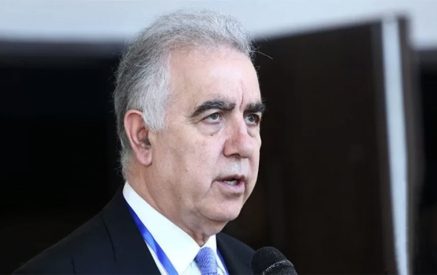


Cultural Heritage Ombudsman of Artsakh Hovik Avanesov
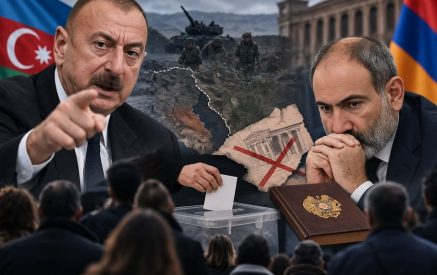
In the territory of the Republic of Artsakh temporarily occupied by Azerbaijan, the policy pursued towards Armenian historical and cultural heritage continues to intensify and to assume an increasingly dangerous and irreversible character. Cases of the destruction, damage, alteration, distortion of identity, and eradication of the historical footprint of cultural heritage are increasing day by day, creating a situation whose consequences may, over time, become impossible to reverse.
This process cannot be viewed as a collection of isolated or accidental incidents. It must be assessed as a systemic threat directed against historical memory, cultural identity, and the civilizational heritage that has been formed over millennia.
The Armenian churches, monasteries, khachkars, cemeteries, monuments, historic settlements, and other cultural assets preserved throughout Artsakh are not merely stone structures or archaeological objects. They constitute material evidence of the centuries-old presence of Armenian civilization, bearers of historical memory, and an integral part of the world’s cultural heritage.
Read also
For this very reason, their destruction or alteration of their identity must be regarded not merely as damage to individual cultural monuments, but also as an attempt to erase historical reality.
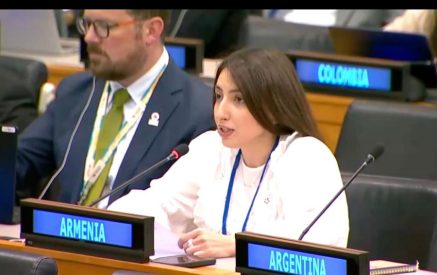
Of particular concern is the fact that the response of the international community and international institutions is often limited to general statements, expressions of concern, and appeals. However, statements that are not accompanied by verifiable, clear, and effective measures cannot prevent the irreversible processes that are already underway.
Time is of critical importance.
Every day during which endangered cultural monuments remain without effective international protection and monitoring increases the likelihood of their permanent loss. Once a monument is destroyed, a cemetery is eliminated, a khachkar is removed or broken, or the identity of a historic structure is altered, a subsequent statement of condemnation alone cannot restore what has been lost.
International institutions must move beyond procedural and ceremonial responses and proceed to clear, coordinated, and practical measures to counter these developments.
It is necessary not only to record what is taking place, but also to demand the establishment of independent and professional monitoring mechanisms, ensure international experts’ access to endangered monuments, document every violation, demand comprehensive information concerning damaged or destroyed heritage, and establish clear mechanisms of accountability.
It must not be allowed to reach a point at which the scale of the damage becomes so extensive that the international response amounts merely to recording a historical fact.
If international institutions continue to limit themselves to procedural statements and fail to undertake clear and effective measures, we may soon face the irreversible loss of an entire civilizational heritage.
The cultural environment formed over millennia cannot be restored overnight. It has been created through generations of human labor, faith, creativity, and historical memory. Its destruction, however, can occur far more rapidly.
Today, it is not only the existence of individual monuments that is at stake. What is at stake is the right to preserve historical memory.
The passivity of the international community towards the processes taking place in the territories temporarily occupied by Azerbaijan cannot be perceived as neutrality. Passivity, particularly in the face of irreversible cultural losses, effectively means allowing the destruction process to continue unchecked.
We call upon international institutions, specialized organizations, experts in the field of cultural heritage protection, and States to:
immediately strengthen international monitoring of Artsakh’s cultural heritage;
demand an independent assessment of the actual condition of endangered monuments and historical and cultural sites;
ensure access to the territory of Artsakh for international professional missions;
fully document every action undertaken with regard to cultural heritage;
demand accountability concerning cases of destruction, damage, alteration, or distortion of the identity of cultural heritage;
and undertake effective measures capable of preventing further and irreversible losses.
The international community must recognize that the protection of Artsakh’s cultural heritage is not solely an Armenian issue. It is an issue concerning the preservation of world cultural heritage, historical memory, and the diversity of civilizations.
If the destruction of cultural heritage created over millennia is allowed today, the historical and cultural assets of other peoples around the world may likewise be placed at risk tomorrow.
Time is running out.
What is needed is not another expression of concern, but action.
Not merely statements, but real protection mechanisms.
Not a delayed response, but immediate intervention-while it is still possible to save what remains.
SUPPORT THE PRESERVATION OF ARTSAKH’S CULTURAL HERITAGE
Why is it important to support the Office of the Ombudsman for the Cultural Heritage of Artsakh?
Preserve Historical Memory
Collecting and preserving facts, photographs, documents, and testimonies related to the history and cultural heritage of Artsakh.
Document Attacks on Cultural Heritage
Documenting the condition of Armenian churches, monasteries, khachkars, cemeteries, monuments, and other cultural assets, as well as threats against them.
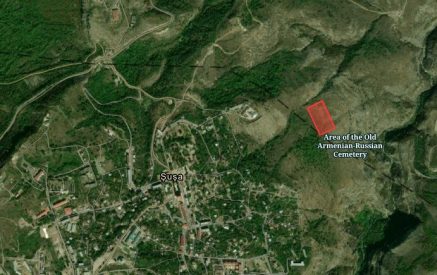
Conduct continuous satellite monitoring to regularly identify, record, and document changes affecting cultural heritage sites in Artsakh, including instances of damage, destruction, and alteration.
Protect Historical and Cultural Rights
Countering attempts to distort, falsify, and appropriate Artsakh’s Armenian cultural heritage through documented evidence and professional research.
Inform the International Community
Providing factual and professional information on Artsakh’s cultural heritage to international organizations, experts, academic institutions, and cultural circles.
Support Research and Professional Work
Collecting archival materials, conducting research, preparing publications, and developing information databases on Artsakh’s cultural heritage.
Preserve National Identity and Memory
Cultural heritage is an inseparable part of a people’s historical memory and identity.
YOUR SUPPORT MATTERS.
Every donation makes it possible to continue the work of documenting, preserving, researching, and raising international awareness of Artsakh’s cultural heritage.