






On September 27, the anniversary of the 44-day war, the concert broadcast by Armenia’s Public Television quite rightly became the subject of public condemnation. But on the sixth anniversary of the war that cost the lives of thousands of young people and resulted in the loss of Artsakh, the concert was not the only “entertainment” Public Television had prepared for its audience.
That same day, viewers were also offered a debate on the Church. The debate format itself is a genre of political show, even when the participants are serious and substantial figures. And when the participants, or at least some of them, are, to put it mildly, far from deserving such a description, the debate turns into something that can simply be watched with a bowl of “popcorn.” It is hardly necessary to say that this was precisely the nature of the televised debate on the Church aired on the anniversary of the war.
The subject of the Church was essentially turned into a television “freak show,” just as, generally speaking, every topic brought up for debate on Armenian television ends up as a spectacle. That is the “culture” we are dealing with—what can you do?
But there are things that can be avoided. For example, the political opposition need not play into the ruling force’s calculation of turning the Church issue into political entertainment. And not merely because the show was scheduled for broadcast on the anniversary of the war.
Read also
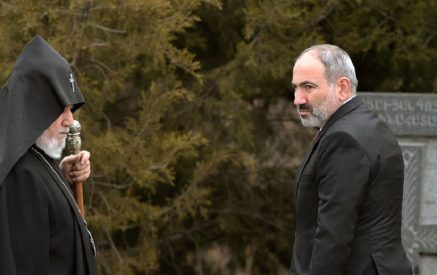
The point is that the Armenian Apostolic Church as a subject should, in general, be kept away from “showman” calculations. Of course, there are people who seek to use every opportunity to defend the AAC and, consequently, to defend national and cultural identity. But even the most sincere motives can lead one into a trap.
Such shows do not help convey to the public the substance of the problems or the scale of the challenges it faces. Rather, they tend to alienate a significant part of the public from those very issues.
And increasing the number of “popcorn followers” of the Church issue fits neatly into the logic behind Nikol Pashinyan’s campaign against the Mother See of Holy Etchmiadzin.
Hakob BADALYAN