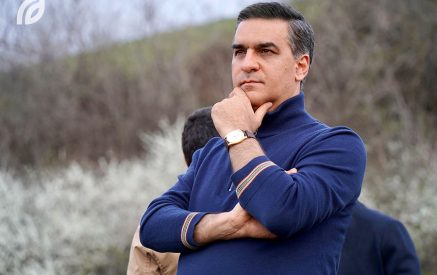










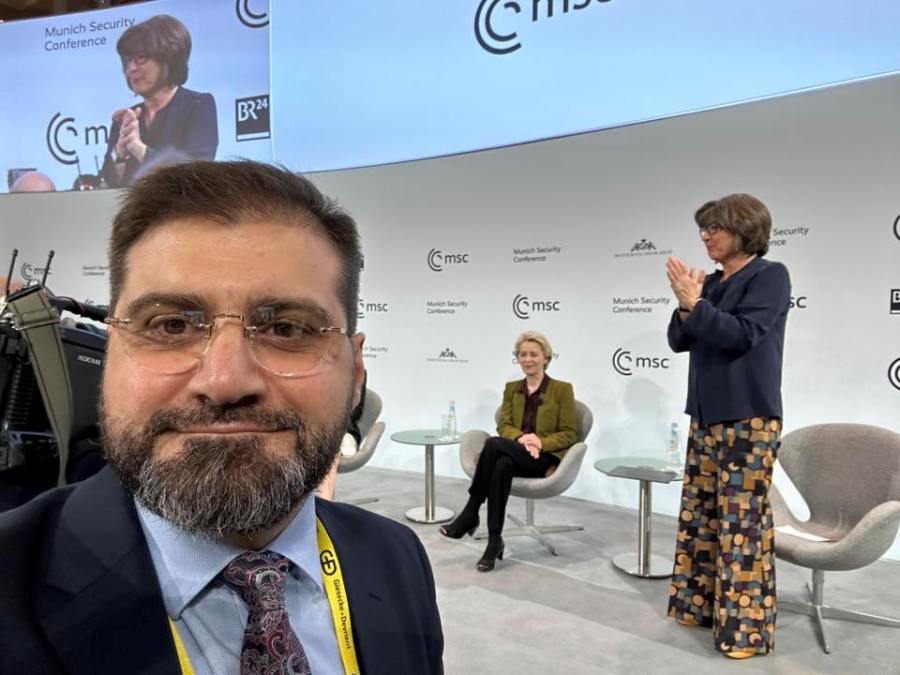
Facebook post by Arman Babajanyan, the leader of the “For the Republic” party
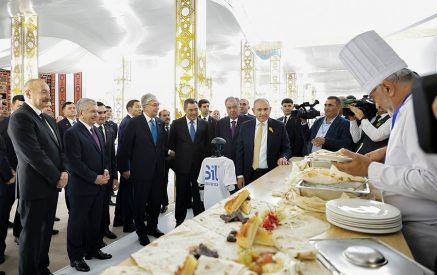
Today, during the EU–Central Asia Summit, European Commission President Ursula von der Leyen, for the first time, explicitly recognized the strategic importance of opening Armenia’s borders within the context of Europe’s transport and economic policies. As she stated, “After thirty years of closure, opening Armenia’s borders with Turkey and Azerbaijan would be a turning point. It would connect Europe and Central Asia like never before.”
This statement has two essential dimensions. First, it confirms that the highest leadership of the European Union views Armenia as a strategic regional hub. Second, it positions the normalization of relations and the reopening of regional transport routes not as a purely bilateral matter, but as an integral component of a broader European strategic agenda.
Armenia is presented with a unique opportunity to redefine its geopolitical role and economic trajectory—becoming not just a geographic, but also an institutional and political bridge between Europe and Central Asia. The decisions Armenia takes now will have lasting consequences: either it becomes a proactive contributor to this new framework or continues to erode its strategic potential through dependence and ambiguity.
Read also

The €10 billion investment under the EU’s Global Gateway initiative into the Trans-Caspian corridor is aimed at developing a new geo-economic and political axis toward Europe, deliberately bypassing Russia. The success of this corridor depends on stability, trust, and legal predictability in the South Caucasus. Armenia’s involvement could become a cornerstone in its own state-building and strategic realignment.
The Trans-Caspian corridor is not merely a technical project. It is a political commitment to building a new global order—one that operates beyond the influence of Russia and China. For Europe, it represents a strategic imperative: reducing reliance on Russian energy and securing control over East-West land routes.
The opening of Armenia’s borders with Turkey and Azerbaijan is now being framed as a “game-changer”—a process with the potential to fundamentally reshape the models of regional cooperation. For such recognition to come from the President of the European Commission is a strong signal: normalization between Armenia, Turkey, and Azerbaijan has become a European strategic priority.
Armenia must act swiftly and decisively to establish itself as an integral part of the transport and energy connectivity framework. All infrastructure projects—from intergovernmental highways to communication and energy systems—must be aligned with the strategic goals of the Trans-Caspian corridor. Armenia must not only serve as a transit country but also become a customs, processing, and logistics hub.
Von der Leyen’s message requires a clear and proactive response from Yerevan—one that demonstrates political initiative, commitment to confidence-building, and a cooperative agenda.
The Trans-Caspian corridor and broader Central Asian connectivity initiatives present a direct challenge to Russia’s geopolitical control. Moscow has repeatedly attempted to obstruct these developments as a way to curtail Western access to the region. Yet countries such as Uzbekistan, Kazakhstan, and Turkmenistan are increasingly turning toward the EU, compensating for the economic consequences of sanctions on Russia.
Armenia must join this strategic realignment. Russian threats must not hinder Armenia’s future integration; rather, they should be addressed on the basis of mutual respect and sovereign equality.
The EU’s expectations of Armenia include:
• Political clarity and strategic consistency
• Predictability in border and regional relations
• A legal and economic environment that attracts European capital
• Alignment with Western principles—particularly in justice, anti-corruption, business environment, and fundamental freedoms
The EU is not looking for passive participants. It is seeking responsible actors to help shape a new global order. Armenia can and must be one of them.
The choice is ours: to enter this new phase of history as a full-fledged partner or to retreat slowly into the fog of uncertainty. Ursula von der Leyen has opened the gates. It is now Armenia’s turn to step through.