
































An Excessively Non-Populist Analysis
The following thought is often attributed to Nelson Mandela: “As I walked out the door toward the gate that would lead to my freedom, I knew that if I didn’t leave my bitterness and hatred behind, I’d still be in prison.” This was the logic that guided him in the aftermath of apartheid, as he sought to forge a new political nation — the South Africans.
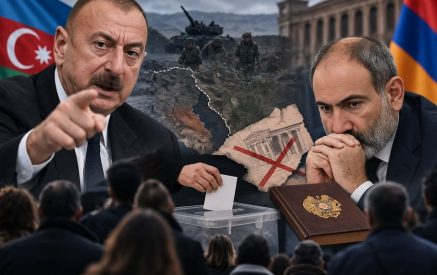
Today, speaking about forgiveness in Armenia seems deeply untimely and would certainly meet fierce resistance from most of society. Nikol Pashinyan has built his entire political career on hatred. In particular, since the 2018 revolution — for the past eight years — he has threatened to destroy, imprison, “spread on the asphalt,” “turn into bums,” and “bring to their knees” his “internal enemies.” He was saying the same things in 2021, waving a hammer and shouting, “No more velvet!” He speaks in much the same spirit during the current election campaign as well. A certain segment of citizens still seems to enjoy it. I am convinced that over the past five years this group has shrunk significantly — there is only so long one can keep appealing to the lumpen masses with the same threats.
But regardless of the election results, this cannot continue forever. When Pashinyan’s inglorious rule comes to an end, the first priority should be changing this atmosphere of hatred. If the people whom the current prime minister has insulted, arrested, and targeted with armies of “fakes” and “trolls” begin thinking about revenge once they come to power, then nothing in our lives will truly change.
Read also
To avoid that, I support the idea of amnesty — a word I heard from Aram Vardevanyan, the number two figure in the “Strong Armenia” alliance. He did not elaborate on the idea, but this is how I imagine the mechanism working. Various crimes have been committed not only by Pashinyan and members of Civil Contract, but also by many prosecutors, judges, investigators, National Security Service officers, and police officers. For example, a number of judges should quite clearly face prosecution under Article 552 of the Criminal Code: “Rendering a knowingly unjust verdict, ruling, or other judicial act.” During the current election campaign, state officials are violating a number of Criminal Code provisions, including Article 218 on vote-buying — a favorite charge of the current authorities. (This is one of those classic cases where it is not the cart that creaks, but the cart driver.)
Trials examining these crimes should take place, and verdicts should be delivered. But afterward, I propose declaring an amnesty for all such offenses and limiting the punishment to barring these individuals from holding public office. I am certain that, for example, our senior clergymen, as well as the Catholicos of All Armenians, have already forgiven all the officials who persecuted and insulted them, beginning with Pashinyan himself. All that remains is for the state to do the same.
The next executive government should also abandon rhetoric such as “we’re going to arrest you all” or “we’ll throw you into the KGB basements.” Such language not only divides society and creates an atmosphere of hatred and hostility, but is also, in essence, unlawful: the executive branch has no official function that involves “going after” people.
Incidentally, speaking of the clergy: in 1989–1990, after German reunification, Protestant pastor Joachim Gauck headed a commission investigating the activities of the Stasi — East Germany’s communist-era counterpart to the KGB. I hope that in the future Armenia, too, will entrust some respected public figure with investigating, among other things, the widespread wiretapping currently carried out by Pashinyan’s government.
Aram ABRAHAMYAN
“Aravot” daily
19.05.2026