








“Initiative for Media Quality and Resilience: Next Chapter in Media Empowerment” Project
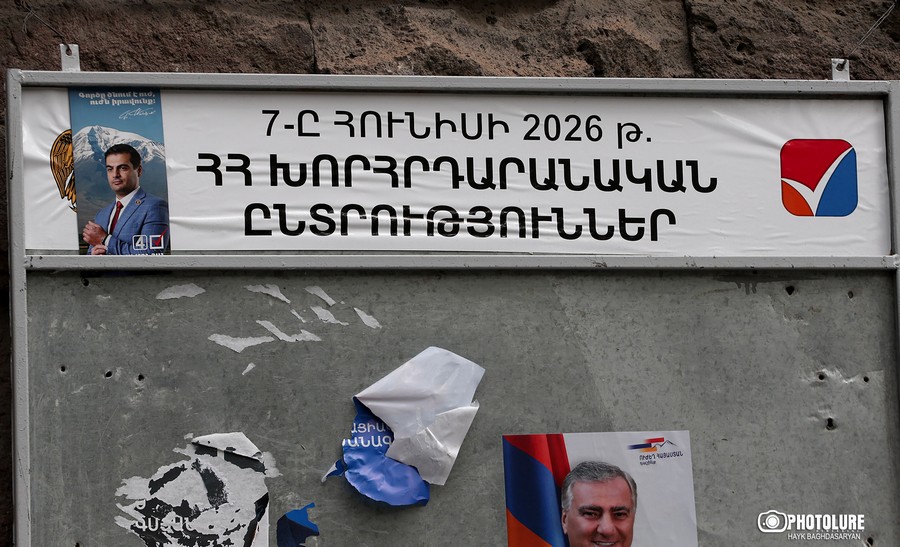
On June 12, 2026, the Yerevan Press Club (YPC) released the findings of its media monitoring project, which analyzed broadcast coverage during the official campaign trail for the June 7, 2026, National Assembly elections in Armenia. The initiative was carried out under the framework of the “Media Quality and Resilience Initiative: A New Phase of Media Empowerment” project.
The monitoring focused on 10 influential television channels. This included seven broadcasters from the public multiplex: Public Television Company of Armenia (First Channel), First News Channel, Armenia TV, Kentron, Shant, 5th Channel, and Free News. Under Armenian law, public multiplex broadcasters carry specific statutory obligations to ensure balanced election coverage. Additionally, Azatutyun TV (RFE/RL), CivilNet, and Factor TV were monitored, noting their significant impact on political orientation of the public.
The study scrutinized the following primary news and current affairs programs:
Read also
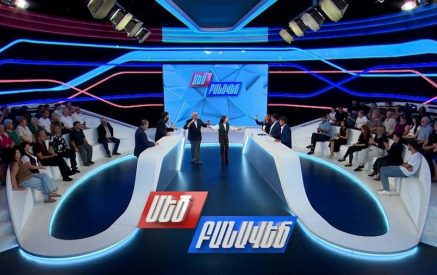
- Public Television Company of Armenia (First Channel): Main edition of Lurer (News), Interview with Petros Ghazaryan, The Great Debate, Public Discussion, and Armenia Chooses.
- First News Channel: Interview with Anna Danielyan and *Open Platform.
- Armenia TV: Main edition of Zham (Time) news programme and The Hour of Choice.
- Kentron: Main edition of Epicenter, Important Topic, and Issue.
- Shant TV: Main edition of Horizon news programme, Perspective, and Perspective Debate.
- 5th Channel: Main edition of Haylur news program and Interview.
- Free News: Main edition of Azat Lurer (Free News) programme and Free Talk.
- Azatutyun TV: Main news broadcast and Debate.
- CivilNet: Interviews and Ditankyun (The Angle).
- Factor TV: Interviews (twice daily) and various debate-discussions.
Monitors quantified the volume of coverage dedicated to political parties and alliances, evaluated the tone of the coverage, and tracked ethical violations, such as insults, threats, hate speech, and unwarranted invasions of privacy. The study explicitly distinguished between the sources of these ethical breaches, categorizing them into political figures, non-party commentators talking about the election, or journalists and hosts themselves. The report also documented instances where journalists and hosts proactively intervened during interviews and debates to urge guests to refrain from derogatory language or disrespectful behavior.
Between May 8 and June 5, 2026, monitors analyzed a total of 1,636 media items. The total number of references to political parties and alliances reached 3,025. Of these, 1,155 pieces were entirely dedicated to a single party or bloc, 1,821 provided partial coverage, and 49 made passing mentions of all competing political units. Overall, the tone of coverage across the board was broken down into 183 positive, 730 negative, and 2,112 neutral references (see attached tables).
A total of 156 ethical violations were identified within political commentary and video segments. Of these, 145 originated directly from political candidates and party representatives, while 11 were attributed to outside commentators.
The study also compiled and analyzed a separate, comprehensive index tracking of all participants and guests featured across the broadcasters’ interview and talk-show formats.
Systemic Challenges Identified
The monitoring highlighted several core issues plaguing the electoral media landscape:
- The Brevity of the Official Campaign Window: The brief official campaign window (May 8 – June 5) allowed well-funded political parties to ramp up campaign activities and establish dominant influence over voters long before legal restrictions took effect. Potential solutions include implementing a strict ban on early political advertising outside the official window—at least for public multiplex and authorized broadcasters—or extending the statutory campaign duration.
- The Breakdown of the day of Silence: The traditional day of silence rule was frequently violated, driven by a changing communication environment altered by modern digital technologies. These breaches routinely went unpunished by regulatory bodies. A viable remedy would be to either abolish the day of silence entirely or overhaul enforcement mechanisms to align with contemporary digital realities.
- Highly Polarized Rhetoric: This systemic issue stems from broader political friction rather than journalism itself. Solutions here lie in restructuring inter-party dialogue and fostering a healthier national political climate.
Armenian media outlets demonstrated unprecedented interest in the 2026 parliamentary elections, yielding, as mentioned, 1,636 campaign-related reports.
The ruling Civil Contract party commanded the lion’s share of media attention, drawing 1,057 references, or 35% of all coverage. This volume was heavily driven by the fact that nearly all opposition forces frequently targeted or referenced the ruling party during their own campaign events.
Conversely, the Kochari National Rebirth and Awakening of the Nation party (28 references; ~1%) and the Alliance Progressive Centrist Party (26 references; ~1%) received the least coverage. The low figures for Alliance are partly because the party withdrew from the race midway through the cycle; its coverage was cut off on May 27, 2026.
Airtime distribution for specific political units was influenced by party activity levels, partisan editorial stances (most pronounced on the 5th Channel and Free News), and public interest (a factor considered acceptable for commercial channels outside the public multiplex). Airtime was also limited by a widespread reluctance among political figures to participate in broadcast debates—a trend observed across almost all monitored networks, with the exception of Public TV (H1).
When evaluating tone, Civil Contract received both the highest number of positive references (59; 32% of all positive coverage) and the highest number of negative references (400; 55% of all negative coverage). The Armenia Alliance secured the second-highest positive coverage (43; 23%), while the Strong Armenia Alliance drew the second-highest volume of negative coverage (137; 19%).
Among individual outlets, 5th Channel exhibited the most opinionated coverage, generating 57 positive references (31% of the total positive volume) and 191 negative references (26% of the total negative volume).
Public TV’s First Channel broadcast the highest volume of negative tone overall with 173 negative references (23%), compared to just 17 positive ones (9%).
CivilNet maintained the most strictly neutral reporting, recording 0 positive and only 17 negative references (2% of the overall negative share).
Ethical breaches were most prevalent in coverage concerning Civil Contract, with 66 identified cases, accounting for 42% of the total violations.
The Prosperous Armenia Party accounted for 32 violations (20%), followed by the Armenia Alliance with 30 (19%), and the Strong Armenia Alliance with 24 (15%). Violations dropped sharply for remaining groups: the New Power” Reformist Party had 3 violations (~2%), and the Bright Armenia Party logged 1 (0.6%). No ethical violations were recorded for other participating parties.
Broadcaster-specific data revealed that Azatutyun TV carried the highest number of ethical infractions with 44 cases (28% of the total), followed closely by 5th Channel with 42 incidents (26%). As noted, these infractions were exclusively the result of broadcasters carrying or re-airing raw statements made by political figures.
Shant TV recorded the cleanest record, with only a single ethical violation identified (0.6%).
The report concludes that broadcasters cannot generally be held liable for these ethical lapses, as the violations did not originate from journalists, but were instead verbatim statements made by political candidates or other figures during live or unedited coverage.
This study was produced with the financial assistance of the European Union. The contents of this publication are the sole responsibility of Yerevan Press Club and can under no circumstances be regarded as reflecting the position of the European Union.”
Yerevan Press Club