











































Rome – FAO’s benchmark measure of world food commodity prices edged down in June, as lower quotations for cereals, sugar and dairy products outweighed higher quotations for vegetable oils and meat, according to new data released Friday by the Food and Agriculture Organization of the United Nations (FAO).
The FAO Food Price Index, which tracks monthly changes in the international prices of a basket of globally-traded food commodities, averaged 130.3 points in June 2026, down 0.3 percent from its May level but remained 2.2 percent higher than its year-earlier level.
“While the overall benchmark for international food commodity prices declined slightly in June, individual commodity markets continue to respond differently to evolving factors. In an increasingly uncertain global environment, transparent markets, timely information and predictable global trade remain essential to advance food security and strengthen the resilience of agrifood systems,” said Boubaker Ben-Belhassen, Director of FAO’s Markets and Trade division.
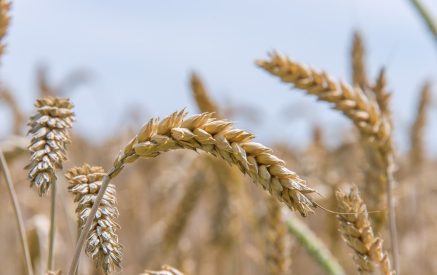
The FAO Cereal Price Index declined by 3.5 percent from May, driven by lower international maize and wheat prices, but remained 2.7 percent higher than a year ago. Global wheat quotations dipped by 4.4 percent as rapid harvest progress and strong supply prospects in the Black Sea region outweighed concerns over crop prospects in Australia and the United States of America. Additional downward pressure stemmed from a stronger United States dollar and softer energy markets amid expectations of reduced tensions around the Strait of Hormuz. World maize prices fell by 6.2 percent, reflecting prospects of ample supplies in exporting countries in South America and weaker ethanol demand. By contrast, the FAO All Rice Price Index increased by 3.2 percent in June, as Asian demand for Indica rice strengthened, while weather concerns and elevated production, transport and marketing costs lent support to non-fragrant quotations.
Read also

The FAO Vegetable Oil Price Index, by contrast, increased by 3.8 percent from May. Higher palm and rapeseed oil quotations, supported by stronger mandated biofuel demand and broadly stable sunflower oil prices more than offset lower soyoil prices.
The FAO Meat Price Index increased by 0.5 percent, reaching a new record high. International poultry meat prices increased, due in part to temporarily tighter domestic availability following production adjustments in response to earlier oversupply, while pig and bovine meat prices declined.
The FAO Dairy Price Index declined by 1.5 percent from the previous month, reflecting lower prices on skim milk powder, whole milk powder and butter, along with an eleventh consecutive monthly drop in international cheese prices as export supplies continued to exceed global import demand.
The FAO Sugar Price Index decreased by 5.7 percent from May, driven down by lower domestic ethanol prices in Brazil along with depreciation of the Brazilian real. Ongoing concerns over the potential impact of El Niño on sugar production in India and Thailand contained the overall decline in international sugar prices.
More details are available here.
Harvest prospects remain robust but El Niño adds uncertainty
FAO also released updated forecasts for 2026 harvests in its Cereal Supply and Demand Brief, with production seen on course to be the second-highest in history, although 1.9 percent below last year’s record high.
Global total cereal output is now pegged at 2 983 million tonnes. Coarse grain production forecast is close to the previous year’s level, buoyed by recent official estimates from Argentina, Brazil, China (mainland) and Zambia, all pointing to stronger harvests than previously anticipated. Global wheat output is expected to decline by 4.3 percent to 806.5 million tonnes, as recent official data from Australia point to El Niño driving output below the five-year average. World rice production is now anticipated to dip by 1.8 percent from its all-time high in 2025/26.
FAO lowered its forecast for world cereal utilization in 2026/27 to 2 961 million tonnes, due an expected reduction in global wheat utilization. FAO’s forecast of world cereal stocks at the close of seasons in 2027 now stands at 957.8 million tonnes, leaving the global cereal stock-to-use ratio largely unchanged in 2027 at 32.0 percent. FAO’s forecast for world trade in cereals in 2026/27 is little changed at 507.6 million tonnes.
More details are available here.
The Agricultural Market Information System (AMIS), hosted by FAO, also published its monthly Market Monitor on Friday. Describing agricultural markets as “generally steady”, the report notes that while El Niño-related risks warrant close attention, generally favourable crop conditions, ample supplies and harvest progress continue to underpin market sentiment. The report also discusses the potential impact of the Hormuz crisis on agricultural markets.
41 countries in need of external assistance for food due to conflicts and weather shocks
FAO estimates that 41 countries and territories (globally, 31 of which are in Africa, require external assistance for food, according to a separate report also released today by FAO’s Global Information and Early Warning System on Food and Agriculture (GIEWS).
Conflict and insecurity remain the primary drivers of the most severe levels of acute food insecurity. In addition, El Niño-related weather conditions, along with high input prices, are constraining agricultural production prospects in East and West Africa. Meanwhile, in North and Southern Africa, where the main harvest is already complete, cereal outputs are forecast above their five-year averages in 2026, with record harvests expected in some countries, the latest Crop Prospects and Food Situation report says.
Among the 39 Low-Income Food Deficit Countries, aggregate cereal output is forecast to increase by 1.4 percent in the 2026/2027 season to 129 million tonnes, while their total cereal import requirements are expected to rise by 2.0 percent to nearly 48 million tonnes.
Food and Agriculture Organization of the United Nations (FAO)