






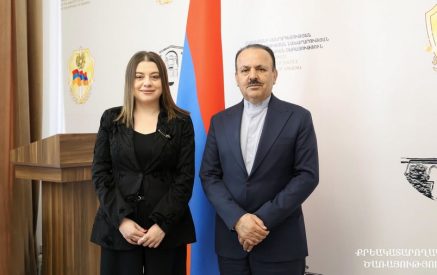



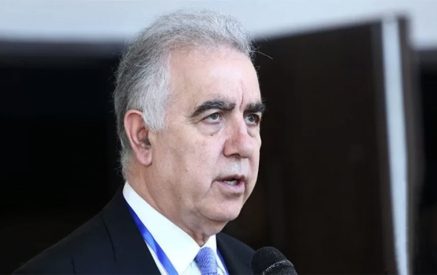


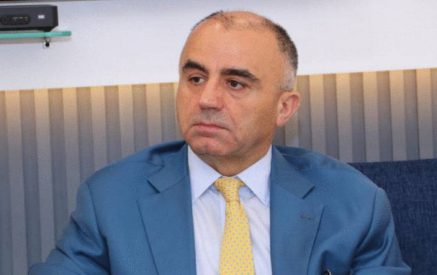
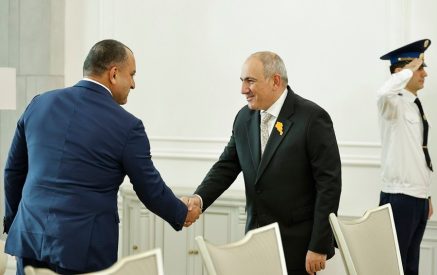
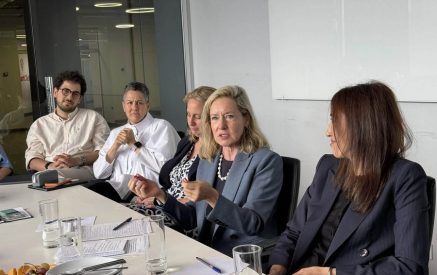


The main points of the remarks delivered by Lilit Galstian, Member of the National Assembly’s “Hayastan” Faction and member of the Armenian Revolutionary Federation (ARF) Bureau, at the meeting of the Committee on Democracy, Human Rights and Humanitarian Questions during the 33rd Annual Session of the OSCE Parliamentary Assembly in The Hague
Each year we are discussing the state of human rights and democracy and each year the picture is becoming more troubling.
As the report rightly stated: “Instead of strengthened co-operation, we are witnessing a widening gap between agreed standards and their implementation in practice.”
This is not simply an emotional disappointment; but a serious concern about our ability to restore trust and to acknowledge our failures.
Read also
For the past four years, I have consistently raised two vital issues: the ethnic cleansing of Nagorno-Karabakh committed by Azerbaijan, and the democratic backsliding in Armenia.
At our Annual Session in Porto, I proposed sending an international mission to Baku to monitor the sham trials of former political leaders of Nagorno-Karabakh and to assess the ongoing erosion of Armenian cultural heritage. The proposal was not supported!
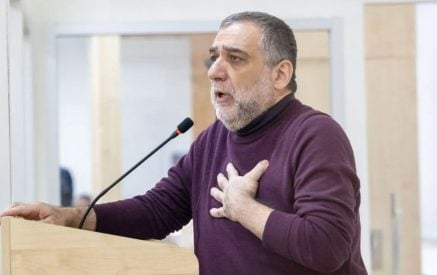
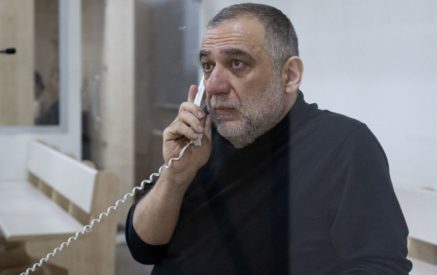
By failing to act, de we allowed Azerbaijan to continue its violations. Today, at least 19 Armenians—including Ruben Vardanyan, Bako Sahakyan, Arkadi Ghukasyan, Davit Ishkhanyan, Davit Manukyan, and others remain unlawfully detained. They continue to face torture and inhumane treatment, while even the Internation Red Cross has been denied access.
This is not an isolated injustice, but part of a broader policy that included the blockade of Nagorno-Karabakh, the forced displacement of its indigenous population, the destruction of Armenian cultural heritage, and the continued promotion of the so-called “Western Azerbaijan” a state-sponsored aggressive and false narrative used to advance territorial claims against Armenia.
By failing to respond we weaken the very standards that form the foundation of OSCE.
Unfortunately, Armenia is facing serious democratic challenges of its own. International organizations are expressing concern about the concentration of power and the weakening of democratic institutions.
Recent parliamentary elections were often portrayed as a geopolitical contest. While the majority of voters rejected further concessions, the crimes against democracy, the rising dictatorship, political prosecutions, unlawful attacks on Armenian Apostolic church.
Colleagues, our responsibility does not end with documenting these developments.
I, therefore, call on the Assembly to closely monitor the democratic decline in Armenia;
to demand the immediate release of all unlawfully detained Armenians;
to ensure the protection of the cultural heritage of Nagorno-Karabakh;
and to reaffirm the right of return of its indigenous population.
This is not simply a moral imperative; but a legal obligation. Let us restore trust in the principles we are committed to uphold.