

































The European Council has approved the deployment of the European Union’s Rapid Response Mission in Armenia, as announced several days ago. While the EU dispatched a rapid response team to Armenia ahead of the parliamentary elections, the new mission is to be deployed for a two-year term. The decision is being presented as support for Armenia’s sovereign capacities in the face of hybrid threats.
In reality, however, the European Council’s decision serves virtually none of Armenia’s national interests. The EU mission will become yet another instrument of the Union’s geopolitical strategy, aimed at facilitating the fastest possible development of the Middle Corridor and securing the EU’s stake in the emerging geopolitical order in the South Caucasus.
For the European Union, Armenia is virtually the only available platform for pursuing this objective in the region. Relations with Georgia remain strained, while Azerbaijan has never been—and, for a variety of objective and subjective reasons, is unlikely ever to become—a country through which the EU can pursue such geopolitical maneuvering.
The deployment of the EU mission, therefore, does not advance Armenia’s national interests. It does, however, serve the interests of Armenia’s current government. By providing the EU with room for geopolitical maneuvering, the authorities in Yerevan receive, in return, the EU’s political tolerance toward what can only be described as increasingly authoritarian conduct in domestic affairs.
Read also
This arrangement is already in effect. Within its framework, not only is there no tangible benefit for Armenia, but there are also significant risks.
For now, the scheme remains largely tactical in scope, making it manageable even from Russia’s perspective. But there is no guarantee that the European Union—which has been steadily escalating its policy toward Russia on multiple fronts—will not eventually do the same in the South Caucasus, using the newly deployed mission as one of its instruments.
Should that happen, it would amount to a strategic revision of the regional balance of power, something that Russia can hardly be expected to leave unanswered. While Moscow may tolerate tactical risks when they suit its calculations, it is likely to respond much more forcefully to what it perceives as strategic challenges.
Whether Russia would seek an understanding with Turkey and Azerbaijan or, if necessary, even risk confrontation with them is an open question.
What is beyond doubt, however, is that Armenia would, under any such scenario, find itself drawn into someone else’s war.
Indeed, at least in terms of information warfare, Armenia is already part of someone else’s conflict. A mission officially deployed to protect the country from so-called hybrid threats would, in practice, function as another component of the information war between Russia and the European Union.
Hakob BADALYAN
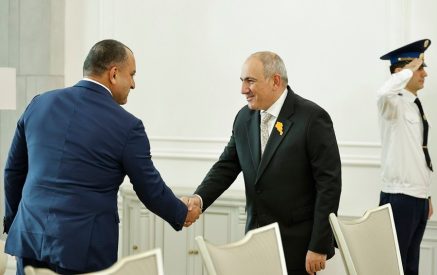
The illustration was created using AI technology.