









The conduct of pro-government NGO representatives reveals the direction in which our country is heading
I recently interviewed Garegin Chugaszyan, a member of the Council of the National Democratic Pole, who classified the public’s response to the catastrophe that unfolded in 2020 and has continued ever since into four categories.
First, those who recognize the disaster and are trying to build the nation’s future (“the architects”). Second, those who recognize the disaster and seek to respond to it (I consider myself part of this group). Third, those who have buried their heads in the sand (the overwhelming majority). And fourth, the extreme cynics—people who know everything and see everything, yet, driven by one interest or another, take up the saz and sing the praises of every government move.
This last category naturally includes officials at various levels, but it also encompasses representatives of the so-called “civil society sector.” Their position is, on the one hand, surprising—if one takes their declared mission at face value—but, on the other hand, entirely predictable and, in a sense, demonstrative, because it clearly illustrates the path Armenia is taking. After all, in Azerbaijan and, for that matter, in Russia, NGO representatives also serve as cheerleaders for those in power. Under such political regimes, there can hardly be any other kind of NGOs.
Read also
The latest example was the tragedy involving conscript soldier Narek Torosyan at the Chambarak military unit. The Investigative Committee delicately described the case as ” driving a person to suicide through negligence.” The wording strongly recalls the killing of Poghos Poghosyan by Aghamal Harutyunyan, a bodyguard of then-President Robert Kocharyan, at the Aragast Café, which was officially classified as an “unintentional scuffle.” How strikingly similar are the euphemisms employed by the law enforcement agencies under Kocharyan and under Nikol Pashinyan.
The reaction of Armenian NGOs, however, could not be more different. Can you imagine how many reports they would have written to their European sponsors just ten years ago? How many statements they would have issued, how many demonstrations and so-called “performances” they would have organized, and how many sweeping conclusions they would have drawn about the conditions in the army—which, incidentally, have not changed over the past decade.
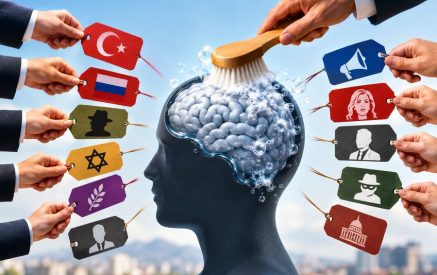
Now there is only silence, because international donors have instructed them to present Armenia as a “bastion of democracy.” Yet even under this Pashinyan’s dictatorship and amid the European Union’s hypocrisy, there are still genuine human rights defenders, such as Zhanna Aleksanyan, who receives no grants from anywhere. The “grant-funded” human rights defenders, meanwhile, remain silent.
But silence is only part of the story. They have also assumed the burden of portraying Pashinyan’s actions in a positive light for the public. Suppose the Civil Contract leader has another opposition figure arrested. They are then “obliged” to explain to the public that the esteemed Prime Minister is merely combating hybrid threats. It is much the same in Russia: Putin says something, and pro-Kremlin political analysts promptly produce lengthy analyses declaring, “Vladimir Vladimirovich’s message is perfectly clear…”
Why do I attach such importance to the independence of civil society? Because it has a vital mission in fostering social solidarity. Without that solidarity, legal norms function only formally.
The French sociologist Émile Durkheim wrote about this as far back as the late nineteenth century. In his view, law is not merely a collection of rules but the visible expression of social solidarity.
Accordingly, law may be either repressive (punitive) or restitutive (restorative).
It is obvious which of the two defines Armenia today.
Aram ABRAHAMYAN
Aravot Daily
28.07.2026