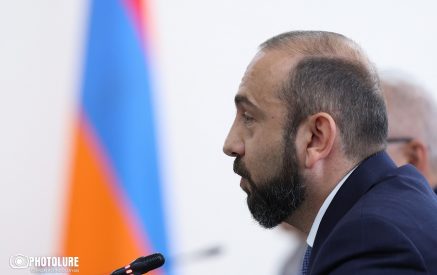

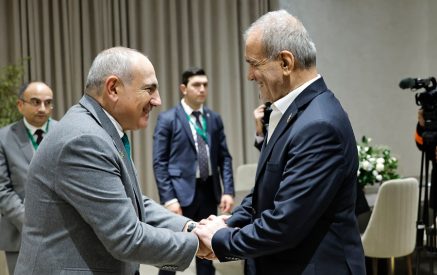






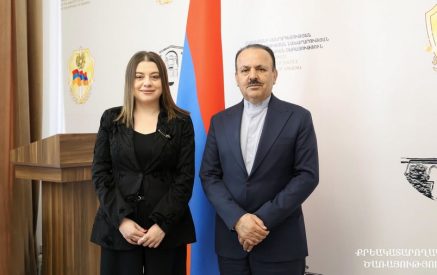





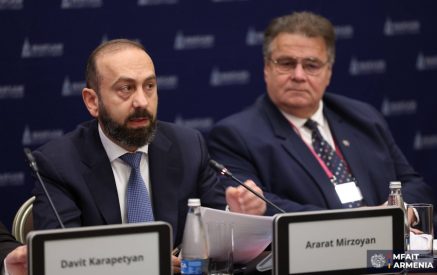






Armenia’s foreign minister says that relations with Russia are brotherly, discussions are constructive, and problems can be resolved. Many have taken note of this statement and, commenting on it, have recalled Ararat Mirzoyan himself and the authorities he represents, along with their anti-Russian statements and rhetoric. The question is being asked: what was all that about, and why, if Armenian-Russian relations were “brotherly”?
By no means do I claim or wish to speak on behalf of the authorities. Nevertheless, I consider it important to address the situation and the issue in general. What was, or is, the reason for the credulity that has existed in Armenia’s public and political sphere when it comes to the Armenian authorities’ “anti-Russian stance”? If it was not “credulity,” then what did the fierce opposition amount to—the opposition directed at what critics said was the government’s effort to “destroy” Armenian-Russian relations, an effort they claim it had undertaken and continues to pursue? And what was the calculation behind it? That Russia would appreciate this devotion and somehow help in the struggle against Pashinyan? Or that Armenian society would recognize the danger and heed the warnings about it?
One thing is evident: thanks to both the Armenian authorities and a substantial segment of their critics, an issue of major importance in Armenian-Russian relations—one that, for certain objective and entirely legitimate reasons, is of fundamental significance—has been reduced to an irrational, emotional form of “folklore” and, in practice, stripped of its substantial economic and political dimensions and content.
There may be many beneficiaries of this, but neither the Armenian public nor Armenia’s economy is among them. It is precisely this mode of irrational, emotional folklore that allows, for example, the official Yerevan to put Armenia’s most vital economic interests on the table of political and opportunistic distortions surrounding Armenian-Russian relations, using them as a bargaining chip—one that is, moreover, being lost to a considerable extent—and get away with it. Then all it takes is to utter the “magic” word, “brotherly,” and return everything to the way it was. Just as the Devil tempted an impoverished writer in a play that caused a sensation in Armenia in the early 1990s: “But I did say ‘brother,’ didn’t I, dear Hamazasp?”
Read also
Hakob BADALYAN