









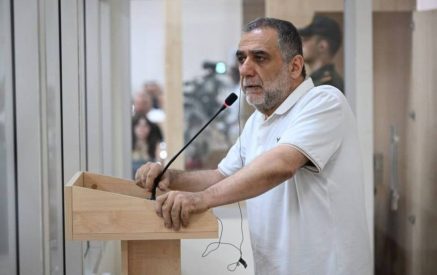





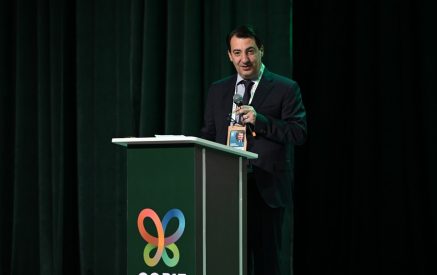






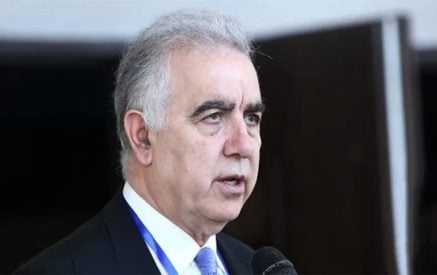








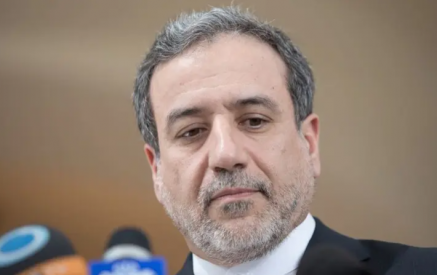


Cultural Heritage Ombudsman of Artsakh, Vice President of the Azgayin (National) Cultural-Historical NGO Hovik Avanesov:
Artsakh is far more than a mere coordinate on a map. It is a sanctuary of memory, a cradle of millennial Armenian culture, and a landscape defined by monasteries, fortresses, khachkars, heroism, and profound sorrow. For centuries, Artsakh has served as one of the most vital spiritual and historical nuclei of the Armenian people. Churches were erected here long before the emergence of many modern states in the region; it was here that Armenian literacy, traditions, and national identity were safeguarded even during the most tumultuous periods of history.
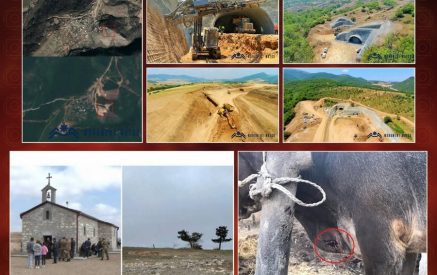
The events of recent years represent a tragedy for the entire Armenian nation. The occupation of Artsakh by Azerbaijan, the forced displacement of the indigenous Armenian population from their ancestral homeland, the desecration of cultural monuments, and the systematic annihilation of historical heritage constitute a severe blow not only to the Armenian people but to global civilization. Today, 150,000 Artsakh Armenians remain deprived of their ancestral homes, cemeteries, temples, and sacred sites. However, history has repeatedly demonstrated that violence and occupation cannot permanently extinguish a people’s fundamental right to their land, memory, and dignity.
In the long arc of history, Artsakh will be liberated from occupation. No historical injustice is eternal. Empires have collapsed and dictatorships have vanished, while nations that preserved their legitimate rights, identity, and collective will have eventually returned to their soil. Artsakh continues to reside in the hearts of millions of Armenians worldwide, and it is this intergenerational bond that renders the final eradication of historical truth impossible.
Read also
Today, the struggle for Artsakh transcends military and political dimensions. It is a struggle for the right to self-determination, the preservation of historical memory, and the protection of a cultural heritage that embodies civilizational values. The destruction of Armenian monasteries, the erasure of ancient inscriptions, and the demolition of monuments and cemeteries are not merely acts of vandalism; they are attempts to negate the very existence of a people on this land. Yet, the historical record of the Caucasus-supported by architecture, manuscripts, and the memory of generations-testifies to the contrary: Artsakh remains an integral part of the Armenian historical, cultural, and spiritual domain.
Despite these harrowing trials, the Armenian people have repeatedly manifested an exceptional capacity for resurgence following catastrophe. In the aftermath of the Armenian Genocide, many predicted the disappearance of the Armenian nation; nonetheless, the people restored their statehood and preserved their culture, language, and faith. Similarly, no amount of repression or forced displacement can sever the organic connection between the Armenian people and Artsakh.
The liberation of Artsakh is, primarily, a matter of historical justice. It demands not only political resolve but also a comprehensive scholarly and social endeavor: the preservation of memory, the rigorous documentation of crimes against cultural heritage, international advocacy, the strengthening of national unity, and the education of a new generation that understands its history and the value of the lost Homeland.
Artsakh stands as a symbol of resistance, dignity, and national spirit. As long as the Armenian people exist, the vision of return will endure. While time may alter political circumstances, borders, and regimes, it is powerless to destroy the historical memory of a nation. Therefore, faith in the future of Artsakh is not merely an emotional sentiment, but an essential component of a national consciousness rooted in history, culture, and the immutable right of a people to inhabit their own land.