
































ARMENIA MONTHLY ECONOMIC UPDATE – JUNE 2026
● Economic activity rose to 7.1 percent (yoy) in April, mainly due to strong construction and mining growth.
● Inflation fell to 4.2 percent in May from 5.3 percent in April, driven by a fall in food prices.
● In April, both exports and imports contracted due to a fall in the re-export of precious and semi-precious stones.
Read also
● Net non-commercial money transfers rose 16 percent (yoy).
● A budget surplus equivalent to 0.5 percent of projected annual GDP was recorded in April, bringing the January-April surplus to 1 percent of GDP, despite a planned deficit in the annual budget for this period.
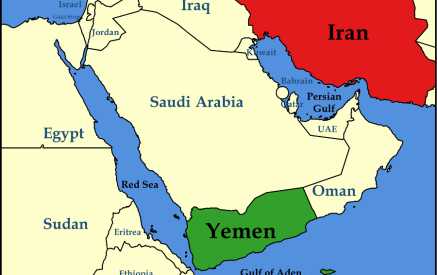
Economic activity rose 7.1 percent (yoy) in April from 6.6 percent (yoy) in March. Growth continued to be buoyed by strong construction activity, up 24.7 percent (yoy) and mining, up 31.8 percent (yoy). Mining continued its strong expansion, building on the recovery that started in late 2025 after previous sectoral challenges and downturns, while benefiting from higher copper prices. Manufacturing grew by 7.1 percent (yoy) following a slow growth of 1.3 percent (yoy) in the previous month. Services (excluding trade) also grew by a healthy 9.1 percent (yoy), while trade remained flat. Cumulatively, economic activity rose 6.9 percent (yoy) in January-April 2026, compared to 4.7 percent (yoy) over the same period last year, continuing the growth momentum. To date, the conflict in the Middle East has had no significant observable impact on economic activity. Notably, in response to rising fertilizer prices, the government has introduced a fertilizer subsidy program of AMD 900 million to support domestic farmers.
Inflation tapered to 4.2 percent (yoy) in May from 5.3 percent (yoy) in April. Decelerating food and non-alcoholic beverages inflation (from 9.5 percent in April to 6.4 percent in May) has been the main driver behind this moderation. Nevertheless, it remains the largest contributor to inflation (contributing 60 percent). Meanwhile, core inflation rose to 5 percent (yoy), exceeding headline inflation and continuing its upward trend, indicating that recent fuel price developments are not the main driver of inflation and that long-term price pressures (excluding food and energy prices), remain strong and sticky.
In April, both exports and imports continued to contract, by 25.9 percent and 5.8 percent (yoy, respectively). Exports decreased due to a continued fall in exports of precious and semi-precious stones by 72.3 percent (yoy), which has been the top re-export item since 2023. Excluding this re-export item, total exports expanded 21.7 percent (yoy), mostly driven by increases in exports of minerals (by 75.6 percent, yoy, following a sector recovery and higher production) and exports of ready food products by 12.5 percent (yoy). Imports also contracted, albeit at a slower pace (by 5.8 percent, yoy) due to a 79.9 percent (yoy) fall in precious and semi-precious stones and a 17.7 percent (yoy) dip in plastic items. Over the January-April period, exports fell 3.3 percent (yoy) whereas imports increased 2.5 percent (yoy), widening the trade deficit from 5.1 percent of annual GDP in 2025 to 5.4 percent of annual projected GDP in 2026. Tourist arrivals continued robust growth – up 10 percent (yoy) in May and 19.3 percent (yoy) in the January-May 2026 period.
In April, net non-commercial money transfers continued to increase by 16 percent (yoy) from a low base in 2025. Net inflows continued to come from Russia (up 31.8 percent, yoy) and other countries (up 46.1 percent, yoy) whereas net inflows from the USA fell 11.2 percent (yoy).
The dram continues to strengthen against the USD. In May, the AMD appreciated against the USD by 1.5 percent (mom) and by 1.7 percent (mom) against the EUR. Compared to May last year, the AMD strengthened further against the USD, appreciating by 4.7 percent (yoy), although depreciating 5.4 percent (yoy) against the RUB. Gross reserves expanded to USD 5.9 billion in May, the highest level ever, reaching an equivalent of 4.4 months of import cover.
Financial system indicators remained sound in April. The Capital Adequacy Ratio rose to 21 percent, and non-performing loans (NPLs) stabilized at 1.3 percent. Commercial bank deposits rose 0.9 percent (mom) while credit increased 1.5 percent (mom), resulting in a loan to deposit ratio of 1.08, requiring the CBA’s close monitoring and application of macroprudential tools to mitigate risks arising from continued credit expansion.
In April, an overall budget surplus equivalent to 0.5 percent of projected annual GDP was recorded. Total revenues and grants grew 16.3 percent (yoy) in nominal terms. Tax revenues grew strongly by 15.7 percent (yoy), two-thirds of this increase owing to profit taxes (up 21.4 percent, yoy), indicating significant profits made in 2025, as all profit tax obligations should be done by end April. Total expenditure expanded by 12.3 percent (yoy) due to a 19.2 percent (yoy) increase in current expenditures which were driven by a 23.4 percent (yoy) increase in social spending. In contrast, capital expenditure contracted 37.5 percent (yoy) mainly due to a 40.6 percent (yoy) dip in defense spending. The cumulative capital expenditure in January-April, remained around 30 percent below its budget plan. Health functional spending remained high due to the public health insurance scheme, rising 75 percent (yoy). Cumulatively, by end-April, health expenditures exceeded the budget plan by 50 percent, indicating higher financing needs for the rest of the year. The cumulative January-April surplus amounted to 1 percent of estimated annual GDP, while the budget planned a deficit of around 2 percent of GDP.
World Bank