








More than four decades after the 1979 Revolution, Iran faces one of the deepest political, economic, and social crises in its modern history. Persistent inflation, declining purchasing power, environmental degradation, restrictions on civil liberties, and growing public dissatisfaction have intensified debate about the country’s future. The central question is no longer whether change is necessary, but how such change can occur without either prolonged authoritarianism or destructive conflict.
Three broad scenarios dominate discussion about Iran’s future. The first is continuation of the existing political order through expanded reliance on coercion. The second is change driven primarily by foreign military intervention or external political engineering. The third is a transition led by Iranian society itself through organized civic participation and domestic political networks. Although these alternatives differ significantly, the first two may both prolong instability for different reasons.
Comparative political experience suggests that durable democratic transitions are built primarily through domestic institutions rather than external force.
International organizations continue to document the depth of Iran’s structural challenges. The World Bank has described Iran as experiencing persistent inflation and long-term structural economic pressures that continue to reduce household purchasing power. Amnesty International’s annual reports consistently identify Iran as one of the world’s leading executioners, while the UN Independent International Fact-Finding Mission on Iran has documented serious allegations of human-rights violations during recent nationwide protests. These findings, regardless of political interpretation, demonstrate that Iran’s challenges extend well beyond short-term economic fluctuations.
Read also
The resilience of the current political system has rested on several mutually reinforcing mechanisms: an extensive domestic security apparatus, an active regional security strategy, and the strategic use of the nuclear issue in international diplomacy. These instruments have helped preserve political control despite recurring economic crises and widespread social dissatisfaction. Any diplomatic agreement that reduces the risk of war and alleviates humanitarian suffering should therefore be welcomed. At the same time, diplomacy alone cannot substitute for domestic institutional reform.
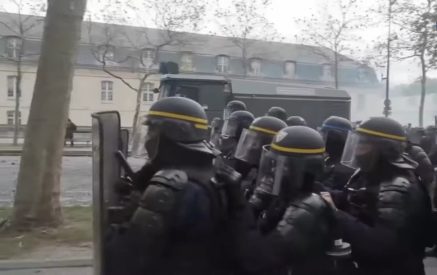
Iranian society has repeatedly demonstrated an impressive capacity for civic mobilization. Students, workers, teachers, retirees, women’s rights advocates, professionals, and many other groups have participated in demonstrations and strikes over the past decade. Yet repeated protest waves also reveal the limitations of spontaneous mobilization when confronted by centralized institutions capable of sustained repression, communication restrictions, and mass arrests.
The critical challenge is therefore organizational rather than emotional. Public dissatisfaction is widespread; transforming that dissatisfaction into lasting political change requires coordination, communication, leadership, and durable civic networks. Without these elements, even large demonstrations often struggle to maintain momentum over time.
Within this broader context, organized opposition networks—including the Resistance Units associated with the MEK—represent one example of attempts to preserve communication among activists, transfer organizational experience, and connect local grievances with broader political objectives. Regardless of differing views toward particular organizations, comparative democratic transitions suggest that durable political change usually requires organization as well as public participation.
Equally important is the existence of a credible constitutional vision for the period after political transition. Any democratic alternative should be evaluated primarily by the institutions it proposes: competitive elections, judicial independence, separation of religion and state, equal citizenship, freedom of expression, protection of minority rights, and peaceful transfer of political power. Democratic legitimacy depends less on personalities than on institutions capable of guaranteeing accountability under the rule of law.
Western policy toward Iran should also move beyond the false choice between military confrontation and indefinite engagement without meaningful political benchmarks. Policies that reduce humanitarian suffering, encourage respect for internationally recognized human rights, and leave political choice to Iranian citizens themselves are more likely to contribute to long-term regional stability than either military escalation or unconditional accommodation.
Ultimately, Iran’s future will be determined less by foreign governments than by the capacity of Iranian society to transform widespread public dissatisfaction into organized democratic change. Sustainable stability becomes possible when three elements converge: an active civil society, organized democratic participation, and a realistic institutional framework for political transition. Iran’s long-term future depends not upon replacing one concentration of power with another, but upon building institutions that protect popular sovereignty, political pluralism, constitutional accountability, and democratic competition.
Selected References
- World Bank. Iran Overview and Macro Poverty Outlook.
- Amnesty International. Death Sentences and Executions (latest annual edition).
- United Nations Independent International Fact-Finding Mission on the Islamic Republic of Iran.
- Freedom House. Freedom in the World: Iran.
Shahrokh Tavakoli