

































What did Alexis de Tocqueville mean when he wrote about the “habits of the heart and mind”?
If I say that one of the important prerequisites for genuine democracy is having the right kind of “heart,” you will say that I am a hopeless romantic and an idealist. What heart? There are degrees, indices and scales measuring the development of democratic institutions, by which it is determined whether a given country is an “excellent student” or a “poor student” when it comes to democracy. You are here according to this index and there according to that one. In Armenia and other countries, those with pro-government or opposition views usually react to these “indices” with exaggerated enthusiasm: “See how much we’ve risen!” or “See how far we’ve fallen!”
But first of all, those who produce these assessments, as we can see from Armenia’s own example, often engage in manipulation, driven by their geopolitical interests. Second, even if everything is, so to speak, measured correctly “in grams” or “in centimeters,” these indicators still tell me nothing, because they seem to overlook one of the most important conditions of democracy: social solidarity, mutual trust and a willingness to compromise.
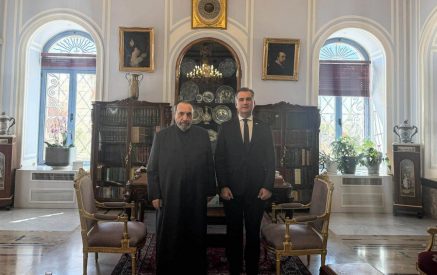
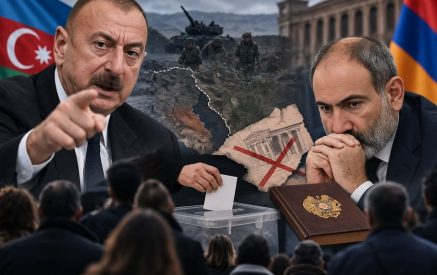
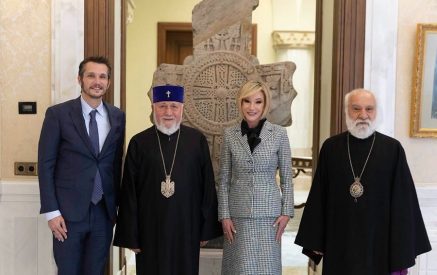
In a democratic country, the head of the executive branch cannot decide and publicly declare who should be imprisoned, who should be driven into bankruptcy, or who should be the Catholicos of All Armenians. In such a country, the opposition cannot be branded “criminal” from one end to the other, with the resulting instructions being issued to law-enforcement agencies. Which “index” measures that? Perhaps you will say: “Well, all of this points to the weakness of state institutions, particularly the courts.” And that observation is certainly correct. With a normal law-enforcement system and functioning courts, it would be possible to hold an “I’ll make you kneel” leader accountable for abuse of power.
Read also

But, in my deep conviction, all of this is a consequence and does not answer the question of why the situation is like this. Vere scire per causas scire, says the Latin maxim. Translated, it means: to truly know is to know the causes.
The authorities can engage in arbitrariness and lawlessness because they encounter no resistance; and, conversely, in Armenia they have mass support—perhaps no longer that of the majority. Continuing this logical reduction, we can say that the reason for this support is that this mass has lost its human face. People are being tortured in a Baku prison? “They deserve it; they are scum.” People have been deprived of basic necessities for three years? “Then they should have stayed in their Karabakh.” A man, regardless of whatever crimes he may be accused of, is taken to court on a stretcher, suffering severe pain? “Good. But when he was looting, was that good?”
The separate question is why people have become so enraged. I believe this would not have been possible without the appropriate propaganda. But the question that concerns us now is how all this is connected with democracy—or, more precisely, with its absence and the establishment of a rigid authoritarian regime.
And here we come to the question of the “heart,” and once again I must quote my favorite author, Alexis de Tocqueville. In his work Democracy in America, written in the 1830s, he introduces the concept of mœurs when discussing social phenomena. It is a difficult term to translate, but in the context of this particular author it can, conditionally, be rendered as “the mores of a people.”
“I include under the term mores not only manners properly so called, which can also be called habits of the heart (les habitudes du cœur), but also the various notions possessed by people, the opinions current among them, and the sum of ideas from which the habits of the mind (les habitudes de l’esprit) are formed,” wrote the French thinker. Thus, among the prerequisites for democracy are not only institutions, but also “mores,” which include the “habits of the heart and mind.”
When people collectively lose their human face, no institution can function. A furious mob does not need democracy.
ARAM ABRAHAMYAN