









































Cultural Heritage Ombudsman of Artsakh Hovik Avanesov:
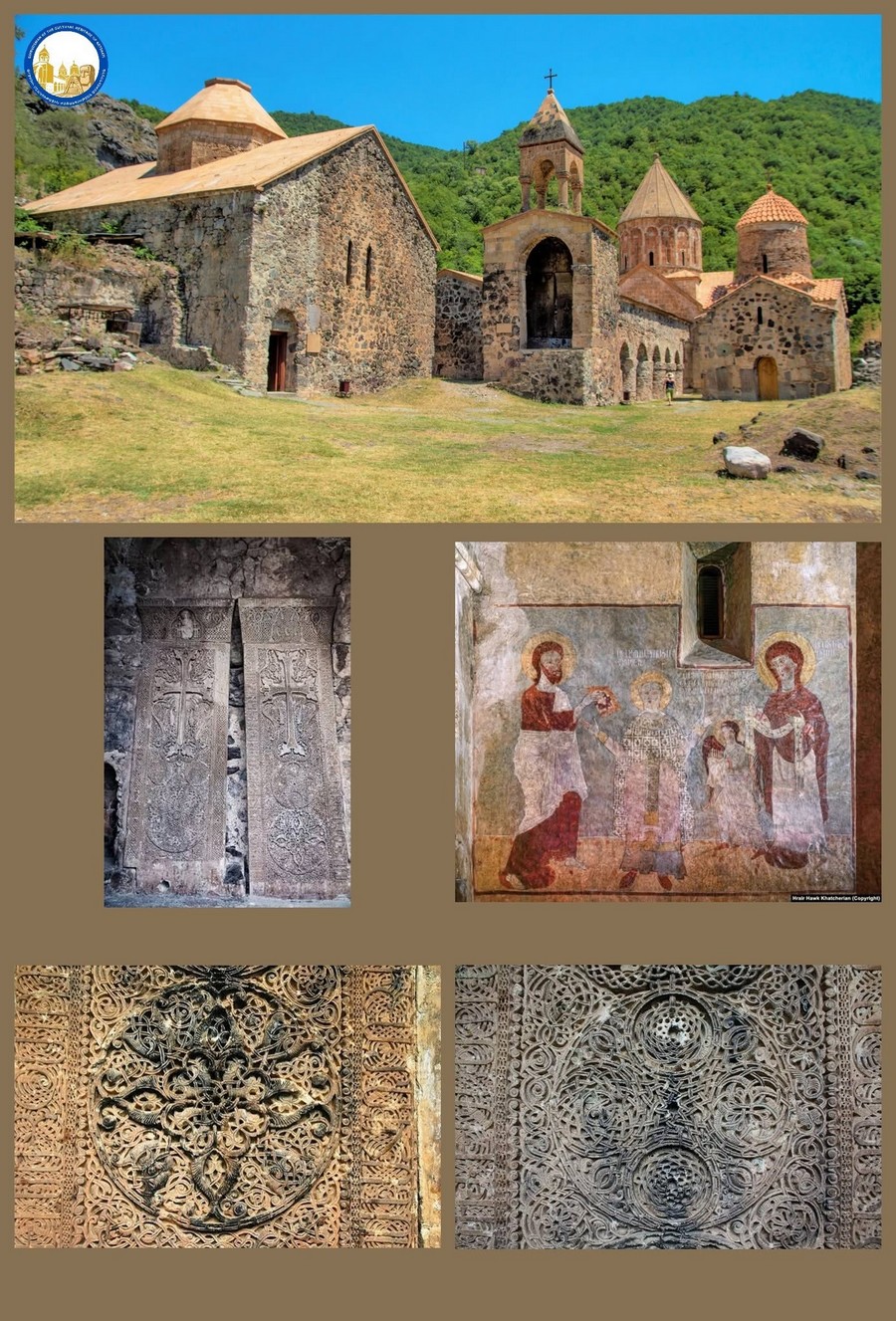
Azerbaijan’s claim that information on the khachkars and frescoes allegedly removed from the Dadivank monastic complex has been entered into INTERPOL’s “Stolen Works of Art” database demands not only the closest attention but also a fundamentally critical assessment.
First of all, it must be recalled that INTERPOL is neither an instrument of states’ foreign-policy struggles nor a mechanism for legitimizing unilateral historical or territorial narratives. Article 3 of the INTERPOL Constitution states explicitly and unambiguously: ” It is strictly forbidden for the Organization to undertake any intervention or activities of a political, military, religious or racial character.” This is one of the fundamental principles of the Organization’s work.
Moreover, INTERPOL itself emphasizes that the principle of neutrality is fundamental to its activities and to its very existence. Requests from states must be checked for compliance with the INTERPOL Constitution and the Rules on the Processing of Data, and information of a political, military, religious or racial character must not be used in violation of Article 3.
Read also
In this light, Azerbaijan’s attempt to present the question of Dadivank’s cultural heritage exclusively as a case of allegedly “stolen Azerbaijani cultural property” raises serious questions regarding the political context and the reliability of the information submitted.
It is particularly problematic that the objects in question are Christian monuments, namely the khachkars and frescoes of a medieval monastic complex whose history is directly bound up with Armenian cultural and ecclesiastical heritage. Consequently, any unilateral assertions concerning the origin, ownership, and circumstances of the relocation of these objects cannot automatically be regarded as legal facts established by the international community.
It should also be borne in mind that INTERPOL itself clarifies that the data in the “Stolen Works of Art” database are supplied by National Central Bureaus and other authorized entities, and that the Organization expressly warns that it does not guarantee the accuracy or reliability of the information provided, which must be verified with the relevant data owner.
Thus, the mere existence of an entry in the INTERPOL database cannot be presented as an international judicial decision, a determination of title to property, or the Organization’s definitive recognition of the historical and cultural affiliation of a specific object. These are fundamentally distinct legal categories.
The political character of such statements by Baku also merits particular attention. Azerbaijan systematically seeks to exploit international organizations and existing international mechanisms in order to advance its own version of history and to promote the perception of Artsakh’s cultural heritage as purportedly “Azerbaijani heritage.” International policing instruments must therefore not be turned into a means of politicizing historical and cultural issues.
If the Azerbaijani side has indeed succeeded in having the relevant information entered into the INTERPOL database, a legitimate question arises: on the basis of which documents, expert opinions, and legally verified data was this information submitted? Who determined the origin of each individual object? Which independent international expert studies support the claim that the objects “belong to Azerbaijan”? And how was the evident political and religious-cultural context of the matter taken into account when these materials were reviewed?
It is no less important to establish whether INTERPOL was provided with complete information on the origin of these objects, on the history of the monastic complex itself, on the circumstances of the objects’ relocation, and on the existing international and scholarly debates concerning the cultural affiliation of Dadivank.
An attempt to present the unilateral position of a single state as a definitively established fact would run counter to the very logic of international police cooperation and to the principle of INTERPOL’s neutrality.
Cultural heritage must not become an instrument of political manipulation. International databases created to combat the illicit trafficking of cultural property must be used solely on the basis of verifiable, reliable, and legally substantiated information, and not to entrench politicized historical narratives.
In the present case, it is especially important that INTERPOL ensure not merely formal compliance with procedures, but also a thorough verification of the provenance of the submitted information, its reliability, and its conformity with Article 3 of the Organization’s Constitution.
Azerbaijan must not be allowed to use international law-enforcement mechanisms to promote, unilaterally, its state historical policy. International institutions must remain a space of objectivity, professional expertise, and legal procedure, rather than an instrument of an information and political campaign.