




































PART ONE — 2020
Ahead of the 17th Conference of the Parties to the Convention on Biological Diversity (COP17), the Office of the Ombudsman for the Cultural Heritage of Artsakh is launching a series of publications aimed at drawing the international community’s attention to acts of environmental destruction constituting manifestations of ecocide that have been perpetrated and continue to be perpetrated by Azerbaijan in Artsakh. The series seeks to document the consequences of these acts and bring the questions of accountability and justice to the forefront.
The assaults on Artsakh’s natural environment, forests, biodiversity, and natural ecosystems cannot be considered in isolation from Azerbaijan’s broader military and political policies. The destruction of the natural environment, the outbreak and spread of forest fires, and the resulting threats to the lives and health of the civilian population require comprehensive, evidence-based investigation in accordance with the principles of international law.
On 27 September 2020, the Turkish-Azerbaijani military alliance launched a large-scale war against Artsakh. During the war, civilian infrastructure, cultural heritage monuments, and the civilian population were targeted. However, the consequences of the military aggression extended beyond human casualties, the destruction of settlements, and the loss of cultural assets. Artsakh’s natural environment also came under severe attack, including its forested areas and the ecosystems sustained by them.
Read also

According to information published on 2 November 2020 by the Human Rights Defender of Artsakh, preliminary data indicated that approximately 1,815 hectares of forestland had already been affected by fires. At the same time, fires continued to burn in various locations, with indications that the areas affected were expanding rapidly ( https://www.facebook.com/ArtsakhOmbuds/posts/1706398566193965?ref=embed_post ).
The scale and geographical extent of the forest fires indicated a serious environmental threat. The population of Artsakh faced the danger of an environmental disaster that threatened the region’s ecological balance and could have long-term adverse consequences for human life, health, and living conditions.
The consequences of forest fires extend far beyond burnt trees and destroyed vegetation. They result in the loss of wildlife habitats, disrupt biodiversity, contribute to soil degradation, increase the risk of erosion, and can impair the natural regeneration of ecosystems for years. Particularly alarming are instances in which fires spread through areas where civilians, driven from their homes by military operations, are forced to seek shelter in forests.
The publication of the Human Rights Defender of Artsakh also emphasized that the use of such methods by Azerbaijani armed forces may have been intended to harm civilians sheltering in forested areas. This circumstance lends the issue not only an environmental dimension but also a humanitarian one, placing it within a critical area of human rights protection.
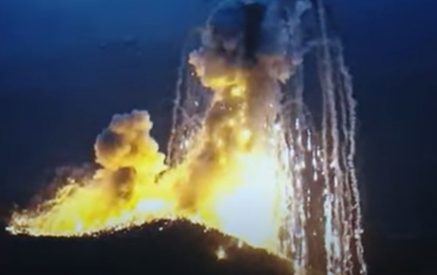
In November of the same year, the Human Rights Defenders of the Republic of Armenia and the Republic of Artsakh published a joint report concerning the use by Azerbaijani armed forces in Artsakh of incendiary munitions containing chemical elements, possibly white phosphorus ( https://artsakhombuds.am/hy/document/761 ).
On 9 December 2022, the Prosecutor’s Office of the Republic of Artsakh announced that, in addition to numerous public statements and video recordings, the use of phosphorus-based weapons by Azerbaijan during the 2020 war had also been substantiated by an expert assessment.
These circumstances warrant a rigorous professional investigation to establish the types of munitions used, the locations in which they were deployed, the damage caused, and their impact on the environment. At the same time, it is essential to ensure the preservation of relevant evidence, independent expert assessment, and appropriate examination by competent international bodies.
The damage inflicted on Artsakh’s natural environment during military operations must be assessed not merely as the consequence of individual fires or localized destruction, but as part of a broader pattern of actions threatening the region’s natural environment, biodiversity, and the safety of its population. Each such incident requires answers to fundamental questions: what was destroyed, by what means, with what consequences, and who bears responsibility for the damage inflicted?
The Azerbaijani authorities cannot disregard the evidence concerning damage inflicted on Artsakh’s natural environment, and the international community must not subordinate environmental concerns to political expediency. If international institutions proclaim biodiversity conservation, climate resilience, and the protection of nature to be among their priorities, these principles must also apply to territories where environmental harm is associated with war, military violence, and the forced displacement of populations.
It is particularly unacceptable for a state that publicly advocates environmental responsibility to fail to ensure a transparent, independent, and verifiable investigation into the damage sustained in territories under its occupation. Nature conservation must not become a selective agenda under which ecological problems in one territory are recognized as matters of international importance, while the burning of forests, destruction of habitats, and environmental consequences of potential war crimes in another territory remain overlooked.
The documented damage to Artsakh’s forests and natural environment must also be examined within the broader framework of human rights protection. The right to a healthy and safe environment cannot depend on a population’s political status, ethnic origin, or the international political attitudes prevailing toward the territory in which it lives. The safety of Artsakh’s population, the preservation of its natural environment, and the protection of its cultural heritage are interrelated concerns. Indifference to any of them compounds the already severe humanitarian consequences.
At the same time, it is essential to emphasize that environmental damage must be documented with the utmost precision. The extent of burned areas, damage to ecosystems, information concerning the use of munitions, and potential long-term consequences must be substantiated by satellite imagery, photographs and video recordings from the affected locations, expert assessments, and other verifiable evidence. Legal conclusions must be grounded in established facts and the applicable rules of international law. Only such an approach can ensure the credibility of the evidence, prevent its distortion, and establish a sound basis for activating accountability mechanisms.
The environmental consequences of Azerbaijan’s military operations in Artsakh cannot simply disappear with the passage of time or be consigned to oblivion beneath the weight of political statements. Destroyed forests, scorched land, disrupted habitats, and threats to human health demand not only documentation but also damage assessments, examination of the question of responsibility, and, where necessary, the implementation of environmental restoration measures.
On the eve of COP17, the international community must receive an unequivocal message: biodiversity protection cannot be selective, and alleged crimes against nature must not go unpunished. If the global environmental agenda aspires to be universal, it must also address ecosystems damaged by military operations, irrespective of their geographical location or political context.
The Office of the Ombudsman for the Cultural Heritage of Artsakh will continue documenting the damage inflicted on Artsakh’s natural and cultural environment, making verified information publicly available, and consistently raising the issue of international accountability. The purpose of this publication series is not merely to recall past events. It is also a call to prevent further destruction, preserve evidence, and ensure that actions directed against Artsakh’s natural environment and population do not remain beyond the scrutiny of the international community.
Artsakh’s natural environment is not a silent witness. Through destroyed habitats, burned forests, and disrupted ecosystems, it bears testimony to the consequences of war. This evidence must be investigated, preserved, and made an integral part of the pursuit of justice.