













UN Secretary-General’s Remarks to the Leaders Summit on Biodiversity at COP 17
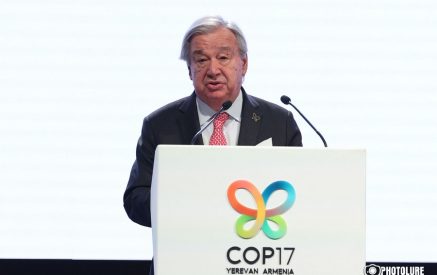
REMARKS TO THE LEADERS’ SUMMIT ON BIODIVERSITY, UNITED NATIONS BIODIVERSITY CONFERENCE (COP17)
“Leaders for Nature”
Excellencies, dear friends,
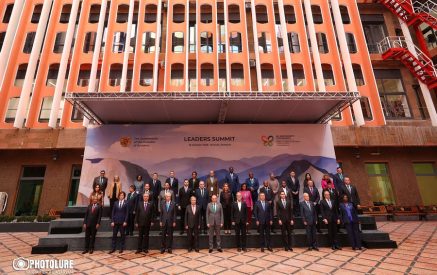
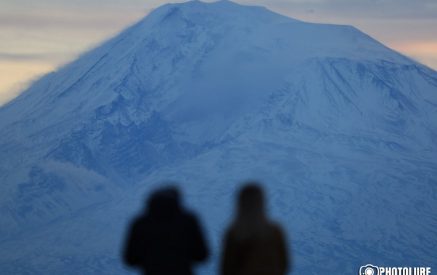
I thank the Government of Armenia for hosting this vital summit, and for sharing with us the wonders of the Caucasus.
Read also
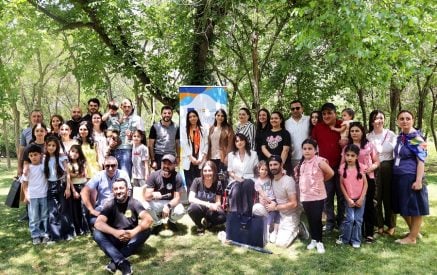
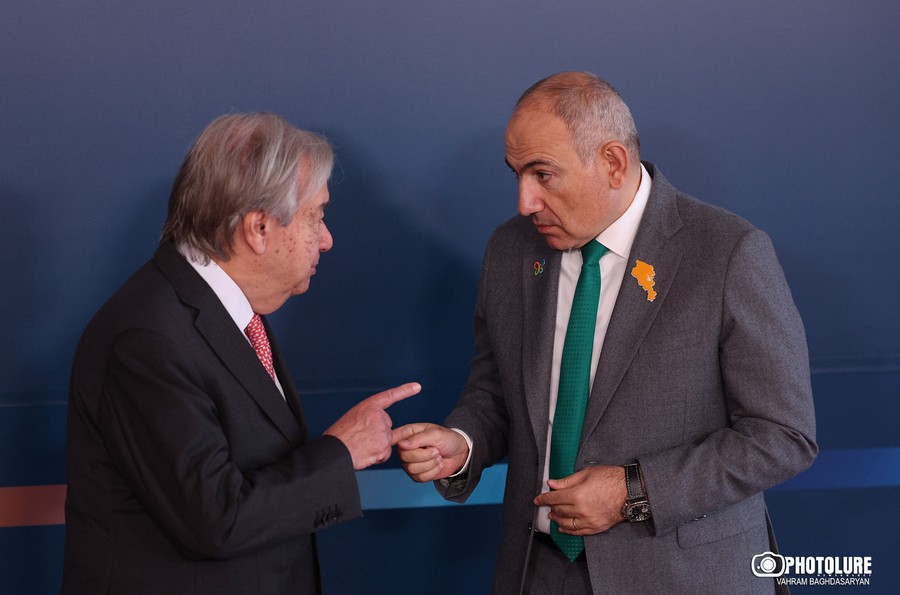
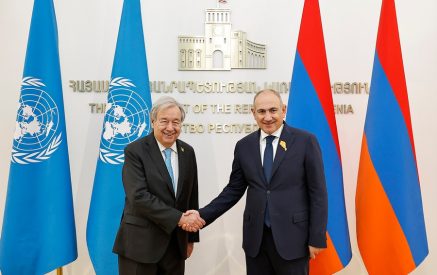
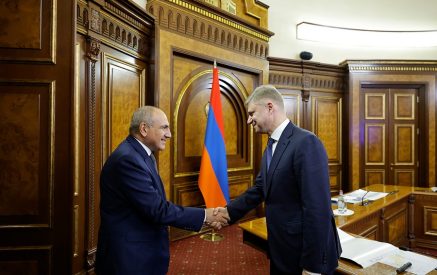
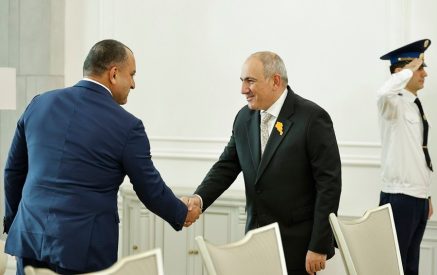
Armenian Prime Minister Nikol Pashinyan welcomes United Nations Secretary-General António Guterres upon his arrival at the Meridian Exhibition Center to attend the COP17 Leaders’ Summit. Yerevan, Armenia
This landscape, and everything in it, is a reminder of why we are here.
The food we eat, the water we drink, the very air we breathe –– all are the gifts of biodiversity.
Yet every day, humankind saws another branch off the tree of life.
Climate chaos.
Invasive species.
Overgrazing and overfishing.
Excessive fertilizers, pesticides, plastics and heavy metals.
All these and more are driving the triple planetary crisis of pollution, biodiversity loss and climate chaos.
Over one million species now face the risk of extinction, edging us ever closer towards an uninhabitable world.
It doesn’t have to be this way.
Four years ago in Montreal, leaders agreed on a plan.
The Kunming-Montreal Global Biodiversity Framework laid out a path to make peace with nature.
But that was just the beginning. We need more action, more speed, and more will.
Halfway to 2030, Yerevan is our moment of accountability.
It’s time to ask ourselves: Are we doing enough?
Dear friends,
There is good news and bad news.
The Global Biodiversity Framework has inspired action across the globe.
Nearly 90 per cent of Parties to the Convention have established national biodiversity targets.
And over half have set out their own national roadmaps for delivery.
Since 2022, an additional 1.3 million square kilometres of land and 6 million square kilometres of ocean have come under formal protection.
But progress is uneven, and far too slow.
Even if current national commitments are met, only 26 per cent of terrestrial, and 12 per cent of marine ecosystems would be protected by 2030.
That is well short of the promise made in Montreal to protect 30 per cent of land and sea by 2030.
Major gaps also remain in targets linked to economic systems, including those focused on reducing harmful incentives.
And many of the critical elements of progress — including finance, capacity, cooperation and data — are still largely missing in action.
An OECD report released earlier this month found that biodiversity financing is less than half of the $200 billion we agreed to under the Framework.
Dear friends,
Our world is being battered by conflict, climate chaos, food insecurity, disease threats, and more.
Biodiversity is not a separate challenge.
Addressing any of these crises requires addressing them all.
And there is no time to waste.
The theme of this gathering is “Leaders for Nature.”
Today, I am calling for leadership across three key areas.
First — government leadership.
The flagship target of “30 by 30” is an acknowledgment of the science, and a show of faith in multilateralism.
Like healing the hole in the ozone layer — another landmark agreement signed in Montreal almost 40 years ago — it has the potential to become one of the greatest collective achievements in human history.
I urge you to do all you can to meet this goal.
Delivering on the Framework will require a massive shift, from policies that destroy nature, to practices that sustain it.
These include:
Zero-waste and circular economies.
Sustainable farming and regenerative agriculture.
Monitoring, transparency and disclosure.
And firmer enforcement of the laws already in place.
I welcome the Yerevan Declaration, which vows to make this conference a turning point for our planet.
And to enshrine biodiversity in every government decision — from policies, to budgets, to regulations.
We can further support this action, through deeper integration across all three Rio conventions.
Second — financial leadership.
The stark truth is, we are spending money on the wrong things.
For every dollar invested in protecting nature, $30 are spent destroying it.
In 2023, $7.3 trillion flowed into nature-negative activities.
Heavy industries that spew pollution.
Agribusiness that strips the land.
And of course, fossil fuels.
Subsidizing fossil fuels is subsidizing suicide.
They are boiling our planet, and are the scourge of biodiversity.
I urge governments everywhere to end these handouts once and for all, and to use the savings for people and planet instead.
According to figures from UN Environment earlier this year, achieving the global biodiversity, climate and land restoration targets laid out in the three Rio conventions requires scaling up investment in nature-based solutions to $571 billion annually by 2030.
That’s just half of one per cent of global GDP — a small price to pay for a liveable Earth.
But governments cannot do this alone.
The private sector must also step up.
The Cali Fund is an innovative financing mechanism that allows the businesses that profit from nature to help protect it.
I urge companies everywhere to contribute, and governments to incentivize participation.
In the realm of renewables, business is already leading the way.
Renewables are now the cheapest, fastest and most secure source of new electricity.
Since 2010, the cost of solar has plummeted by almost 90 per cent, and battery storage by 95 per cent.
Global clean energy investment has surged to nearly twice the capital being invested in fossil fuels.
And last year alone, renewables prevented carbon emissions equivalent to those of the US, the EU and Japan combined.
More and more countries are shaking themselves free from volatile and extortionate fossil fuel markets.
But these benefits are not shared equally around the globe.
Crushing debt, shrinking fiscal space, and an unjust international financial system force many developing countries to choose between nature and people.
We know that sustainable development cannot happen without both.
Through the Sevilla Commitment, world leaders pledged to right this wrong.
By increasing domestic and international financing for development…
By having Multilateral Development Banks aggressively scale up investment…
By Bank shareholders providing fresh capital, allowing to expand concessional finance and unlock private investment…
And by reforming the global financial architecture to give to developing countries the participation and influence that they deserve bring it in line with today’s economic reality.
We are far from what the world was in 1945.
Third — we need the leadership of all.
Environmental decline often falls hardest on the most vulnerable, and those who did the least to cause the problem.
But the solutions often arise from these same groups.
For the Global Biodiversity Framework to succeed, we need partnerships like never before.
These include:
The innovation of young people…
The energy of civil society….
The participation of women…
And, of course, the leadership of Indigenous Peoples and local communities.
By placing Indigenous knowledge at the heart of biodiversity, we can harness one of the world’s most powerful AIs: Ancestral Intelligence.
These millennia-old practices that can bring humankind back into alignment with earth, sea, and sky.
Dear friends,
I have 76 days left as Secretary-General.
Over a decade in office, one of my greatest priorities has been fighting the triple crise of climate change, loss of biodiversity and pollution.
This is because, like many of you, I have children and grandchildren.
They are counting on us to be leaders for nature.
In nature, leaders are nurturers.
The matriarchs of elephant herds, who know the paths to hidden water in times of drought.
The first bird in a migrating flock who cuts the air for those flying behind.
The plants, known as pioneer species, which have evolved to grow back first after wildfires, and enrich the soil for those that follow.
We must be nurturers too.
Let us act with the urgency this moment demands.
For our children.
For our future.
And for all life on Earth.
Thank you.
UN Armenia
Yerevan, 16 October 2026