









The international human rights organization Freedom House has published its annual report “Freedom in the World 2025.” It also analyzes the situation of rights, civil liberties, and justice in Armenia, addressing the judicial system, security, equal rights, and personal freedoms. Here is the section concerning our country.
Note
Conditions in Nagorno-Karabakh were examined in a separate report through the 2024 edition of Freedom in the World, in which the territory’s status declined from Partly Free to Not Free due to an Azerbaijani blockade and military offensive that culminated in the dissolution of local political, legal, and civic institutions and the departure of nearly all of the civilian population. As of the 2025 edition, conditions in Nagorno-Karabakh are covered under the country report for Azerbaijan. Freedom in the World reports assess the level of political rights and civil liberties in a given geographical area, regardless of whether they are affected by the state, nonstate actors, or foreign powers. Related, disputed, or occupied territories are sometimes assessed separately from the relevant countries if they meet certain criteria, including distinct conditions for political rights and civil liberties and boundaries that are sufficiently stable to allow year-on-year comparisons. For more information, see the report methodology and FAQ.
Overview
Armenia experienced a significant transition following mass antigovernment protests and elections in 2018 that forced out an entrenched political elite. The government has since worked to address long-standing problems including systemic corruption, opaque policymaking, a flawed electoral system, and weak rule of law. The country has been seriously affected by military pressure from Azerbaijan in recent years. In September 2023, nearly the entire ethnic Armenian population of Nagorno-Karabakh, which had enjoyed de facto independence from Azerbaijan since 1994, fled to Armenia after the Azerbaijani military defeated local defense forces and took full control of the territory.
Key Developments in 2024
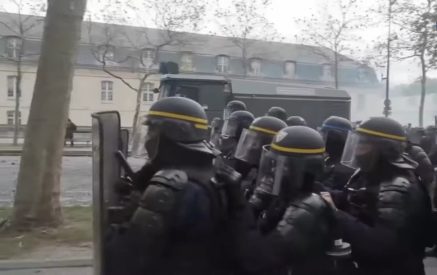
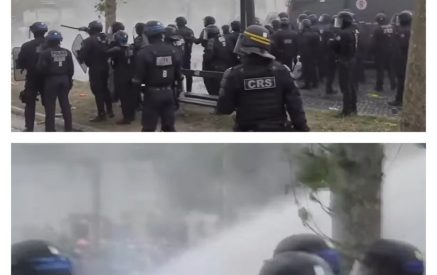
- In April, the Armenian government reached agreement on a border delimitation process with Azerbaijan and pledged to hand over four pieces of territory to Baku, sparking protests within the country. Antigovernment protests at the parliament building in June featured clashes with police, leading to the use of stun grenades, injuries to about 100 people, and a similar number of arrests.
- The government’s ongoing anticorruption and judicial reforms made little progress during the year. Successful corruption prosecutions against high-ranking officials remained extremely rare, and law enforcement bodies failed to respond to media reports concerning the declared assets of certain officials.
- In November, the head of the Supreme Judicial Council (SJC) joined five other senior officials in resigning at the prime minister’s request, raising concerns about judicial independence.
- The government continued its efforts to decrease Armenia’s dependence on Moscow for security, freezing the country’s membership in the Russian-led Collective Security Treaty Organization (CSTO) in February and overseeing the withdrawal of Russian border guards from a Yerevan airport and the borders with Azerbaijan and Iran by year’s end.
Political Rights
A Electoral Process
Read also
A1 0-4 pts
Was the current head of government or other chief national authority elected through free and fair elections?
The president is chosen by the parliament for a single seven-year term. Most executive power lies with the prime minister, who is chosen by a parliamentary majority. In January 2022, President Armen Sargsyan, who had been elected in early 2018, resigned. Vahagn Khachaturyan, who was serving as minister of high-tech industry, was elected as the new president.
In June 2021, Prime Minister Nikol Pashinyan’s Civil Contract party won a majority of seats in snap parliamentary elections, allowing him to retain his position. Though the outcome was contested by the opposition, the Constitutional Court upheld the election results, and local and international observers considered the elections to be relatively free and fair, despite some irregularities.
A2 0-4 pts
Were the current national legislative representatives elected through free and fair elections?
The National Assembly consists of a minimum of 101 members elected for five-year terms under a closed-list proportional representation system. Up to four additional seats are reserved for ethnic minority representatives, and further seats can be added to ensure that opposition parties hold at least 30 percent of the seats.
In the June 2021 snap elections, three party groups won representation. Pashinyan’s Civil Contract secured 53.9 percent of the vote and a stable majority of 71 seats. The new Armenia Alliance, led by former President Robert Kocharyan, took 21.1 percent of the vote and 29 seats. Another new bloc, the I Have Honor Alliance, founded by former President Serzh Sargsyan (unrelated to Armen Sargsyan), won 5.2 percent of the vote and 7 seats, though one representative left the group to become an independent lawmaker. While party alliances are required to meet a 7 percent electoral threshold, the threshold was waived for Sargsyan’s alliance, as Armenian law requires a minimum of three party groups in the legislature.
Local and international observers deemed the elections to be competitive, well-organized, and fairly administered, though there were some irregularities.
In November 2024, the prime minister asked two Civil Contract lawmakers, Narek Zeynalyan and Hovik Aghazaryan, to step down. Zeynalyan complied, but after Aghazaryan refused, he was expelled from the party, as was another member of parliament who supported him. Aghazaryan later faced a criminal investigation for allegedly disclosing state secrets.
Fourteen political forces took part in elections for the Yerevan municipal council in September 2023, which drew a turnout of only 28.4 percent of eligible voters. The domestic monitoring group Independent Observer found that while there were “massive abuses of administrative resources” during and before the campaign, voters were generally free in expressing their electoral will. The group also recorded instances of unauthorized individuals in voting rooms, violations of voting confidentiality, “directing voters,” and violation of the rights of observers or media representatives. Subsequent media investigations found possible evidence of illegal financing for the ruling party’s election campaign.
A3 0-4 pts
Are the electoral laws and framework fair, and are they implemented impartially by the relevant election management bodies?
Members of the Central Election Commission (CEC) are recommended and then confirmed by the parliament for six-year terms. According to international observers, the CEC conducted its work in a transparent and efficient manner during the June 2021 parliamentary elections. In October 2022, Vahagn Hovakimyan, a member of the ruling party, was elected head of the CEC, drawing concerns from civil society groups about the body’s independence and neutrality.
An April 2021 reform introduced a simple proportional electoral system based on a nationwide constituency, and the June elections were held under the new system. In May 2023, the government proposed new amendments to the electoral code. The Venice Commission and the Organization for Security and Co-operation in Europe in a joint report called the frequency of electoral legislation amendments “striking” and expressed regrets that not all prior reform recommendations had been addressed.
B Political Pluralism and Participation
B1 0-4 pts
Do the people have the right to organize in different political parties or other competitive political groupings of their choice, and is the system free of undue obstacles to the rise and fall of these competing parties or groupings?
Political parties and opposition groups have been able to operate in a much freer environment since 2018. In January 2021, amendments to the Law on Parties took effect, capping individual donations and tying public funding to a party’s geographical reach and the degree of gender parity in its leadership.
An unprecedented number of political entities—22 political parties and four alliances—took part in the June 2021 parliamentary elections.
B2 0-4 pts
Is there a realistic opportunity for the opposition to increase its support or gain power through elections?
Elections have become significantly more competitive since 2018, allowing for opposition gains. However, opposition parties have sometimes encountered procedural barriers and the threat of criminal prosecution in recent years.
In the September 2023 Yerevan municipal council elections, the opposition National Progress party and Mother Armenia alliance received approximately 19 percent and 15 percent of the votes, respectively, with the ruling Civil Contract party securing only 32.5 percent. However, in February 2024, the ruling party initiated a procedure that ousted the leader of National Progress—former Mayor Hayk Marutyan—and two other opposition members from the council, citing their repeated absences. Marutyan argued that he had been intentionally boycotting the sessions and labeled his ouster “politically motivated.” Three other opposition members were removed from the council on the same grounds in September.
In October 2024, the opposition mayor of Gyumri, Armenia’s second-largest city, and all members of his Balasanyan Alliance in the city council resigned after a criminal case was launched against senior party figure and former Mayor Samvel Balasanyan and his family. The resignations came less than a year after Civil Contract canceled its 2021 cooperation agreement on shared city governance with the Balasanyan bloc. With snap city council elections set for early 2025, Prime Minister Pashinyan appointed an acting mayor after holding a limited Civil Contract primary election in December. The opposition criticized the move as an effort to preempt the council elections.
B3 0-4 pts
Are the people’s political choices free from domination by forces that are external to the political sphere, or by political forces that employ extrapolitical means?
In 2021, the parliament set heavier penalties for vote buying, election-related violence, and disruption of the electoral process. Lawmakers also criminalized the obstruction of preelection campaign activities. Though that year’s parliamentary elections featured a decline in such practices, international observers continued to report allegations, including isolated incidents of vote buying and the misuse of administrative resources.
Independent Observer said that no outright voter bribery took place during the 2023 election campaign for the Yerevan municipal council, but noted several cases of voters being offered items or services by various parties.
B4 0-4 pts
Do various segments of the population (including ethnic, racial, religious, gender, LGBT+, and other relevant groups) have full political rights and electoral opportunities?
Citizens formally enjoy equal political rights regardless of gender or ethnicity. However, women remain underrepresented in politics and government, and most parties do little to address women’s political interests aside from meeting a legal gender quota on their candidate lists. Due to persistent societal discrimination and political marginalization, no openly LGBT+ people have run in elections or been appointed to a public office in Armenia.
A system introduced as part of 2015 constitutional reforms mandates the inclusion of up to four members of parliament representing ethnic minority groups; all four must be elected on a party list. In 2021, the Civil Contract party won the three seats representing ethnic Russians, Yazidis, and Kurds, while the Armenia Alliance won the seat representing ethnic Assyrians.
C Functioning of Government
C1 0-4 pts
Do the freely elected head of government and national legislative representatives determine the policies of the government?
The Civil Contract party, which won a significant parliamentary majority through competitive elections, effectively controls government policy and legislation. Although Prime Minister Pashinyan promised to reduce the influence of business interests over policymaking, two powerful businessmen entered the parliament on his party list, and one of them was appointed as Armenia’s ambassador to Russia in August 2024. Some opposition lawmakers also maintain close ties to influential businesspeople.
Armenian authorities have been diversifying their international security partnerships to reduce dependence on Russia, particularly since Azerbaijani forces conquered Nagorno-Karabakh in September 2023 despite the presence of Russian troops tasked with maintaining a 2020 cease-fire agreement. During 2024, the Armenian government negotiated the withdrawal of Russian military and border guard forces from several Armenian provinces where they had been deployed after the 2020 Nagorno-Karabakh conflict, as well as from the Iranian border. Russian border guards also left Yerevan’s Zvartnots Airport, where they had been stationed since 1992. In February, Armenia froze its membership in the Russian-led CSTO; no Armenian officials took part in the organization’s sessions during the year.
Despite these moves, Armenia’s economy and significant components of its national infrastructure, including railroads and energy suppliers, remained dependent on Russia, allowing Moscow to retain influence over policymaking.
Also during 2024, Armenia faced continued territorial pressure from Baku. In April, the government reached agreement on a border delimitation process with Azerbaijan and subsequently transferred four pieces of territory in Tavush Province to Azerbaijani control in May.
C2 0-4 pts
Are safeguards against official corruption strong and effective?
Relationships between politicians, public servants, and businesspeople have historically influenced policy and contributed to selective application of the law. High-level government officials from the ruling party are rarely investigated despite clear evidence of improper uses of their office. In February 2024, Economy Minister Vahan Kerobyan resigned after being charged with abuse of office for allegedly manipulating procurement decisions. In May, the state-owned Armenian National Interests Fund, which was managed by the Economy Ministry, was dissolved amid further accusations of corruption, though a related criminal investigation had reportedly made little progress by year’s end.
Anticorruption bodies have themselves come under scrutiny for apparent dysfunction and possible irregularities. In 2023 and 2024, for example, media reports revealed significant corruption risks in the asset declarations and other credentials of judges on the Anti-Corruption Court. Sasun Khachatryan resigned as head of the Anti-Corruption Committee in November 2024 at the prime minister’s request, and only one candidate was named to replace him, raising doubts about the integrity of what was meant to be a competitive selection process. The parliament also struggled to fill vacancies on the Commission to Prevent Corruption, electing one new member in December 2024 but failing to install a permanent chairperson. Separately, media reports during the year highlighted the extremely slow pace of court cases involving the confiscation of illegally obtained assets.
C3 0-4 pts
Does the government operate with openness and transparency?
Transparency has historically been limited, and enforcement of procurement safeguards and asset-declaration rules for public officials has been weak. Civil society experts identified a number of flaws and allegedly regressive features in draft legislation on freedom of information that the government released in February 2024, after an earlier round of comment and revision.
The Committee to Protect Freedom of Expression (CPFE) reported a pattern of incomplete, delayed, or denied government responses to journalists’ requests for information during 2024. Another watchdog organization, the Freedom of Information Center, similarly highlighted incomplete or generic responses as a major challenge, alongside state bodies’ discrimination among different outlets and unlawful demands to justify information requests.
Media reports in recent years have cited an increase in closed or classified government proceedings and a paucity of regular press conferences by government leaders.