
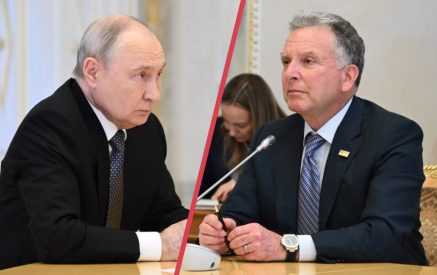


























“I like people that like me.” A perfectly simple human attitude—if we are honest, each of us could say the same. For a private individual, that is natural. But when it comes to a head of state, it becomes a problem. And when such a statement is made by the leader of the most powerful country in the world, it can have disastrous consequences.
Within the United States, guided by this slogan, Donald Trump, to put it mildly, allows himself rather inappropriate remarks about journalists, opponents, and even his (former?) associates—such as Elon Musk and Tucker Carlson. In dealing with the outside world, Trump regularly lashes out at the Pope, European leaders, and NATO officials.
This situation suggests that Trump is by no means a peacemaker; on the contrary, he is combative and prone to scandal. Peace within a country can only take hold when citizens, despite all their disagreements, share a common narrative. “Make America Great Again” could serve as such a narrative—provided that Trump does not tie the words “America” and “great” exclusively to his own dear person.
Or, if we take an example from international relations, peace between Iran and Israel cannot be established because their narratives about the “Temple” contradict each other. Of course, it is entirely possible—and highly desirable—that this conflict does not take the form of active military operations. But in a broader sense, the conflict itself cannot be brought to an end.
Read also
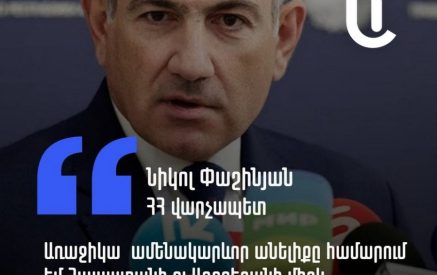
In Armenia, internal peace is impossible as long as Nikol Pashinyan considers all his political opponents, as well as anyone he dislikes, to be enemies of the state and the people (or, at best,a repulsive rabble). This is because he associates the words “state” and “people” exclusively with his own dear person. One can only hope that Armenia’s next leader will have the statesmanship to understand this.
Peace between Armenia and Azerbaijan will be possible if we share a common narrative. Theoretically, that is possible. But it cannot be a purely Azerbaijani narrative—that everything was peaceful until 1988, when Armenians, whether out of foolishness, adventurism, or because they were “servants of Russia,” suddenly decided to seize someone else’s land. This is precisely the narrative being offered to us by Pashinyan, his supporters, and those who believe him. Can this serve as a shared Armenian-Azerbaijani narrative? I very much doubt it.
Aram ABRAHAMYAN