














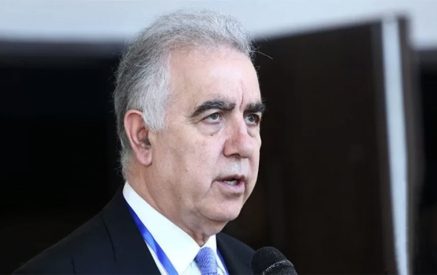




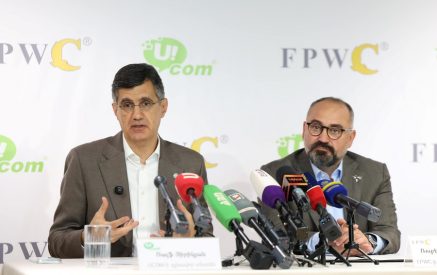



Siranush Sahakyan, director of the International and Comparative Law Center and the Armenian Office of the Armenian Legal Center for Justice and Human Rights, held meetings in Washington from September 14 to 16 with members of the U.S. Congress, senators, members of the House of Representatives, and responsible staff members of their offices.
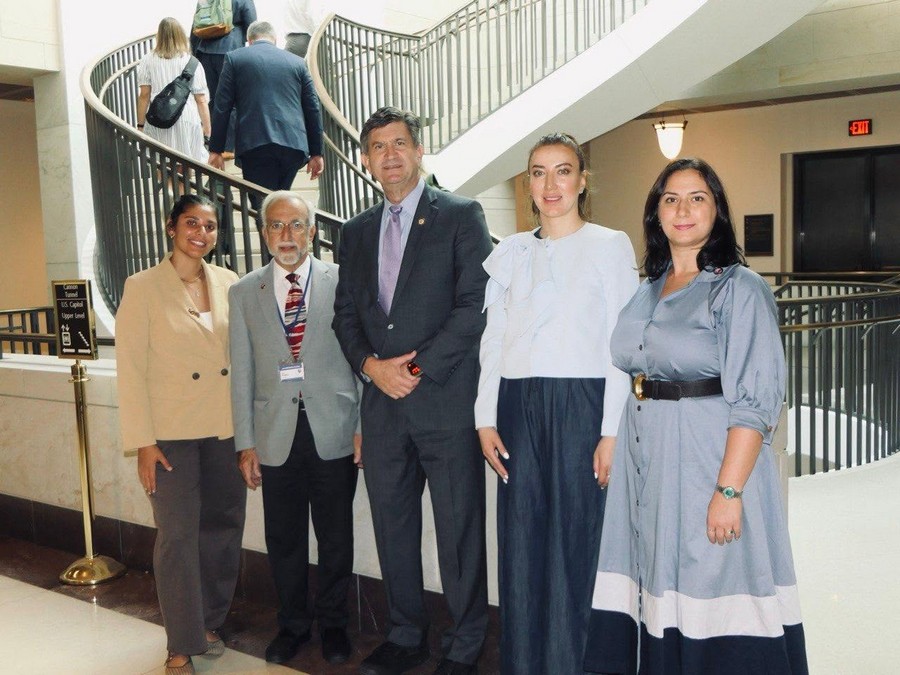
As the representative of Armenian prisoners before the ECHR, during her meetings with members of Congress, Siranush Sahakyan raised the ongoing violations of the prisoners’ rights. She addressed the lack of visits with the prisoners’ families and lawyers, restrictions on consular visits, as well as the incompatibility of their actual situation with international human rights standards and even Azerbaijan’s legislation.
Sahakyan also spoke about the trials held in Baku and the judgments delivered, emphasizing the application of collective responsibility to individuals and the approach of holding them accountable without a specific act and sufficient grounds concerning that act.
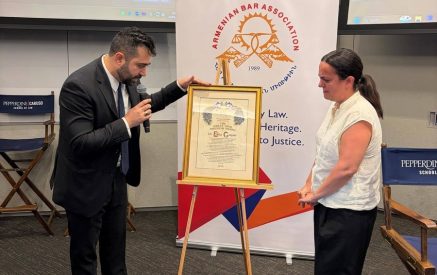
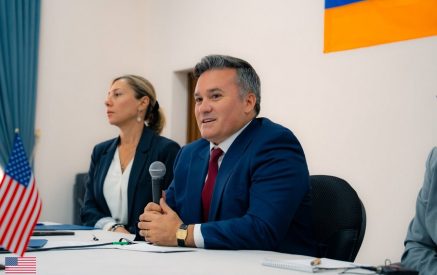
Siranush Sahakyan also participated in the “Strategic Advocacy 2026” nationwide event organized by the Armenian National Committee of America. In her remarks, she first thanked the Armenian National Committee of America (ANCA) for organizing the event, as well as for keeping the rights of the people of Artsakh on the agenda in Washington. Against the backdrop of the initiation of the peace agreement and the advancement of the peace agenda, Sahakyan considered it important to speak about people affected by the conflict.
Read also

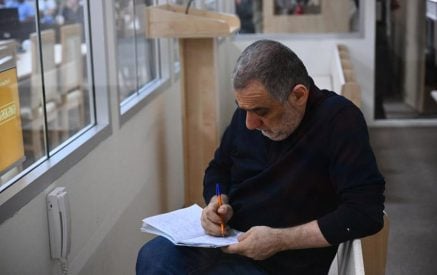
“What we are witnessing is diametrically opposed to the promise of peace. The peace agreement contains no clear commitment to release Armenian prisoners or to guarantee the dignified return of the displaced population of Artsakh. It addresses the issue of missing persons, but leaves its detailed regulation to a separate agreement. At the same time, Article 15 of the agreement stipulates that within one month after its entry into force, interstate claims relating to previous disputes must be withdrawn from international courts, rejected, or otherwise settled. In other words, the agreement sets a clear deadline for terminating previous legal proceedings, but no such clear deadline or obligation is established for the release of Armenian prisoners,” said Sahakyan, expressing concern over this, as legal proceedings may come to an end while the human rights violations underlying those proceeding remain unresolved.
Sahakyan presented those gathered the course and problems of the “trials” that have concluded in Baku, and spoke about the charges brought against Armenian prisoners’ total isolation, the ban on visits by the ICRC, and the need for consular visits: “The absence of normal diplomatic relations should prompt the establishment of mutually agreed mechanisms, including through a third country.”
“Families face another obstacle as well. They cannot visit their loved ones: telephone communication is important, but it cannot replace seeing a parent, holding a partner’s hand, or personally comforting an aging mother. These restrictions isolate the prisoners from those who could protect them, ensure their well-being, and provide support,” said the human rights defender.
Concluding her remarks, Sahakyan emphasized the importance of trust in peace, which is difficult to imagine without protecting the rights of people affected by the conflict and resolving their problems: “without these changes, we risk declaring the conflict resolving while allowing those affected to continue bearing the heavy consequences of the conflict.”
International and Comparative Law Center