
















In 1978, Yerevan was adorned with banners proclaiming “Together Forever” (“Навеки вместе”) to celebrate the 150th anniversary of Eastern Armenia joining the Russian Empire. The series of events, films, paintings, and programs, though orchestrated from above, from Moscow, did not provoke much internal resistance. Of course, I have also heard opinions that the Russian Empire colonized Armenia in 1828, but those opinions were not predominant.
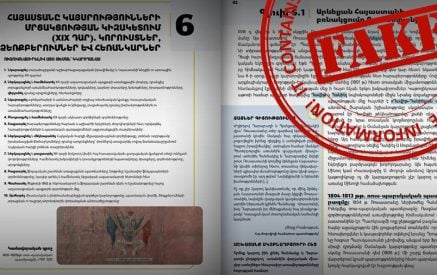
Today, deeply disappointed by Russia’s policies and its evident contribution to the depopulation of Artsakh, the same events of 1828 are officially labeled “annexation” in school textbooks. Is it right to drastically re-edit the past based on our current rightful discontent and today’s political climate?
What does ” annexation” mean? That Armenians truly wanted to live under the rule of the Yerevan Khan and, against their wishes, the Russians took over this territory? But it is a fact that Armenian volunteers also fought with the Russian army. Were there internationally recognized borders between Russia and Persia in 1828 that Russia violated?
But at the beginning of the 19th century, such borderlines did not exist. It seems to me that evaluative judgments of “liberation” or ” annexation ” should be avoided in such historical cases. The neutral word “joining” is quite appropriate.
Read also

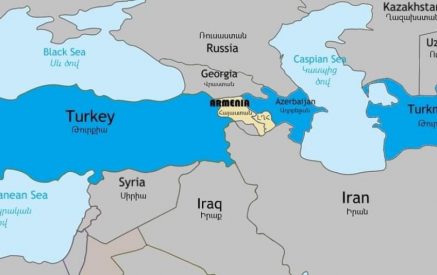
Of course, Moscow has done many bad things to Armenians and Armenia, not only in 2020-23. But it is also a fact that it is precisely in this region where we attempted to build statehood three times in the 20th century. These attempts were successful or unsuccessful not solely because of the Russians.
…In 1981, the “Berekamutyun” metro station was opened, which is decorated with a wonderful bas-relief by our talented artist Ghukas Chubaryan. Armenian and Russian girls pass each other bread and salt and grapes (in the photo).
I am not against the friendship of peoples, even more so, that bas-relief. I am against giving unequivocal assessments of historical events and, in effect, changing history “every minute.”
Aram ABRAHAMIAN