
























Human rights in Armenia 2025
AMNESTY INTERNATIONAL REPORT
Background
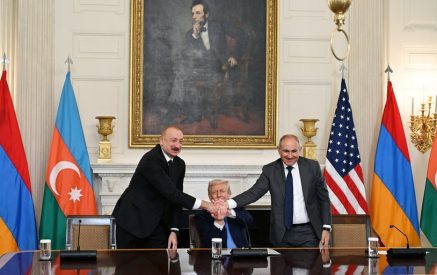
In January, the government signed a strategic partnership agreement with the USA. In March, parliament adopted the Լaw on Launching the Accession Process of the Republic of Armenia to the European Union, to pursue EU membership. In August, the presidents of Armenia and Azerbaijan signed a US-brokered joint declaration aimed at ending hostilities, addressing territorial disputes and establishing a trade corridor through southern Armenia to Azerbaijan’s exclave of Nakhichevan. Armenia’s shift toward a pro-western foreign policy and its efforts to reduce traditional ties with Russia were politically divisive, fueling disinformation campaigns and hate speech across the country. In June, authorities claimed to have foiled a coup, arresting an influential Russia-linked businessman.
Economic, social and cultural rights
Economic and social challenges persisted, exacerbated by the forced displacement of more than 100,000 ethnic Armenians from Azerbaijan’s Nagorno-Karabakh region to Armenia in 2023. Access by these refugees to long-term housing, employment and economic opportunities remained challenging.
Read also

The abrupt closure of USAID operations as part of a broader freeze on US foreign aid reduced the funding of many NGOs in Armenia, including those seeking to provide social and economic support to vulnerable groups.
Freedom of expression
The international media watchdog Reporters Without Borders improved Armenia’s ranking in its annual press freedom report. However, media polarization, a lack of editorial independence from the state and the safety of journalists remained concerns, amid growing disinformation and hate speech.
Government and corporate actors were reported to have initiated new strategic lawsuits against public participation (SLAPPs) targeting journalists and human rights defenders, including campaigners for women’s and environmental rights. Furthermore, the growing use of lawsuits targeting media and human rights defenders continued to have a chilling effect. Between April and June, 29 cases were filed against journalists and outlets for “insult” or defamation.
On 2 May, a court in the capital, Yerevan, acquitted Imnemnimi podcast co-hosts Narek Samsonyan and Vazgen Saghatelyan, who had spent two months in pretrial detention on charges linked to their public criticism of Prime Minister Nikol Pashinyan in a 2024 podcast. They were re-arrested on 13 November, again on charges of hooliganism, for a later podcast critical of the parliamentary speaker.
Freedom of peaceful assembly
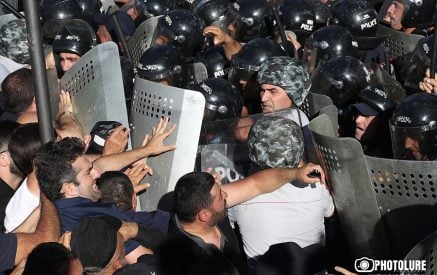
Police reform, including the introduction in 2024 of a new law to improve policing of assemblies, failed to alleviate concerns regarding the use of excessive force during demonstrations and a lack of police accountability. This was particularly the case regarding human rights violations during anti-government protests in May and June 2024. Despite ample evidence of the unlawful use of force by police, subsequent criminal proceedings were only brought against demonstrators – 16 in total – rather than any police officers.
Right to privacy
In August, parliament passed amendments allowing the police to access live feed from surveillance cameras fitted in public spaces, including transport hubs and public buildings, and to integrate facial recognition into these feeds. The amendments raised concerns about the law having a chilling effect and resulting in violations of the rights to privacy, freedom of peaceful assembly and freedom from discrimination.
Torture and other ill-treatment
In April, parliament amended the Law on the Treatment of Arrestees and Detainees to strengthen the safeguards intended to protect detainees, including the mandatory medical documentation of injuries under the Istanbul Protocol.
In June, the UN Committee Against Torture published its concluding observations on Armenia’s fifth periodic report. It welcomed reforms such as the broader definition of torture and the abolition of the statute of limitation for this crime. However, the committee raised serious concerns about low penalties for torture, limited access to compensation for survivors and the lack of independence of investigative bodies. It also raised concerns about the high rate of pretrial detention, overcrowding and poor prison conditions.
Discrimination
The absence of comprehensive legislation prohibiting discrimination on a wide number of protected grounds continued to be a subject of concern. On 7 January, the European Court of Human Rights ruled in favour of LGBTI people’s rights defenders who had been subjected to homophobic and transphobic hate speech. In the case of Minasyan & Others v. Armenia,the court found that Armenia had violated the right to private and family life and the prohibition of discrimination, highlighting persistent state failures to protect LGBTI individuals from hate speech and discrimination.
A draft law on equality and anti-discrimination remained pending in parliament, without including sexual orientation and gender identity as protected grounds.