











































It serves not only political purposes, but personal ones as well
In 1830, Honoré de Balzac published his novel Vendetta. To a 19th-century Frenchman, the brutal and backward customs associated with blood feuds carried a certain exotic appeal. Balzac sought to introduce this phenomenon—unfamiliar to his social milieu—to his readers.
To this day, such customs survive among many peoples, if only at a бытовой level. Hostility between families can still carry significance even in the most developed countries. And settling disputes through vendettas remains characteristic of certain tribal communities, whether in remote mountain villages or isolated settlements.
What is the fundamental cause of a vendetta? Conflicts arise between individuals or groups, often resulting in bloodshed. Yet those groups do not trust the state. They are convinced that justice will not be served, that criminals will not receive the punishment they deserve, and so they take upon themselves the task of administering justice as they understand it. Where a normally functioning state exists, vendettas cease to be part of public life.
Read also


When, two centuries after Balzac, Armenia’s supposedly “pro-European,” “democratic,” and “law-abiding” members of the Civil Contract party openly promise and carry out a “vendetta” against their political opponents, it speaks, first, to their political immaturity and, second, to the weakness of state institutions. After all, Civil Contract uses those very institutions to carry out its “vendetta,” and in the process those institutions cease to function as genuinely state institutions.
Political “vendetta,” of course, has been practiced since 2018, although Civil Contract officials were initially reluctant to call it by that name. Today, however, they have become more candid. They make only the slightest effort to conceal their actions behind terms such as “the people,” “criminal oligarchy,” or “foreign agents”—phrases that, naturally, carry no legal meaning.
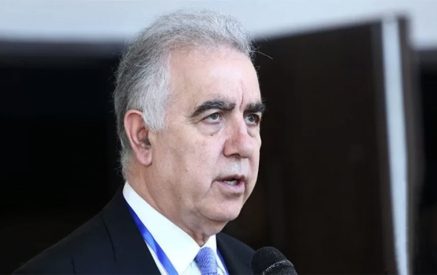
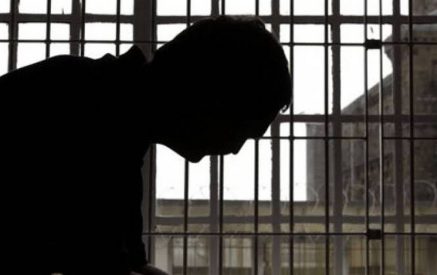
The “vendetta” of recent months had, of course, a purely practical and electoral purpose. In the days leading up to the election, individuals who could potentially hinder the reproduction of the ruling party’s power were removed from the political arena. Particularly notable were the imprisonments of Armen Ashotyan and Andranik Tevanyan just days before the vote.
Although the two men are very different, I regard them equally as political prisoners, and I would very much like all opposition supporters—and all honest citizens—to take the same view.
In Ashotyan’s case, authorities pulled out a case file that had been sitting untouched on the shelf for eight years, only to suddenly “remember” it before the election. In Tevanyan’s case, they resurrected a two-year-old story concerning his decoding and translation of materials from a closed session of parliament—materials that, naturally, were already widely known—and alleged that he had received an astronomical sum of money for doing so. Incidentally, the leader of Civil Contract himself admitted that he had long been aware of the matter. When the political need arose, it was reclassified as “treason against the homeland.”
The isolation of two prominent opposition figures during the election campaign had, as noted, a pragmatic objective. But Civil Contract officials are correct when they describe it as a “vendetta”—that is, as revenge and score-settling. In my view, political motives are intertwined here with personal ones.
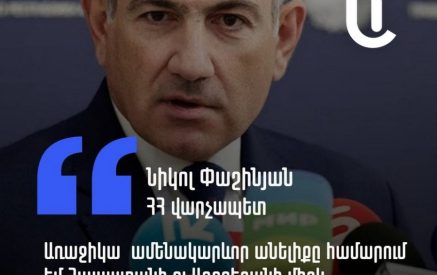
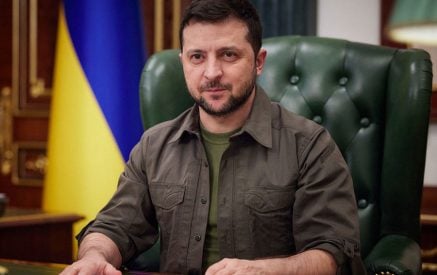
Every time either of these politicians—or any other opposition figure—subjects Pashinyan to harsh criticism, the prime minister takes note. He then says to himself, and sometimes aloud: “Now you’ll see.” This applies not only to political figures but also to non-political individuals, such as Yerevan State University lecturer and political scientist Alen Ghévondyan.
And whenever the opportunity presents itself, Pashinyan carries out that threat with the assistance of the law-enforcement bodies that serve him. That is how petty people driven by inferiority complexes behave.
It is clear that after the election “victory,” this blend of personal and political retribution will assume a much larger scale.
Aram ABRAHAMYAN
“Aravot” Daily
16.06.2026