



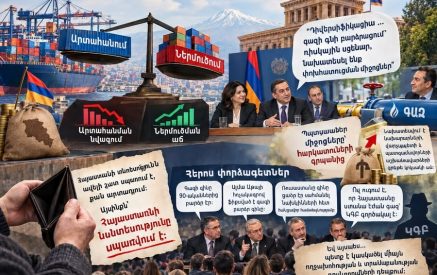



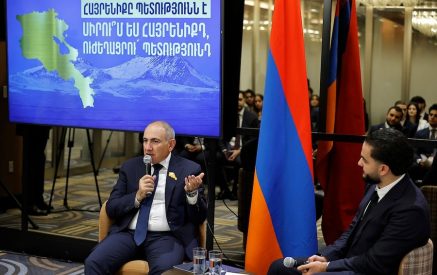
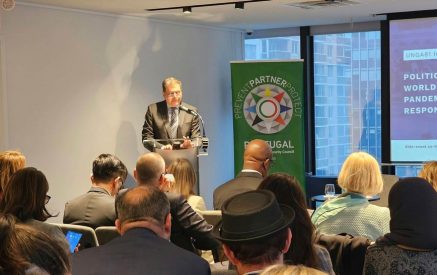
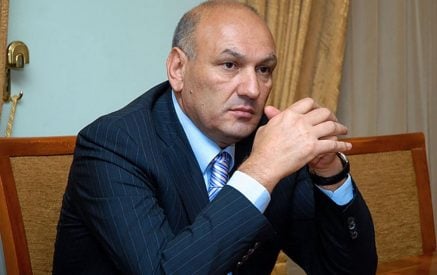
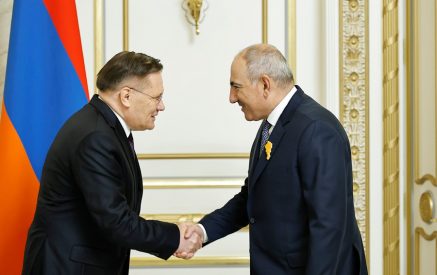

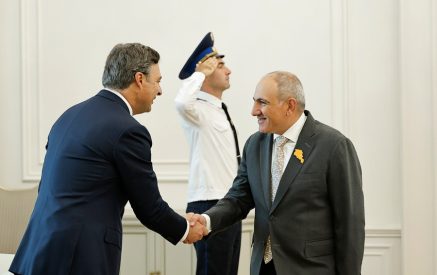


Prime Minister Nikol Pashinyan has declared in parliament that he will crush Robert Kocharyan, Samvel Karapetyan, and Gagik Tsarukyan, adding that anyone who disagrees is free to launch a revolution.
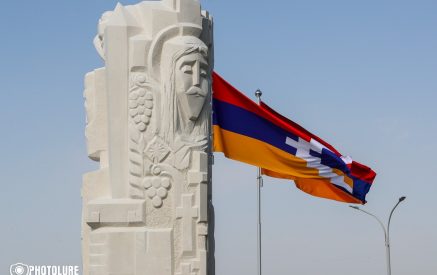
The rhetoric is familiar. The same Nikol Pashinyan, following the ethnic cleansing of Artsakh’s Armenian population, declared that he had consciously chosen a course of sacrifice and that anyone opposed to it should stage a revolution. He later argued that since no revolution had taken place, society must therefore have approved both what had happened and his formula of “conscious sacrifice.”
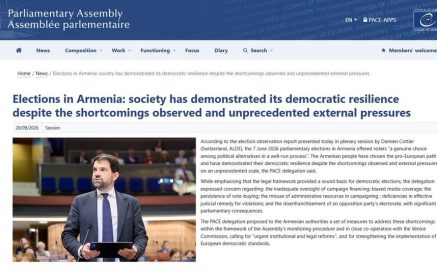
As usual, however, Pashinyan was distorting reality—a reality that would later be reflected even in the official results of Armenia’s 2026 parliamentary election.
The Nikol Pashinyan whose policies culminated in the forced displacement of Artsakh’s Armenian population and in the closure of the chapter of the Artsakh Movement ultimately received three percentage points fewer votes than the Pashinyan who, during the 2021 parliamentary election campaign, had promised not to close that chapter. More than that, he had pledged to “de-occupy” Shushi and Hadrut and to advance the principle of Remedial Secession.
Read also
In effect, even without launching a revolution against him, the public nevertheless rejected the policy that led to the depopulation of Artsakh.
And Pashinyan, despite that profound defeat—indeed, despite what may be described as an existential defeat—has proclaimed an absolute victory. He undoubtedly understands the complexity of his political situation far better than anyone.
His statements about crushing opposition leaders, imprisoning them, and stripping them of their assets amount to nothing less than an admission of defeat. A politician who has truly secured a political victory, especially in a country facing challenges as serious as those confronting Armenia, spends the period after an election addressing major national issues, not indulging in outbursts about persecuting electoral rivals.
Yet it is precisely defeat that fuels those outbursts.
Part of the reason is that the opposition has largely refused to engage in post-election theatrics or impulsive situational tactics. Both before and after the election, it has declined—at least so far—to validate expectations that it would be drawn into political brawls and score-settling.
But political confrontation of that kind is Pashinyan’s natural element. Without conflict, there is no Pashinyan as a viable political actor.
The leading opposition forces have deprived him of that vitality by refusing to enter into a process of settling scores with him and instead focusing on direct engagement and dialogue with different segments of society.
That is what continues to unsettle Pashinyan.
This is why, after the election, he has sought to inject new energy into an atmosphere of emotion and confrontation, including through a fresh wave of threats. Pashinyan’s political batteries drain remarkably quickly whenever the opposition refuses to abandon its calm and consistent dialogue with society and declines to step into the arena of political brawling that he seeks to create.
Hakob BADALYAN