


























Armenia has announced that it is launching the domestic ratification process for the Armenian–U.S. framework agreement on the so-called Trump Route.
What the Trump Route actually is remains largely unclear. One thing, however, is evident: numerous geopolitical interests intersect there, and at its heart is a geopolitical struggle over Syunik.
Prime Minister Nikol Pashinyan, who is currently on vacation, recently climbed Mount Khustup, the highest peak in Syunik. What did he see from the summit of Khustup that prompted him, after coming down from the mountain, to initiate the ratification process for the agreement on the Trump Route?
A broader question, however, is whether Armenia’s prime minister belongs to the group of those making decisions in this process—or merely to those carrying them out. Everything that has unfolded so far suggests that Armenia has been acting far more as an executor than as a decision-maker.
Read also
For example, the Armenian public has been learning the key details of the Trump Route not from their own government but from various other sources—through leaks or official statements issued elsewhere—and only afterwards, if at all, from the government they themselves finance through their taxes.
Take the latest example. Instead of Armenia’s well-paid government informing taxpayers, it was the U.S. Embassy in Armenia that recently announced that a team of specialists from the American engineering company AECOM had arrived in Armenia and, together with representatives of the Armenian government, had inspected and surveyed the area where the Trump Route is expected to run.
Moreover, the embassy disclosed this information only on July 10, after the team had visited the site, completed its inspection, and left the country roughly a week earlier. Yet the matter concerns Armenian territory, including Armenia’s strategically important border with Iran.
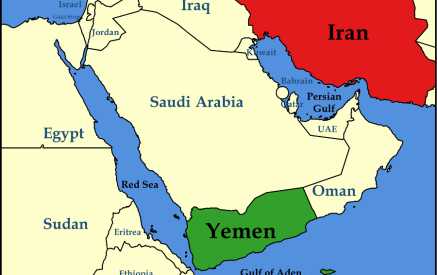
Notably, the visit of the AECOM team effectively coincided with Nikol Pashinyan’s trip to Iran to attend the funeral of the country’s Supreme Leader. That apparent coincidence may explain why, just four days after Pashinyan’s visit to Tehran, Iran’s ambassador to Armenia held a press conference in Yerevan, where he openly expressed concern over the Trump Route, the prospect of an American presence there, and, in effect, skepticism toward the assurances provided by Yerevan.
Against this backdrop—and as the exchange of strikes between the United States and Iran has resumed—Yerevan is launching the ratification process for an agreement concerning a project that is highly sensitive for Iran.
The most basic question, though by no means the only one, is this: Is Yerevan initiating the process—or is the process being initiated in Yerevan?
Hakob BADALYAN