








































The Armenian Mirror-Spectator: The image of “the steadfast mountain, unmoved by the sound and fury of an individual destiny,” a reference to the celebrated Beat writer Jack Kerouac and his novel Desolation Angels, sets the tone for Aram Saroyan’s before I forget: a memoir (and then some) (Three Rooms Press, 2026). The memoir can be seen as Saroyan’s attempt to transform the “terror and chaos” of a childhood of “violent misery that tore the family apart twice by the time I was eight,” into the “stillness” surrounding the mountain peak in Kerouac’s novel.
Aram recalls the monstrous behavior of his father, William Saroyan, the “international literary sensation” of almost mythic fame, who dominated the literary scene of the 1930s and ‘40s America. More than four decades after his father’s death, and after the son himself has risen to international fame — Aram is the author of many books of prose and poetry, a multiple-awards-winning writer, best known for his minimalist poems — the “flamboyant literary figure” of the father, to borrow the son’s words, frames the memoir.
Before i forget opens with the chapter titled “Family Portraits” where Aram depicts a life that started with the brutality and the rejection of “a self-made tyrant and compulsive gambler.” It concludes with an accidental encounter in the streets of New York between the now divorced, “embittered” Saroyan and his ex-wife Carol walking arm-in-arm with his “old buddy” Walter Matthau, the actor she had married after a dual-divorce from his father. “If you walk around New York long enough, sooner or later you meet your family,” says Bill in his “booming voice . . . with a jovial look at the two of them.” This final chapter, “The Sound of Love,” offers Aram the closure and the reassurance he seeks. It recalls for me the line, “What thou lovest well remains,” of the Ezra Pound poem Aram uses as his epigraph.
Along with a fascinating account of Aram’s journey to literary fame, the memoir paints a vivid picture of the 1950s and 1960s, the scene the adolescent grew up in. Aram recounts his psychedelic experiences, both chemical and non-chemical, of growing up in a counterculture that promoted “free love” and believed in the use of drugs to expand human consciousness. Leaders of this counterculture, Allen Ginsberg, Timothy Leary, are ever-present. So are Bob Dylan, The Beatles, The Rolling Stones, Gloria Vanderbilt, Oona O’Neill, among others. Whether in Los Angeles, Bolinas, London or New York, Aram moves in the world surrounded with the celebrated poets, artists and movie stars of the day. The memoir is full of casual mentions, such as ”our neighbor, the poet Bill Berkson . . .” It might be worth noting here that, at times, being introduced to a few too many names and to stories of divorces and break-ups that seem disjointed, can be confusing. Ultimately, however, these stories come together to create a faithful portrait of the times.
Read also
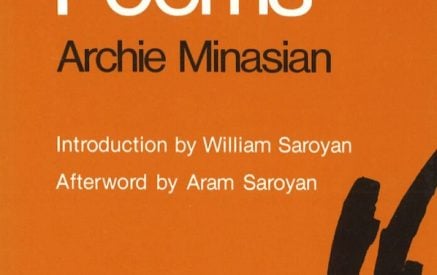
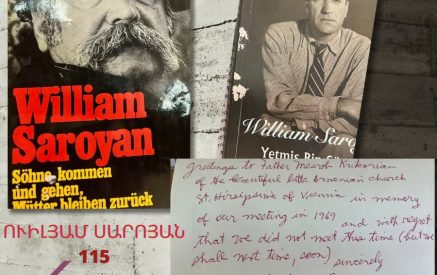
Aram’s honest and truthful accounts in this recent memoir inevitably take the reader to his 1982 Last Rites: The Death of William Saroyan, an earlier memoir based on the journal he kept during his father’s final days at the hospital. In the journal, Aram allows himself to feel the anger and the frustrations as the son of a famous man who he knew was not the person people take him to be, the public legend universally adored for his “sweetness.” Last Rites exposes “this gap between the public image and the reality I knew,” with the son ultimately making peace with the dying man.
“If he could be impossible — and he could be — knowing him was nonetheless a great gift of my life,” writes Aram. before i forget draws a highly appreciative portrait of his father’s career as a writer. “He was already a stylist, master of a prose light years beyond all but one or two of his most accomplished contemporaries,” affirms the son with pride and joy. Aram has praise for a father, ”after all, but the son of Armenian immigrants who had made literary high modernism funny and easy in the middle of the dark hours of the Depression.” William Saroyan did indeed teach Americans to keep their faith and their love alive, even in the face of death.
That William Saroyan who, in 1943, the year his novel The Human Comedy was published, “was arguably the most famous writer in America,” to borrow Aram’s words, in no way diminishes the son who attained literary fame in his own right. Aram’s poem “lighght” is acclaimed as the world’s most famous one-word poem. The father’s enormous popularity could in fact add to the merit of a son who was able to measure up to the name he will always be associated with.
Arpi Sarafian
Read more at the source