





























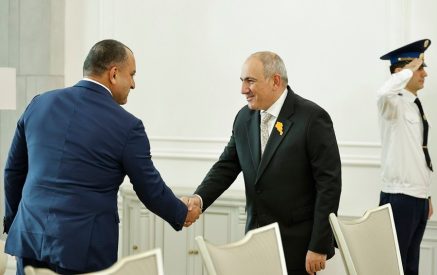




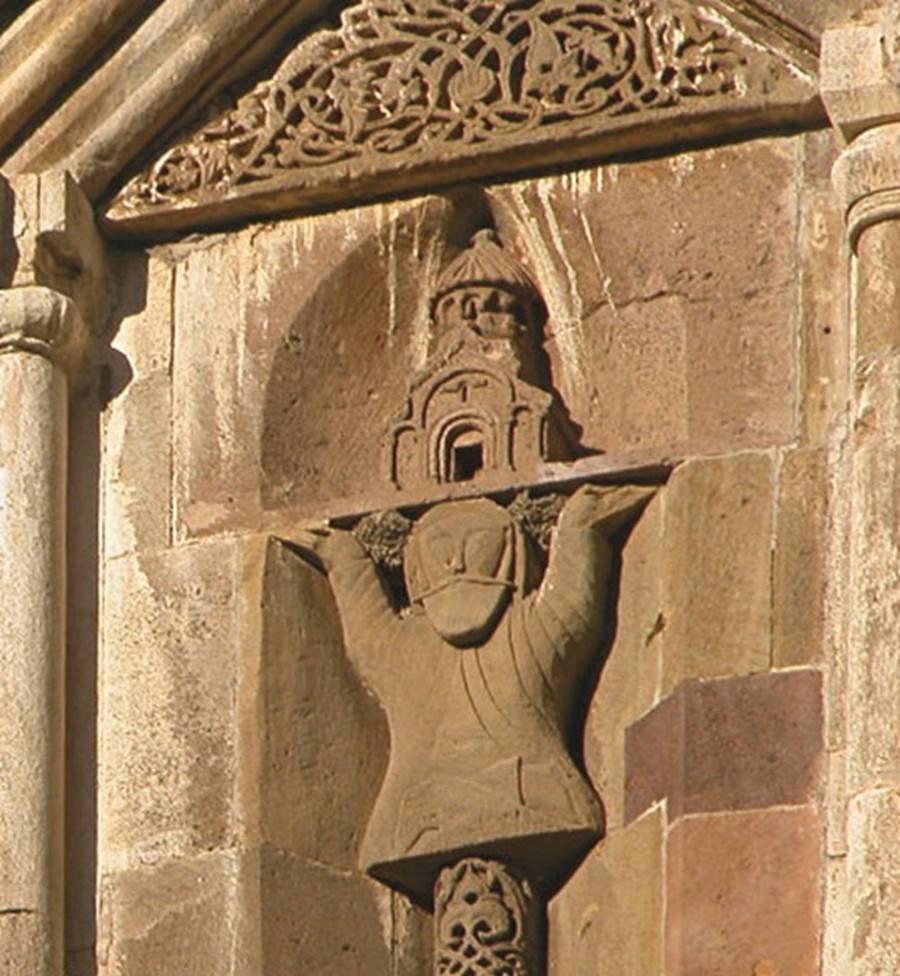
According to the 13th-century historian Kirakos Gandzaketsi, as well as Armenian and foreign researchers, it is an indisputable fact that the King of Artsakh and Prince of Princes, Hasan-Jalal Dawla (1214–1261), was ethnically Armenian and descended from the most prominent and illustrious Armenian noble families. But where, then, did his foreign-sounding name come from, and what do his three non-Armenian names—Hasan, Jalal, and Dawla—signify?
Given the immense influence of Iran, and subsequently the Arabic Caliphate in particular—and through them, foreign cultural environments—over the entire Caucasus and specifically Armenia and its people, it can be assumed that during that historical period, the Arabic language was highly prestigious and held a value roughly similar to that of English in the modern world. For this reason, individuals of high social standing were given Arabic names as a sign of their exceptional merits. The fact that the Prince of Princes of Artsakh bore names of Arabic origin is precisely due to the aforementioned circumstance.
In antiquity, just as today, it was traditional in Artsakh and throughout Armenia to name the eldest son after his grandfather. In this case, Hasan-Jalal Dawla’s father, Prince Vakhtang-Tangik of the Lower Khachen district of Artsakh, named his eldest son, Hasan-Jalal Dawla, after his own father, Hasan.
Hasan, the King of Artsakh and Prince of Princes, was also called “Jalal” and “Dawla”.
Read also


According to the prominent linguist and academician Hrachia Acharian, the names Hasan, Jalal, and Dawla are of Arabic origin.
Translated from Arabic into Armenian, “Hasan” means “handsome man”; “Jalal” means “glory, majesty, greatness”; while “Dawla” originates from the Arabic word “dawlat/dovlat” and means “wealth, greatness, property, state, power” in Armenian.
Exalting their ruler Hasan, the Armenians of Artsakh called him “Jalal Dawla”, which literally translates to “glory to the state” or “glory to the power”.
Literally, this is similar to the Russian expression “slava tsaryu” (“glory to the tsar”), while semantically, “Jalal Dawla” translates to “glory of the state” or “majesty of the state”.
Notably, Hasan’s brother, Zakare, held a similar title; he was also called “Nasr Dawla”, which translates into Armenian as “victory [or help] to the state”.
Thus, as we can see, during the period of 1214–1261, the Armenian king of Artsakh and Prince of Princes, Hasan-Jalal Dawla, encapsulated the very idea of the state within his name.
STEPAN HASAN-JALALYAN
political scientist