





















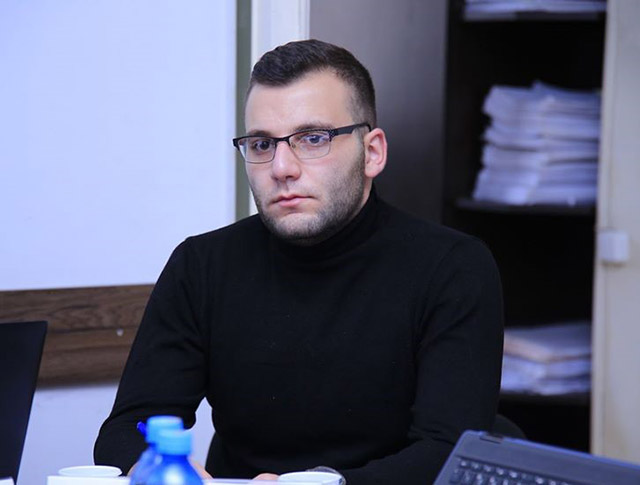
Arman Gyulgazyan
AIISA Associate Fellow
King’s College London, Political Economy BA
INTRODUCTION
In the modern world, elections are widely used by authoritarian regimes. Elections in authoritarian states are there to help the leaders increase their regime stability and legitimize their power on the international political arena. Moreover, an empirical data of the elections in authoritarian states has shown that those regimes that use elections as a political tool are more stable and stay in power longer than those that do not.
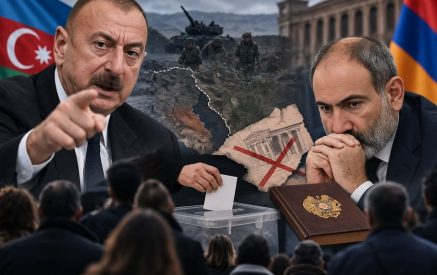
This article is going to argue that holding elections do not guarantee a transition to democracy. Ultimately, it will argue that elections do help authoritarian regimes to stay in power and, what is more, legitimize their actions and stabilize their rule. To prove this, the example of Belarus will be shown. Finally, it will talk about one of the ways (the “Successor” scenario) of how authoritarian states create a democratic facade by holding elections, but always winning them. As examples of countries that used the “Successor” scenario will be some of the former USSR states: Russia, Armenia and Azerbaijan.
ELECTIONS DO NOT GUARANTEE DEMOCRACY
In the modern world there are about 200 states. The vast majority of them (about 180) more or less regularly holds elections. Of this vast majority, about 50 states are more or less classical democracies. About 40 other states in which elections are held are more or less classical authoritarian regimes. In the remaining hundred states conducting elections, all kinds of transitional, semi-authoritarian, hybrid, etc. modes rule. That is, elections alone do not guarantee any democracy.
Moreover, in most countries of the world, people’s participation in elections does not create democracy. In one hand, elections will create a democratic regime; in other hands, elections will create an authoritarian regime. In the election technology itself, democracy is not programmed – it all depends on the purpose of their use. Therefore, democratic elections coexist on the planet with authoritarian elections – the owner of the elections decides everything. Elections work for democracy only when political forces interested in democracy control them at all stages. And it is not only and not so much about control over the counting of votes.
Elections in authoritarian states do not accumulate democracy and do not prepare it, because they do not promote political competition, they do not train the opposition, they do not put the mass voter into a situation of real fateful choice. Elections in authoritarian states work as a full-fledged authoritarian institution of legitimization of authoritarian power, they are in demand only as a source of power. And all who participate in such elections participate exclusively in the legitimization of the regime.
HELPING HAND TO AUTHORITARIAN STATES
In spite of those comparatively uncommon cases when elections play a role of a tool for transition to democracy, the main social goal of elections in the context of authoritarianism is to fortify the corresponding types of political domination by influencing the consciousness of their own citizens and/or international public view. Although in this case, the elections do not determine the composition of the government, they, acting as a sophisticated instrument of stabilization and preservation of power in comparison with direct coercion methods, perform important functions in the political system.
Despite the similarities in the social purpose of elections, their functions in authoritarian political systems differ significantly. In authoritarian states elections are a democratic facade, a beautiful decoration that covers the monopoly on power of a narrow group of people or a single individual. Both non-competitive and semi-competitive choices are applied here. The latter is usually inherent in such features as the admission to the election only of candidates or parties that are acceptable or at least loyal to the authorities and the restriction of the competencies of the institutions of power elected through polls. In practice, this often manifests itself, for example, in the holding of elections to virtually powerless parliaments, which surround many authoritarian rulers in Latin America, Africa, Asia, and also in the states of the former USSR.
Modern undemocratic regimes usually use a whole range of methods, falsifying election results and turning them into a manipulation tool, a means of organizing self-deception of their own citizens and misleading international public opinion. In authoritarian political systems, elections serve to strengthen the legitimacy of the existing regime; increase its reputation within the country and especially abroad; ease political tension in the state; identify the opposition and its taming, or creating, on the initiative of the authorities, only formally opposition parties; stabilization of the regime through the integration of the opposition and partial consideration of its requirements.
Elections in authoritarian states also help to legitimize the rule of the leader both in the eyes of its citizens and the international watchdogs. Moreover, the multiparty elections conceal the distribution of power in an authoritarian state and create an image of a true democracy. In such states the ruling party is “competing” with the opposition in the elections to increase legitimacy and show others that their party is still the most popular among citizens and is out of competition. Thus, elections create an image of the citizen’s consent for the ruling party to rule again and again.
Furthermore, when talking about the international arena, the smokescreen of elections proves the existence of at least some form of democracy in a state for the Western World. This provides the authoritarian state with Western support and international recognition. This support is expressed in both physical and diplomatic aids, which on its turn strengthens the regime survival.
An example of using elections as a political tool for legitimization has been applied in the Republic of Belarus. The main and the ruling party there is called the Communist Party of Belarus (KPB), which uses elections to legitimize its rule both in the eyes of its own citizens and international watchdogs. However, even though it is hard to prove that the voting is free from any illegal machinations, it is nearly impossible for the opposition to compete due to unfair regulations. This proves that elections there are only used to show the presence of a so-called democracy and that the electoral system is free enough for citizens to confer legitimacy, but unfair enough to ensure the KPB’s dominance. Consequently, this makes it evident that holding elections is an authoritarian strategy and a political tool for authoritarian leaders to legitimize their regime on the international level, while staying in power and showing their popularity to citizens of the state.
IMPORTANT INFORMATION TOOL
Additionally, elections also help the authoritarian states to gather information on the distribution of power and find out whether an opposition party represents a threat. By identifying this type of opposition forces, the ruling party can threaten it to change the alliance during the following elections and support the regime. The gathering of information lets the incumbent regime realize its flaws and weak points, and thus to eliminate them for the future elections.
Also, if the ruling party wins the elections with significantly big difference compared to the opposition, this can act as a signal to citizens that the regime is strong and stable and at the same time discourage any divisions between the party members. And that is what Lukashenko, the president of Belarus since 1994, has done for the recent election on August 9, 2020; according to official data he received over 80% of votes, while his opponent Sviatlana Tsikhanouskaya received only a little over 10%.
Large majority victories also show the opposition the imbalance of power and that the dictator’s party is the only game in town and that there is no point in trying to organise an opposition movement, thus discouraging the organisation of any potential military coups. Using elections as an information tool explains why authoritarian regimes put in vast amounts of finance despite knowing the outcome and their victory for sure. Achieving victories by huge margins is crucial for such regimes as it indicates their stability and power.
Additionally, through holding elections regularly, winning them by huge margins and mobilising voters in great numbers to party rallies and the polls, Lukashenko sought to generate a public image of invincibility. In countries such as Belarus, elections showed to the external and internal actors that the regime is stable, powerful enough, resistant to outside threats and the end date of the rule of the regime is unclear.
Nevertheless, 2020 was different from all other election years. After the election results were released and it was clear that Lukashenko was elected as the president for the sixth term, the Belarusian public, hundreds of thousands of people, were sure that the results were falsified, and that is what took them to the streets.
Moreover, while blaming the EU for the situation in the country, Lukashenko followed Erdogan’s move (who opened the border with Greece to migrants, encouraging them to go to Europe) and sent a large crowd to the Lithuanian border in order for them to cross it. As the EU could not accept so many refugees at the same time, this would give Lukashenko the opportunity to blackmail the EU through questioning their protection of human rights.
The political climate and hostility around migration allow authoritarian governments such as Lukashenko’s government to harness that fear of refugees. Lukashenko knows that it will harm the EU, as it is aimed at internal disputes over migration. That is why there must be a change in migration policy, an internal EU political solution to neutralize the force used by authoritarian countries to intimidate the migrant crisis.
Of course, Lukashenko was doing all this looking at Erdogan, however Russia was standing behind his back, which began to demand financial assistance from the EU to Belarus, in the way as it had previously provided to Turkey. By doing this, Russia was trying to turn the situation around, pointing to the double standards of the EU “liberal values” for preventing people from entering the EU.
THE “SUCCESSOR” SCENARIO
The Successor scenario has been widely used by states of former Soviet Union. This scenario of actions implies the transfer of power from the leader to his/her political ally through mostly fake democratic elections. By this the ruling party remains the same, while only the leader is swapped. For the first time, the “successor” scenario in the Commonwealth of Independent States (CIS) was tested in Russia.
In the late 1990s, discussions arose repeatedly about whether the first president of the Russian Federation, Boris Yeltsin, would extend his term of office for another term. But on December 31, 1999, a phrase that went down in history sounded from television screens: “I’m leaving. I did everything I could”. Boris Yeltsin resigned ahead of schedule and entrusted the execution of the duties of the president to Prime Minister Vladimir Putin, who has held this post since August 1999. At the same time, Boris Yeltsin made it clear that voting in the early elections is necessary only for Putin. Vladimir Putin won the first round of the presidential election, gaining almost 53% of the vote.
It is noteworthy that Vladimir Putin himself used a similar scenario to transfer power. Contrary to expectations and requests, he did not remain president for a third term and decided to nominate First Deputy Prime Minister Dmitry Medvedev for president. The latter won the election with a result of 71% of the vote. The difference from the “Yeltsin” scenario was that Putin, transferring power to Dmitry Medvedev, remained in politics and took the key post of Prime Minister of the Russian Federation.
A kind of duumvirate was formed with the presence of two distinct centres of power. Shortly before that, Putin headed the United Russia political party, which won 70% of the seats in the State Duma. This, on its turn, suggests that there is another vertical power – the party.
Moreover, Russian Duma has recently passed a new constitutional reform, which annuls all the previous presidential terms, and allows the current president Putin to be reelected for two more terms, potentially keeping him in power until 2036. These changes were introduced at a point in time when the coronavirus lockdown was present, which means the public was not able to express opposition by protesting against the changes.
In 1993, Heydar Aliyev returned to power in Azerbaijan, who led the republic under the Soviet rule. He was elected president twice, in 1993 and 1998. In late 1990s, Heydar Aliyev began to have serious health problems – this made him think about a successor. Probably, the choice here was made without much thought: Aliyev’s son Ilham already worked as vice president of the State Oil Company of Azerbaijan. Heydar Aliyev, already seriously ill, put forward his candidacy in the 2003 presidential elections for the third term (in violation of the current constitution), but subsequently withdrew it in favour of Ilham Aliyev. Ilham Aliyev won the election with the result of 77% of the vote and became the first heir to the president in the CIS in the direct (monarchical) sense. In 2008, Ilham Aliyev was re-elected for the second term, and in March 2009, following a referendum, the constitutional rule, prohibiting the incumbent from being elected for more than two consecutive terms, was repealed. Thus, the way was opened for the multiple extension of the powers of Ilham Aliyev.
In Armenia, the “successor” scenario was also prepared in advance. Three years before the expiration of the second term of office of incumbent president Robert Kocharyan, amendments to the constitution were adopted at a referendum, which redistributed part of the president’s powers between the parliament and the head of government. This indicated that the leaders would change places: Robert Kocharyan’s successor would be Prime Minister Serzh Sargsyan, and Robert Kocharyan himself would take over as prime minister. However, the main rival of Serzh Sargsyan, the first president of Armenia Levon Ter-Petrosyan, did not recognize the unconvincing victory of Serzh Sargsyan in the elections. His supporters took to the streets with protests. As a result of the riots, according to official figures, ten people died and more than 100 were injured. The ruling elite managed to prevent a coup, but the successor scenario was not fully realized: Serzh Sargsyan did not appoint Robert Kocharyan as prime minister in an open confrontation that threatened to develop into new riots.
In December 2015, the country held a constitutional referendum which approved transformation of Armenia from a semi-presidential to a parliamentary republic. As a result, the president was stripped of his veto faculty and the presidency was downgraded to a figurehead position elected by parliament every seven years. By this, the then president Sargsyan wanted to stay in power and continue ruling the country as a prime minister after his presidential term would come to an end. However, in 2018, when a revolution had started, Sargsyan signed his resignation.
CONCLUSION
In conclusion, this article has argued that elections do not guarantee a transition to democracy, moreover they do also help authoritarian states to stay in power. Some of the forms of such help are legitimization of the rule of the leader, stabilization of the ruling regime, and collection of information. These all are done in the form of the “Successor” scenario. For the legitimization of the leader’s rule, the example of Belarus has been shown, where the elections are free, but it is made almost impossible by the ruling party for the opposition to win the elections. Also examples of how Belarus uses elections as a stabilization and information tool were shown, where it has been noted that it is justified for the ruling elites to spend huge amounts of money clearly knowing the outcome of the elections. Finally, as examples of the “successor” scenario has been shown in cases of some of the former USSR states, in particular Russia, Azerbaijan and Armenia.
BIBLIOGRAPHY
- Averkiev, I. (2018). There are elections that create democracy and there are elections that kill it. The main thing is not to mix it up. Pgpalata Press. (Translated from Russian)
- Bedford, S., (2013). “Everybody knows who will win”: Presidential Election in Azerbaijan. Baltic Worlds.
- Blaydes, L. (2006). Who Votes in Authoritarian Elections and Why? Determinants of Voter Turnout in Contemporary Egypt, Paper prepared for delivery at the annual meeting of the American Political Science Association, Philadelphia PA. pp 1-21.
- Borisov, N. (2010). Prospects for the Institute of Elections in the Former USSR. Gazeta Press (Translated from Russian).
- Gandhi, J. and Lust-Okar, E. (2009). Elections under Authoritarianism, Annual Review of Political Science, 12, pp. 403-422.
- Geddes, B. (2006). Why Parties and Elections in Authoritarian Regimes? Paper presented at the annual meeting of the American Political Science Association, Washington D.C. pp 1-24.
- org. (2000). Parliamentary and Presidential Elections In Russia, 1999-2000 (Technical Assessment). [online] Available at: https://www.ifes.org/publications/parliamentary-and-presidential-elections-russia-1999-2000-technical-assessment.
- Krikorian, O., 2012. Parliamentary elections in Armenia. Caucasus international, 2(2), pp.189–200.
- Malesky, E. and Schuler, P. (2011). The Single-Party Dictator’s Dilemma: Information in Elections without Opposition, Legislative Studies Quarterly, 36:4, pp. 491-530.
- Mill, J. M. (1991). Considerations on Representative Government, Amherst, NY: Prometheus
- Morse, Y.L. (2012). The Era of Electoral Authoritarianism, World Politics, 64:1, pp. 161- 198.
- Pugachev V. and Soloviev A. (2005). Introduction to Political Science. Aspect Press. (Translated from Russian)
- Schedler, A. (2006). Electoral Authoritarianism: The Dynamics of Unfree Competition, London: Lynne Rienner Publishers.
- Schedler, A. (2002). Elections without Democracy: The Menu of Manipulation, Journal of Democracy 13:2, pp 36-50.
- Shevtsova, L., (2010). Putin’s Russia 2nd ed., Washington DC: Carnegie Endowment for International Peace.
Democracy, Security and Foreign Policy Programme (NED)
The Armenian Institute of International and Security Affairs (AIISA)